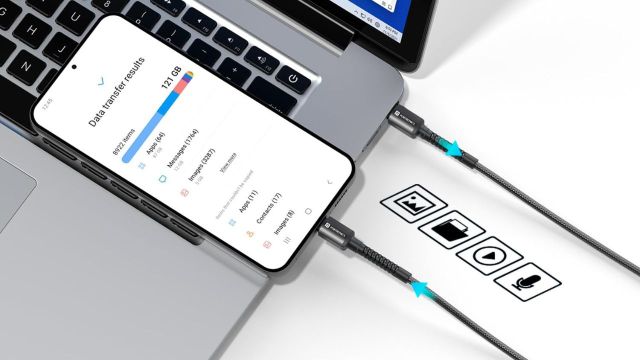
Best braided USB‑C cables to check out: If you’re tired of cables fraying right at the connector, braided ones are the simplest upgrade—more grip, less tangling, and better resistance to daily wear. What really makes them “built to bend” is the combo of a woven outer jacket plus reinforced stress points near the plug.
5 braided USB‑C cables to consider on Amazon
These picks are curated from Amazon with durability-first features in mind—braided nylon construction, solid strain relief, and specs that match how you charge (phone, tablet, or laptop). Aim for the right type (USB‑C to USB‑C vs USB‑C to USB‑A) and power rating so you’re not stuck with slow charging later.
USB-C to USB-C cables look interchangeable until they’re used across different devices and situations. Charging a phone is one thing; charging a laptop, powering a tablet while navigating, or topping up a device in the back seat adds a different kind of stress—heat, bend points, frequent unplugging, and the constant tug of “just a little more reach.” The practical baseline is simple: the cable needs to support the power profile the device asks for (often 60W for many modern laptops and fast-charging phones), and it needs to do it consistently without getting hot or fraying at the connector.
The second layer is longevity and use-case fit. Data speed matters only if files are moving often; many durable, budget-friendly cables still sit at USB 2.0 transfer rates, which is fine for photos and light sync but not ideal for heavy work. Length is the other make-or-break detail: short cables are tidy for power banks and desks but frustrating in bedrooms and offices; long cables solve reach but can feel bulky in a bag. The five options below take different positions on those trade-offs—some are compact and tough, some are long and convenience-led, and one leans into certification and warranty as the reassurance factor.
UGREEN 60W USB C to USB C Charger Cable (0.5 m)
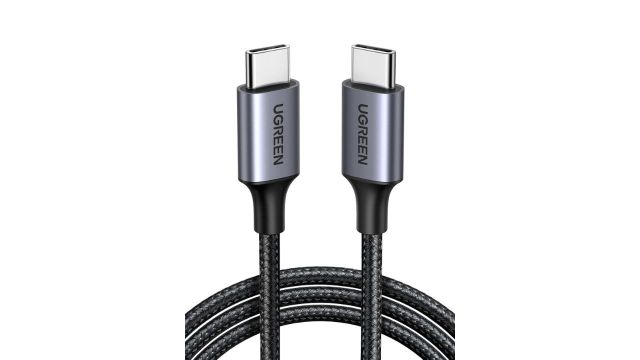
UGREEN’s 60W USB-C to USB-C cable is aimed at fast charging with a compact footprint. Then, it supports up to 60W (20V/3A) Power Delivery and offers USB 2.0-level data transfer up to 480 Mbps, which is fine for everyday syncing but not designed for high-speed workflows. Also, it’s explicitly positioned as not supporting video output, and the short 0.5 m length makes it most practical for power banks, travel pouches, and desk setups where the charger is close.
Pros
- 60W PD support covers a wide range of phones, tablets, and many USB-C laptops
- Clear limitation call-out: no video output, so expectations are set upfront
- Short length reduces tangling and looks neater in tight spaces
Cons
- 0.5 m can feel restrictive for bedside or couch charging
- USB 2.0 transfer speed is not ideal for large, frequent file moves
Pro-tip
- If a laptop user keeps a charger under a desk, this length can be annoying; it’s better as a “carry cable” paired with a longer home cable.
Belkin Apple Certified Braided USB-C to USB-C Cable
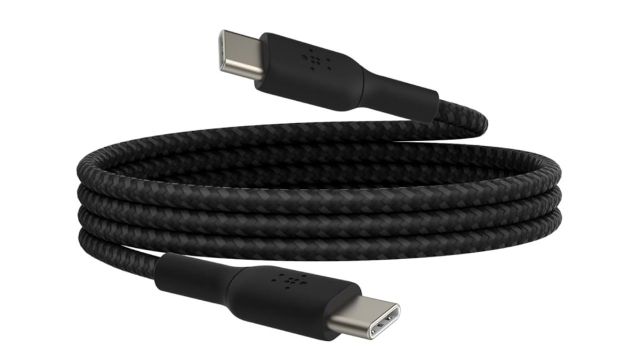
Belkin’s braided USB-C to USB-C cable leans on durability testing and certification. Belkin markets this line as tested to withstand 10,000+ bends and notes USB-IF certification, which matters for people who want a standards-based cable that “just works” across devices without guesswork. Belkin also lists a 2-year warranty for this braided USB-C to USB-C cable, which is a practical differentiator when the goal is fewer replacements.
Pros
- USB-IF certified, which is a reassuring baseline for compatibility and safety
- Long-term ownership angle: 2-year warranty is uncommon at this price tier
- Built for daily use, with durability testing emphasized
Cons
- Transfer speed and charging performance still depend on the charger and device; it’s not a magic “faster than physics” cable
- Usually sold in standard lengths (often 1 m), which may not solve reach issues for every setup
Pro-tip
- This is the sensible “default cable” for a household: one that can live in the car or office bag without feeling precious.
Portronics Konnect X 60W Unbreakable Nylon Braided Cable (2 m)
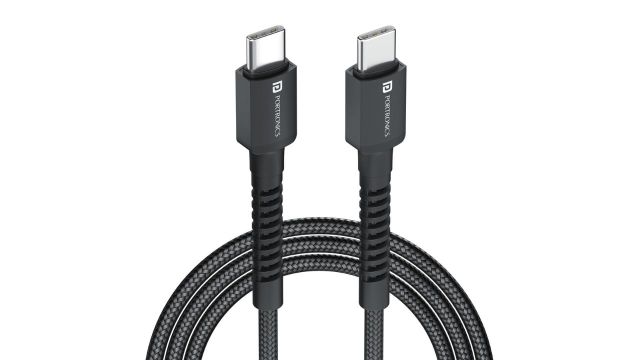
Portronics positions the Konnect X as a 60W PD Type-C to Type-C cable with 480 Mbps data transfer and a convenient 2 m length. The length alone changes the experience—this is the kind of cable that can run from a wall socket to a bed or a work desk without tension at the connector. Portronics also lists a 6-month warranty against manufacturing defects, which is modest but still useful for peace of mind.
Pros
- 2 m length is genuinely practical for home and office layouts
- 60W PD support covers common fast-charging needs
- Braided build is designed to handle daily wear
Cons
- USB 2.0 transfer speed (480 Mbps) is fine, but not “workstation fast”
- 6-month warranty is shorter than some premium brands
Pro-tip
- Long cables are easiest to live with when paired with a simple Velcro strap; it prevents the “rope coil” effect inside bags.
Also Read: Fresh Cut Flower Energy: Standout Floral Blouses Worth Exploring on Zalora Indonesia
Wayona Type C to Type C 10ft/3m Long 65W Fast Charging Braided Cable
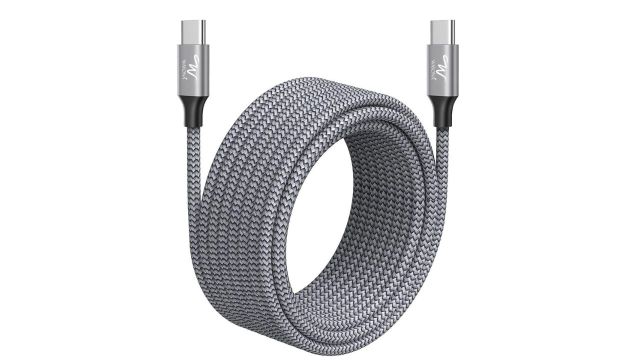
Wayona’s cable is the reach-first option: a long, braided USB-C to USB-C cable rated up to 65W (20V/3A) with 480 Mbps data transfer. It also states it does not support video output or monitor connection, which makes it a charging-and-basic-data cable rather than an all-purpose USB-C solution. The length is the headline—ideal for awkward sockets, couch charging, and travel rooms where power points are never where they should be.
Pros
- 3 m length solves real-life charging layouts immediately
- 65W rating offers headroom over 60W for some devices and charging setups
- Clear note that it’s not for video output helps avoid mismatched expectations
Cons
- Extra length can feel bulky for everyday carry
- Still USB 2.0 transfer speed, so it’s not aimed at large file workflows
Pro-tip
- For long cables, a right-angle connector can reduce strain near the device; if the phone is used while charging, this is worth considering.
Ambrane Unbreakable 3A Fast Charging 1.5m Braided Type C Cable
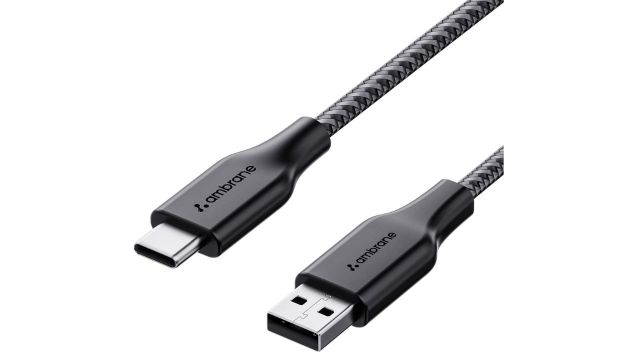
Ambrane’s cable is a middle-ground pick: 1.5 m length, 3A fast charging, and 480 Mbps data transfer. It also highlights Made in India and a 180-day (6-month) warranty. This is the kind of cable that fits most households—long enough for comfort, not so long that it becomes messy.
Pros
- 1.5 m length is a practical everyday sweet spot
- 6-month warranty provides basic assurance for daily use
- Braided build is aimed at durability
Cons
- Stated charging spec is 3A; for some laptop scenarios, buyers may prefer a clearly stated wattage rating in the listing
- USB 2.0 transfer speeds remain the ceiling here as well
Pro-tip
- If a buyer’s main use is laptop charging, it’s safer to choose a cable that clearly states PD wattage support (60W/65W), not just amperage, to avoid confusion.
Frequently Asked Questions
Is a 60W cable enough for most people?
For many phones, tablets, and a large number of USB-C laptops, 60W (20V/3A) is a practical ceiling. If a laptop charger is rated higher than 60W, it may still charge, but it can be slower or capped, depending on how the device negotiates power.
Why do so many “fast charging” cables still say 480 Mbps for data?
Because charging capability and data speed aren’t the same thing. Many durable, affordable cables are designed around USB 2.0 data rates while still supporting higher power delivery for charging, which is fine unless large files are moved often.
What cable length is most useful for daily life?
0.5 m works best for power banks and tidy desks, 1–1.5 m suits most home and car use, and 2–3 m is best for bedsides and rooms with inconvenient sockets. Choosing length based on where charging happens reduces strain on connectors.
Why doesn’t a USB-C to USB-C cable support video output sometimes?
Video output requires specific wiring and support for alternate modes; many charging-focused cables are built only for power and basic data. If a buyer needs monitor support, it’s safer to purchase a cable explicitly labeled for video or USB-C display/Thunderbolt use.