Top headphones under Rs 2,000 to consider: You want bass and battery—sure. But what you really want is a pair that doesn’t creak, crack, or stop charging after a month. Under Rs 2,000, durability is the real flex.
5 headphones under Rs 2,000 worth grabbing on Amazon
These 5 picks on Amazon are the kind you add to cart and actually use hard—built for daily wear, reliable performance, and fewer ‘why did this stop working’ moments.
Over-ear headphones have split into two clear lanes: wired “work tools” built for monitoring and consistency, and wireless “daily drivers” that prioritise convenience, call clarity, and battery life. The best choice usually comes down to where the listening happens. At a desk with an interface or mixer, stable wired output and predictable tuning matter more than features. On commutes or in shared spaces, noise control, quick charging, and a mic that doesn’t collapse in traffic noise become the real differentiators.
Specs can help, but only when they translate into a real scenario. Big drivers and wide frequency claims don’t automatically mean better sound, just as ANC doesn’t guarantee silence if the fit is poor. A more practical approach is to think in friction points: cable length and connector types for wired setups, battery anxiety for wireless pairs, latency for gaming, and whether the microphone system is strong enough for meetings. The five models below cover these use-cases with minimal overlap, which makes the trade-offs easier to see.
hayden HY-HD10 Professional Studio Headphones
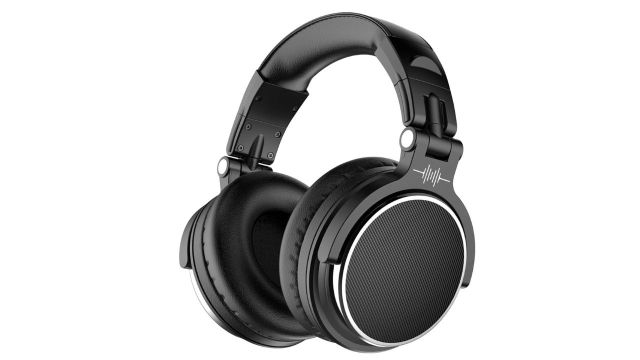
The hayden HY-HD10 is the only fully studio-leaning option in this list, designed for wired monitoring across DJing, mixing, recording, and even gaming. It uses 50mm neodymium drivers and is specified at 32 ohms with 110dB sensitivity, plus it includes two detachable cables: a longer coiled cable with 3.5mm to 6.35mm for pro gear and a shorter straight cable with an inline mic for more casual use. It’s the kind of headphone that fits best when the priority is consistent output and isolation, not switching between devices wirelessly.
Pros
- Versatile wired setup with detachable cables, including a 6.35mm-friendly option for interfaces and mixers
- 32-ohm impedance keeps it broadly usable across laptops and mobile devices without demanding a dedicated amp
- Over-ear design is aimed at isolation for longer sessions
Cons
- It’s wired-first, so it won’t solve commute convenience the way Bluetooth models do
- Inline mic on the short cable is functional, but not the same as dedicated multi-mic call systems
Pro-tip
- For home recording, the coiled cable helps reduce accidental yanks, but it can add weight; the straight cable is often more comfortable for long editing sessions when movement is minimal.
Portronics Muffs M5 Over Ear Hybrid ANC Bluetooth Headphone
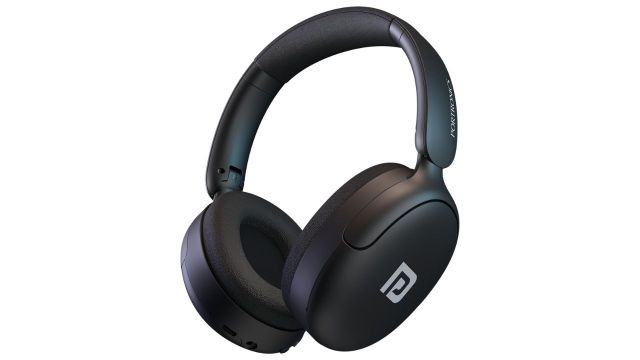
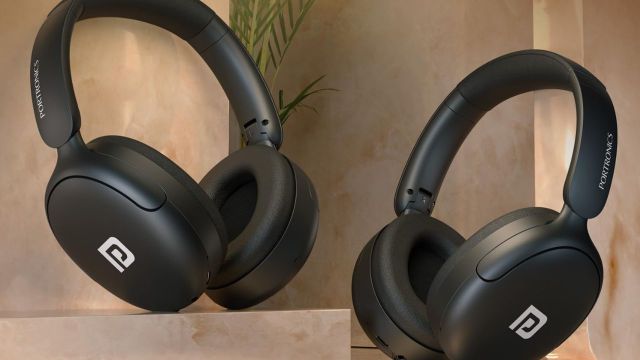
Portronics Muffs M5 sits firmly in the “work + travel” category: hybrid ANC for reducing ambient noise, up to 50 hours of claimed playback, and a quad-mic setup aimed at clearer calls. It also leans into convenience with Type-C fast charging, including a claim of 2 hours of playtime from a 10-minute charge, which is the sort of detail that matters when someone forgets to charge before leaving.
Pros
- Hybrid ANC for commuting, shared offices, and flights
- Quad mics and call focus make it more meeting-friendly than basic wireless pairs
- Strong battery life positioning and quick top-up charging
Cons
- ANC performance still depends heavily on seal and fit; glasses-wearers may notice a drop in effectiveness
- EQ modes and “heavy bass” tuning can be fun, but not always ideal for neutral listening
Pro-tip
- ANC plus long battery is a great combo, but it pays to test comfort early; a slightly uncomfortable clamp becomes a deal-breaker around hour two, not minute five.
Amazon Basics Pro Series ANC Over Ear Wireless Headphones
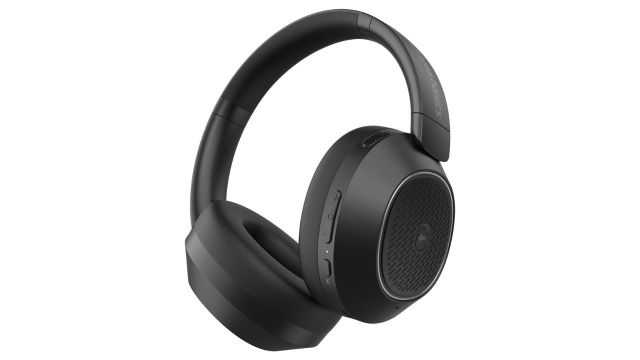
The Amazon Basics Pro Series option targets the same lane as Portronics but with a simpler pitch: hybrid ANC (listed up to 38 dB), Bluetooth 5.3, up to 28 hours of playtime, and 40mm drivers in a foldable design. This one reads like a straightforward “commute + office” headphone for buyers who want a known feature set without chasing a strong brand personality.
Pros
- Hybrid ANC with a stated reduction spec for distraction-heavy environments
- Foldable build improves portability for bags and travel
- Balanced general-purpose feature mix (wireless, ANC, mic)
Cons
- 28-hour battery is fine, but noticeably lower than 50–70 hour claims elsewhere in this list
- The brand’s tuning and mic performance can vary by model; it’s worth prioritising return-friendly purchase channels
Pro-tip
- For office use, foldability matters less than mic reliability; if calls are frequent, testing mic pickup in a noisy room is the fastest way to decide.
Also Read: H&M Midi Skirts That Earn Their Space in Your Wardrobe
GOBOULT Soniq Over Ear Bluetooth Headphones
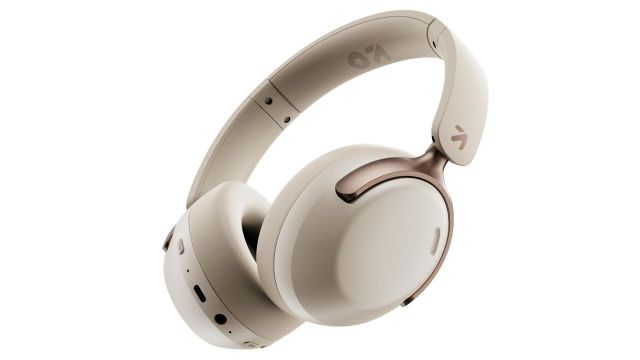
GOBOULT Soniq goes after endurance and modern connectivity: up to 70 hours of claimed playtime, Bluetooth 5.4, multiple EQ modes, and dual device pairing for switching between phone and laptop. It also highlights ENC for calls, which is different from ANC: it’s focused on improving voice clarity rather than cancelling the listener’s environment.
Pros
- Very long playtime positioning for people who hate charging routines
- Dual pairing helps anyone bouncing between work and personal devices
- Newer Bluetooth version is positioned for stable connectivity
Cons
- ENC is about calls, not silence; it won’t replace true ANC on a loud metro
- Buyers who are sensitive to bass should be cautious with “bass boosted” positioning
Pro-tip
- Dual pairing is most valuable for meeting-heavy days; it reduces the small, repeated friction of disconnecting and re-pairing that adds up across a week.
boAt Rockerz 480
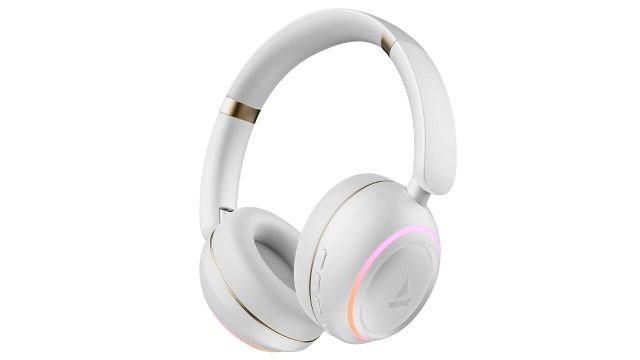
boAt Rockerz 480 is the most lifestyle-driven option here: RGB lighting with multiple modes, a dedicated low-latency BEAST mode (40 ms) for gaming, 60 hours of claimed playback, and ENx tech aimed at improving call clarity in noisy places. It also supports dual pairing and Bluetooth 5.3, so it’s designed for people who want a fun, feature-forward headset that can switch roles across gaming, streaming, and calls.
Pros
- Gaming-friendly low latency mode is a real differentiator for casual competitive play
- Strong battery life claim and dual pairing for daily use
- Call-focused noise reduction positioning via ENx
Cons
- RGB is either a plus or an instant no; it’s visually expressive, not minimal
- Low latency modes can sometimes prioritise responsiveness over audio processing polish
Pro-tip
- If the headset will be used in public, choosing a subtler RGB setting (or turning it off) can make it feel less “gaming gear” and more everyday.
Frequently Asked Questions
Are wired studio headphones actually better than wireless for sound quality?
Wired models tend to offer more consistent output and fewer variables, especially when used with interfaces or mixers. Wireless headphones can sound excellent, but performance depends on codec support, connection stability, and internal processing.
What matters more for calls: ANC or mic features like ENC/ENx?
For the person speaking, mic-focused noise handling (ENC/ENx) often matters more than ANC. ANC mainly improves what the listener hears; call clarity depends on microphone quality and voice processing.
Is “up to 70 hours” battery realistic?
It can be, but battery claims often assume moderate volume and certain feature settings. ANC, high volume, and lighting effects can reduce real-world playback time significantly.
How should someone choose between 28 hours and 50–70 hours of battery?
If charging nightly is already a habit, 28 hours is usually enough. If charging is inconsistent or travel is frequent, a higher battery ceiling reduces the odds of being caught at 10% mid-day.