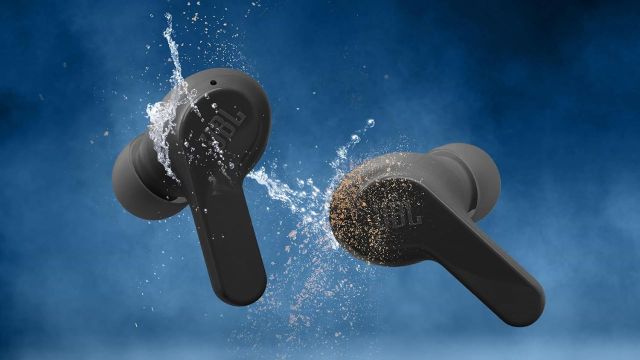
Best JBL earbuds to check out: JBL does “fun sound” in a way that feels instantly familiar—like your playlist got a little louder, bolder, and more alive. If you want earbuds that bring energy to everyday listening, this is the kind of brand that fits right in.
Top 5 JBL earbuds to consider on Amazon
These picks have been curated from Amazon to make your JBL shortlist feel quick and confident. It’s a tight edit for people who want something they’ll genuinely use daily—music, podcasts, and all the in-between moments.
JBL’s true-wireless line-up has started to feel less like a wall of similar products and more like a menu built around priorities. Some models are engineered around silence and adaptability—noise cancelling that changes with the environment, plus ambient modes that keep a commute safer. Others are aimed at the daily basics: secure fit, reliable battery, and a sound signature that makes streaming playlists feel bigger and punchier than the price suggests. The point is not that one pair is universally “best,” but that each one reduces a different kind of friction.
The easiest way to choose between these five is to decide which feature has to work flawlessly. If calls are non-negotiable, microphone count and voice processing matter more than driver size. If travel is frequent, adaptive ANC and case features that reduce phone dependency suddenly feel worth paying for. And if the earbuds will mostly be used at home or in quieter spaces, simpler models with strong battery and a comfortable seal can feel more satisfying than feature-heavy flagships.
JBL Tune Flex 2
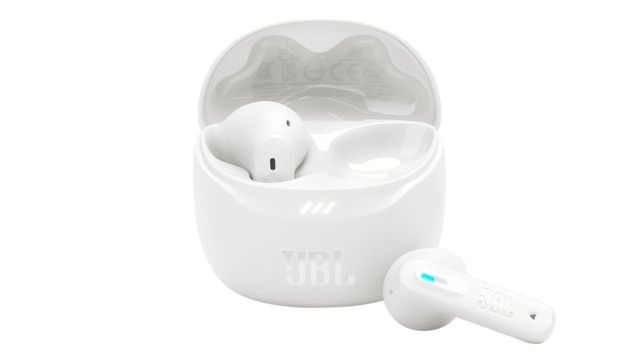
JBL Tune Flex 2 is positioned as an all-rounder with modern comfort features: Adaptive Noise Cancelling, 6 microphones for calls, multipoint connection with fast pairing, and up to 48 hours of total playtime. It also brings JBL Pure Bass Sound with Spatial Sound, which is aimed at making music and video feel wider and more immersive without needing special content. This is the “one pair for most days” choice in the list, especially for people moving between work calls and commuting.
Pros
- Adaptive Noise Cancelling plus Smart Ambient positioning suits changing environments
- 6-mic call system is designed to keep voice clearer outdoors and in windier conditions
- Multipoint connection reduces the hassle of switching between phone and laptop
Cons
- Feature-rich earbuds can take a little setup time to feel “right,” especially spatial and ambient tuning
- Battery claims depend on volume and ANC usage, so the best experience comes from realistic settings
Pro-tip
- Spatial modes are most convincing on video and games; for podcasts, turning spatial off often makes voices feel more natural.
JBL Vibe Beam
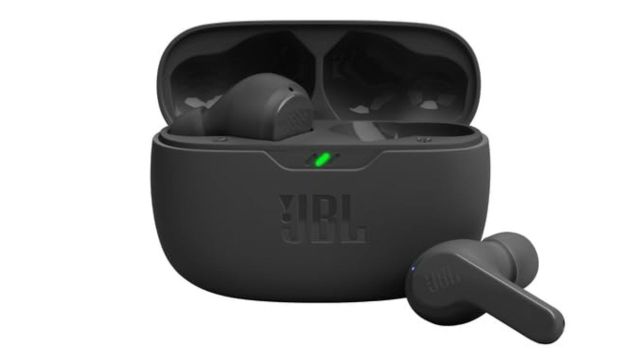
JBL Vibe Beam is the straightforward, value-leaning option: 8mm drivers tuned for JBL Deep Bass Sound, up to 32 hours total battery (8 hours in the buds + 24 in the case), and a speed-charge claim that adds two hours in 10 minutes. It also includes VoiceAware for calls—useful for people who dislike feeling “sealed off” and want to hear some of their own voice while speaking. The earbuds are IP54-rated, while the charging case is listed with IPX2 protection.
Pros
- Clear battery math and a useful speed-charge ratio
- VoiceAware is a small feature that can make calls feel less tiring
- IP54 buds are better suited to daily outdoor use than non-rated pairs
Cons
- No mention of ANC in the core positioning; it’s more of a passive-isolation earbud
- The case’s lower IPX2 rating means it still needs care around water
Pro-tip
- If bass feels too heavy, shifting to a flatter EQ curve in the JBL Headphones app can improve vocal clarity without killing the low end completely.
Also Read: Your Daily Carry Just Got an Upgrade With H&M Shoulder Bags Under Rs 2,000
JBL Tune Beam 2
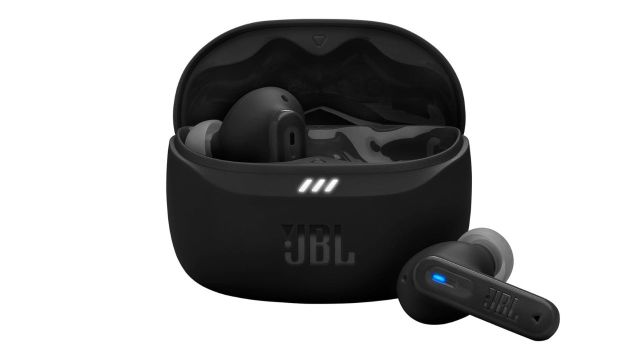
JBL Tune Beam 2 sits in the “spec-complete” middle: 10mm drivers, 6 microphones, Bluetooth 5.3, multipoint, Adaptive Noise Cancelling, and IP54 water resistance. Battery is listed as up to 48 hours total, with separate figures for ANC off (up to 12 hours) and ANC on (up to 10 hours), which is the kind of detail that helps set expectations. It also includes ambient features like Ambient Aware and TalkThru, plus Spatial Sound and Voice Aware support.
Pros
- A well-rounded feature set without jumping to flagship pricing territory
- ANC-on vs ANC-off battery clarity helps buyers plan realistically
- IP54 rating and multipoint make it a practical daily commuter option
Cons
- With many ambient and spatial toggles, it can feel “settings-heavy” at first
- ANC performance varies with fit; in-ear seal still does much of the work
Pro-tip
- For city commuting, a slightly lower ANC level plus Ambient Aware can feel safer than full cancellation while still reducing fatigue.
JBL Live Beam 3
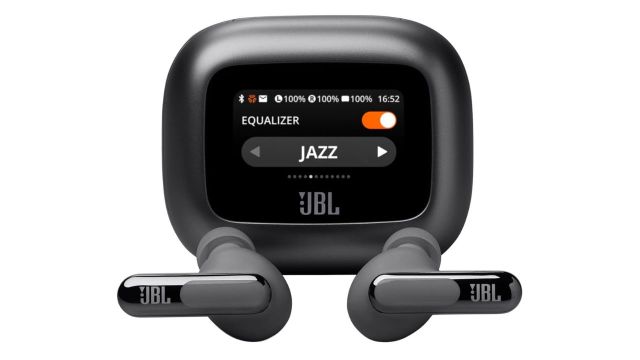
JBL Live Beam 3 is built around control—specifically, control that doesn’t require pulling out a phone. The Smart Charging Case includes a touchscreen display, designed to let users customize and manage key settings even when connected to devices like laptops, TVs, tablets, and phones. On the sound side, it’s positioned with 10mm dynamic drivers, JBL Spatial Sound, and true adaptive noise cancelling with adjustable ambient sound. It also includes personalization tools like Personi-Fi 3.0 and multipoint connectivity.
Pros
- Smart Charging Case touchscreen reduces app dependence in day-to-day use
- Strong mix of adaptive ANC, spatial, and personalization tools for people who like to tune their experience
- Multipoint switching suits work + personal device routines
Cons
- The case display is a premium feature; some users will love it, others will never use it
- More customization can mean more time spent tweaking instead of just listening
Pro-tip
- The case screen is most useful for people who pair earbuds with non-phone devices (work laptops, TVs); that’s where app-free control actually becomes a convenience, not a gimmick.
JBL Tour Pro 3
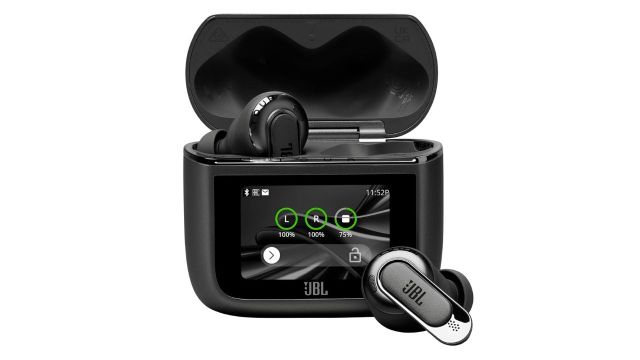
JBL Tour Pro 3 is the flagship “everything on” option: True Adaptive Noise Cancelling 2.0 with customization, a dual-driver hybrid design with LDAC support, and spatial sound with head tracking for a more dynamic sense of movement. The Smart Charging Case is positioned as both a touch-control hub and an audio transmitter, designed to send audio wirelessly to the earbuds from certain sources, including in-flight or gym systems, and it supports Auracast. Battery is listed up to 44 hours total, with a 10-minute speed charge adding about 3 hours.
Pros
- The most advanced audio feature set here (dual drivers, LDAC, head tracking)
- Smart Charging Case functions go beyond convenience by acting as an audio transmitter
- Strong battery framing with a practical quick-charge claim
Cons
- The flagship features make the most sense only if the user will actually use them (LDAC, head tracking, transmitter)
- Advanced ANC can feel intense for some listeners; customization helps, but it’s still a different experience than simple earbuds
Pro-tip
- If the main use is flights or gym TVs, the transmitter-style case is the standout feature; it can solve a real problem that even great earbuds usually can’t.
Frequently Asked Questions
How much does Adaptive Noise Cancelling matter compared to a good fit?
Fit still does the heavy lifting. Adaptive ANC helps most when noise levels change constantly—traffic, cafés, flights—because it adjusts the cancellation in real time instead of leaving the listener to manage modes manually.
Is Spatial Sound worth using every day?
Not always. It can make movies and games feel more immersive, but for podcasts and voice-heavy content, many listeners prefer spatial off for a more direct, natural vocal presentation.
What’s the real benefit of a Smart Charging Case with a screen?
It reduces dependency on a phone app, especially when earbuds are used with laptops, TVs, or tablets. For some users, that’s genuine convenience; for others, it’s a feature they’ll forget exists.
Do quick-charge claims actually hold up in real use?
They’re useful as a safety net, but results can vary with battery age, volume, and settings like ANC. JBL gives clear ratios on models like Vibe Beam (10 minutes for 2 hours) and Tour Pro 3 (10-minute speed charge adding 3 hours), which is the most practical way to interpret fast charging.