
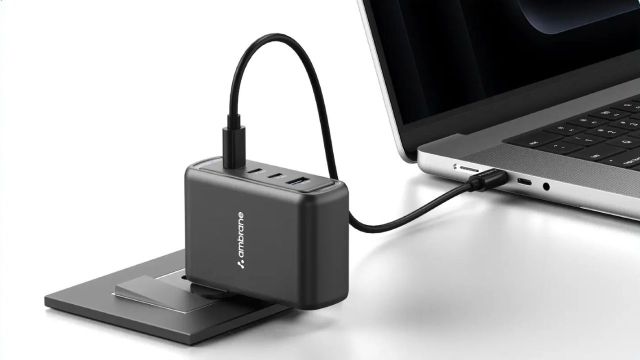
Best GaN chargers to check out: GaN chargers are popular because they can deliver high wattage in a more compact form factor—great when you want one brick for phone, laptop, and accessories without carrying something bulky. Flipkart’s GaN charger listings include multi-port options (like CMF by Nothing GaN chargers) and brand-name picks (like boAt GaN) that are positioned around fast charging and daily reliability.

Flipkart edit: Top 5 highest rated GaN chargers to consider
These picks have been curated from Flipkart GaN charger listings, including multi-port GaN options like CMF by Nothing (65W and 100W) and boAt’s GaN charger line, which show customer ratings and reviews on their product pages. The aim is to help shortlist chargers that feel dependable in real use—stable output, practical port selection, and strong buyer feedback—rather than just chasing the biggest watt number.
These five GaN chargers form a simple ladder: one is built for laptop-class power and multi-device workstations, two sit in the “one charger for phone + accessories” middle, and one stays intentionally minimal for single-device fast charging. The most practical way to choose is to start with the heaviest device in the bag (laptop or no laptop), then decide how many ports are genuinely needed every day.
The high-power hub (for laptop users)
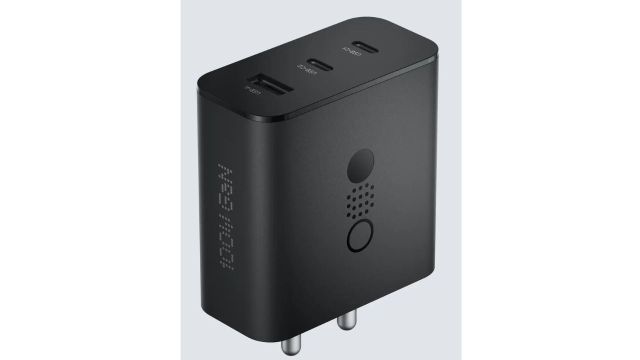
CMF by Nothing 140 W Power GaN 5 A 3 Port Mobile Charger is the “carry one brick” option, with a stated 140W maximum output, PD 3.1 support, and a 3-port layout (2× USB‑C + 1× USB‑A) meant to charge up to three devices at once. It’s also positioned as compact for its class, with dimensions listed as 67 × 65 × 32 mm and a weight of 229 g, and it includes a USB‑C to USB‑C 5A cable in the box. The upside is obvious when travel includes a laptop; the trade-off is that it’s heavier than typical phone-only adapters, so it can feel like overkill for a phone + earbuds routine.
Pro-tip: chargers in the 100W–140W range make the most sense when at least one device supports higher USB‑C PD input; otherwise, much of the capability sits unused.
The multi-port alternative (more ports, slightly lower ceiling)
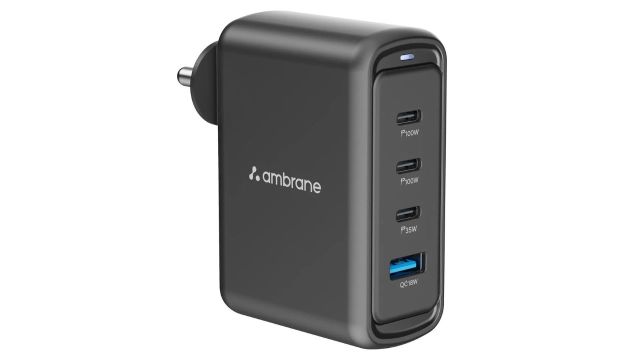
Ambrane 100 W GaN 5 A Wall Charger for Mobile (Charge 100) is positioned as a multi-port desk/travel hub with four total ports (3× Type‑C + 1× USB‑A) and a 100W maximum output. Ambrane’s spec sheet also lists port limits—Type‑C1/C2 up to 100W, Type‑C3 up to 35W, and USB‑A up to 18W—which is helpful for planning what goes where. The compromise versus a 140W PD 3.1 class charger is headroom for higher-power laptops, but the benefit is an extra port and a clear per-port breakdown.
Also Read: Hawkins Pressure Cookers: Quick Festive Cooking Staples on Flipkart
Mid-range: everyday phone + extras
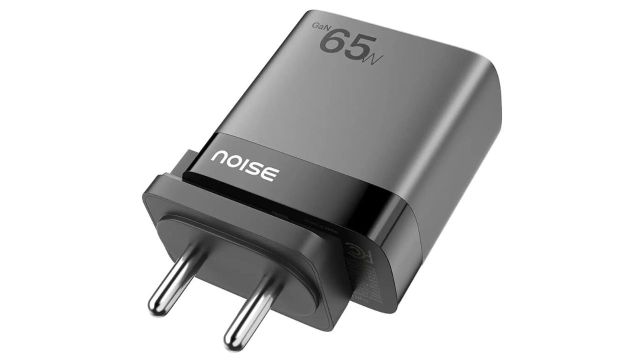
Noise 65 W GaN Wall Charger (Power Series GAN 65W) sits in the more typical “phone + TWS + watch (and sometimes a tablet)” space, with GaN tech, Type‑C and Type‑A outputs, and support for charging up to three devices listed. The main advantage is portability—its weight is listed at 106 g—while still keeping multi-device flexibility. A fair con is that 65W-class chargers can become slower when multiple devices share power at once, especially if a tablet or small laptop is added to the mix.
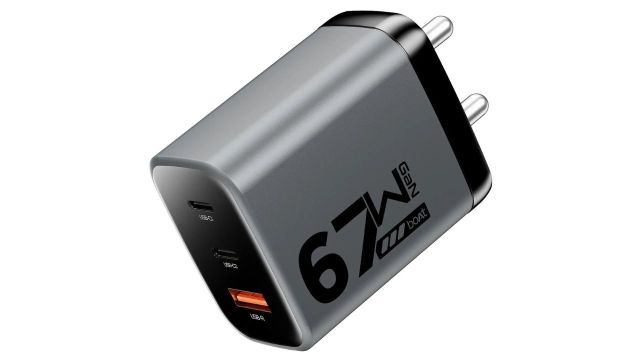
boAt 67 W GaN 3 A Wall Charger for Mobile is in the same weight class of use-case, but its listing calls out protocol support like QC3.0, PPS, and PD, plus universal voltage, which typically helps with device compatibility across brands. It’s also designed for charging up to three devices, but doesn’t include a cable in the box as listed. The trade-off is that multi-device convenience still depends on the right cables and the right port choice, especially if one port is USB‑A and the rest of the setup is USB‑C.
Minimal, single-device focus
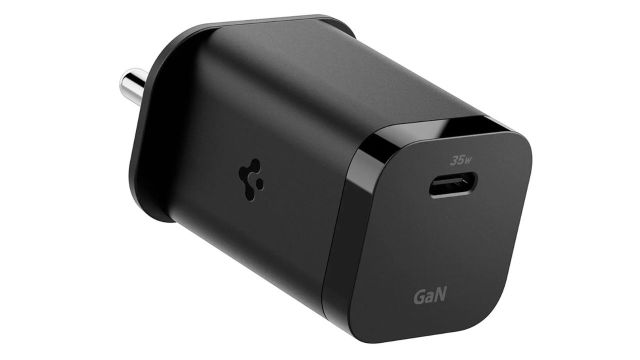
Spigen 35 W GaN Wall Charger for Mobile (PE2213) is the “one phone, done” pick: a single-port USB‑C charger with 35W output, PPS support, and BIS certification, plus a longer 24‑month warranty listed by retail pages. It’s also notably light at 65 g, which suits daily carry when a laptop charger is already in the bag. The limitation is straightforward: it’s not meant for powering multiple devices simultaneously, so it’s better as a personal charger than a shared household adapter.