
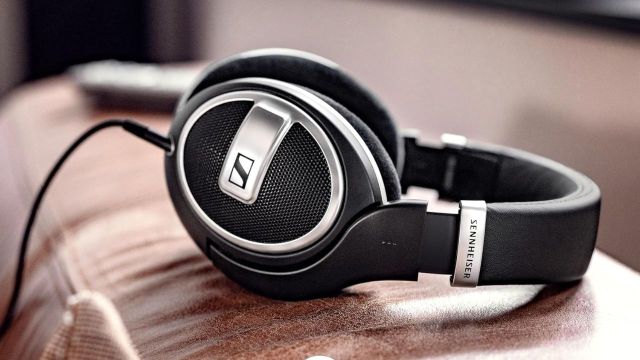
Best Sennheiser headphones to check out: When audio feels “real,” you stop multitasking and start listening—and Sennheiser has a knack for that kind of clarity. If you want sound that feels clean, balanced, and genuinely satisfying over long sessions, this is a brand worth paying attention to.

Top 5 Sennheiser headphones to consider on Amazon
These picks have been curated from Amazon, narrowing Sennheiser’s crowd-favourites into a short list that feels worth your ears’ attention. Think of it as a streamlined starting point—five options that fit different listening moods without turning your decision into homework.
Sennheiser’s range is easiest to understand when it’s framed around two different kinds of listening. The first is private, stationary listening—music, films, and games in a quiet room—where the goal is realism, imaging, and long-session comfort, not isolation. The second is modern, mobile listening—commutes, shared offices, travel—where battery life, noise control, and call clarity matter as much as tonal balance. The brand sits comfortably in both lanes, but the experience changes dramatically depending on whether the earcups are open-back and breathable or sealed with active noise cancelling.
What often trips buyers up is assuming that “wireless” and “premium” automatically equal “better sound.” In practice, an open-back wired headphone can feel more spacious and natural than many closed wireless models, while a great ANC headphone can make a busy day feel calmer even if it’s not the most airy or expansive in presentation. The smartest picks usually come from matching the headphone to the environment: open-back for quiet homes, adaptive ANC for unpredictable noise, and codec support for smoother wireless quality if the phone or laptop can take advantage of it.
Sennheiser HD 599 Special Edition Open‑Back Audiophile Headphones
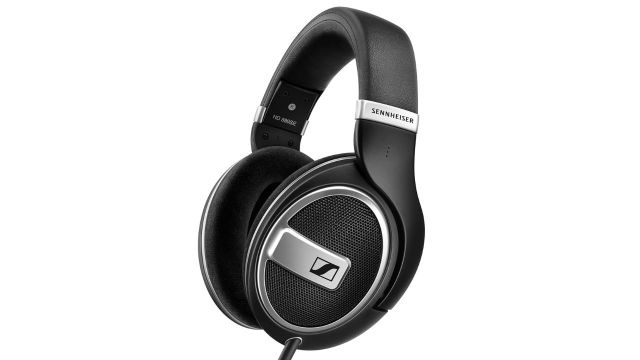
The Sennheiser HD 599 Special Edition is the “sit down and listen” option: open-back, lightweight, and built around comfort details that matter over hours, not minutes. It’s listed at 250 g and uses velour earpads, with a frequency range commonly specified as 12 Hz to 38.5 kHz and an impedance of 50 ohms—easy enough to run from a PC or modest gear, but still rewarding with a decent source. Its E.A.R. (Ergonomic Acoustic Refinement) approach is meant to angle sound toward the ear for better imaging, which is exactly the kind of subtle engineering that shows up in soundstage and placement.
Pros
- Open-back staging that feels expansive for music, films, and gaming positioning
- Comfort-first build: 250 g with velour pads is designed for long sessions
- Sensible impedance for broad compatibility without requiring a powerful amp
Cons
- Open-back leaks sound and lets noise in; it’s not a commute headphone
- No ANC, no mic features, no wireless convenience by design
Pro-tip
- Treat this as a home headphone: quiet room, moderate volume, and a simple desktop DAC/amp if the listener wants a cleaner, more controlled presentation than a laptop jack can provide.
Sennheiser Momentum 4 Wireless Over Ear Headphones
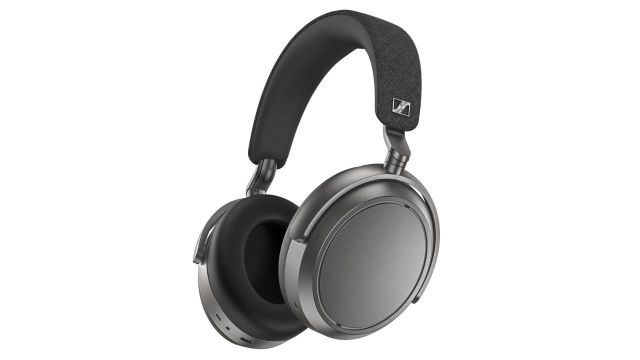
The Sennheiser Momentum 4 Wireless is the most balanced “one headphone for everything” pick in this list. Sennheiser highlights a 42 mm transducer system, adaptive noise cancellation with a transparency mode, and up to 60 hours of playback with fast charging, all managed through the Smart Control app for EQ and personalization. It also puts real emphasis on calls, using four digital beamforming microphones and wind noise suppression, which makes it more than a music-first commuter headset.
Pros
- Long battery life claim (up to 60 hours) reduces charging anxiety
- Adaptive ANC and transparency mode suit mixed environments (home, office, commute)
- Beamforming mic system is built to improve call clarity and reduce wind noise
Cons
- The most portable option only if the buyer is happy with a larger over-ear profile
- ANC and sound personalization add complexity; some users prefer simpler controls
Pro-tip
- For people who take calls on the move, the mic system matters as much as the ANC; this is one of the few models where Sennheiser clearly positions both as priorities.
Sennheiser ACCENTUM Plus Wireless Over Ear Headphones
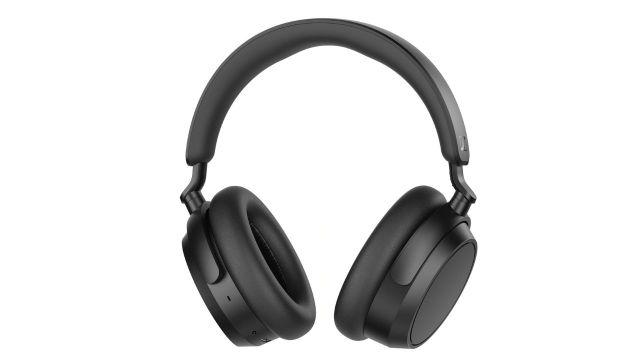
The Sennheiser ACCENTUM Plus Wireless is tuned toward an immersive experience without pushing into flagship pricing territory. Sennheiser positions it with angled 37 mm drivers for soundstage, adaptive hybrid ANC with transparency mode, plus Smart Control app features like EQ, sound modes, and sound personalization, alongside touch controls and multipoint connectivity. It’s the model that makes sense for someone who wants a modern feature set and a spacious presentation, but doesn’t need the Momentum line’s top-end polish.
Pros
- Angled driver design is positioned to create a more immersive sense of space
- Hybrid adaptive ANC and transparency mode for daily flexibility
- Multipoint and app-based tuning for people who switch devices often
Cons
- More “feature dense” than a set-and-forget headphone
- If calls are the main priority, mic performance should be tested early, not assumed from specs alone
Pro-tip
- This is a strong pick for long workdays when the listener wants to dial ANC up and down frequently; the ability to shift between isolation and awareness becomes the real quality-of-life upgrade.
Also Read: Sustainable Stainless Steel Lunch Boxes For Daily Office Meals
Sennheiser HD 350BT Wireless Headphones
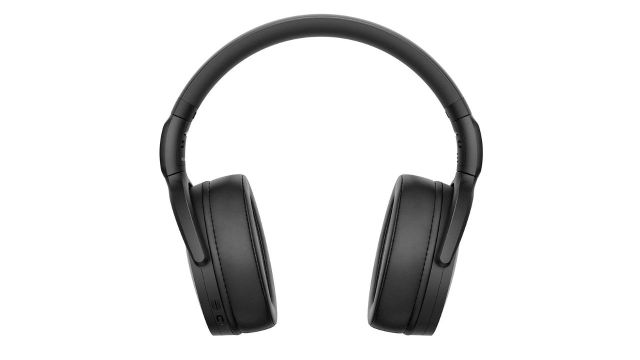
The Sennheiser HD 350BT is the straightforward wireless pick for buyers who care about codec support and app EQ more than ANC. It supports Bluetooth 5.0 and is commonly listed with AAC, aptX, and aptX Low Latency codec support, plus Sennheiser’s Smart Control app for EQ and firmware updates. It’s a practical choice for watching video and casual gaming on compatible devices because aptX Low Latency is specifically aimed at reducing audio delay.
Pros
- Codec support including aptX and aptX Low Latency on compatible devices
- Smart Control app adds EQ and configuration without extra gear
- Stable Bluetooth 5.0 baseline for everyday use
Cons
- No ANC, so it won’t reduce environmental noise the way the Momentum/Accentum lines can
- Codec benefits depend on the phone/laptop supporting them; otherwise it falls back to other codecs
Pro-tip
- If video lip-sync issues are a recurring frustration, choosing a model positioned around low-latency codec support can be more effective than simply buying “louder” headphones.
Sennheiser HDB 630 Hi-Res Wireless Headphones
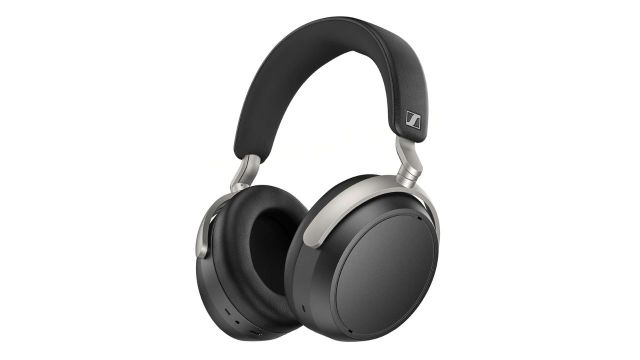
The Sennheiser HDB 630 Hi-Res Wireless is the spec-forward, bundle-heavy option: positioned around hi-res playback up to 24-bit/96 kHz via USB-C or analog input, plus broad Bluetooth codec support including aptX Adaptive and aptX HD. It also includes the BTD 700 USB-C dongle to enable aptX Adaptive on devices that don’t support it natively, which is a thoughtful inclusion for buyers who want higher-quality wireless without gambling on phone compatibility. ANC is positioned as hybrid adaptive with a transparency mode, and battery life is presented as 60 hours with fast charging.
Pros
- Codec-focused wireless approach, plus a dongle to reduce compatibility guesswork
- Hi-res positioning via USB-C or analog input for more “serious listening” options
- Full-kit mentality (dongle, cables, case) suits people who hate piecing accessories together
Cons
- Overkill for buyers who mainly use Spotify and don’t care about codecs or hi-res paths
- The best benefits require matching sources and settings; otherwise it behaves like any good wireless ANC headphone
Pro-tip
- If a buyer doesn’t want to research codec support device-by-device, a bundled dongle can be the simplest route to consistent wireless quality across laptops and tablets.
Frequently Asked Questions
Is open-back worth it for everyday listening, or is it only for audiophiles?
Open-back can be worth it for anyone who listens in a quiet room and values a more spacious, airy presentation. It’s usually a poor fit for commuting or shared spaces because sound leaks and outside noise comes in.
For wireless listening, what matters more: ANC or codec support?
ANC changes the environment; codec support refines the quality of the signal. For flights and noisy commutes, ANC is usually the bigger day-to-day win, while codec support matters most when the listener is sensitive to detail and uses compatible devices.
How much does multipoint actually help?
It’s one of those features that seems minor until it’s used daily. Being able to stay connected to a laptop and phone reduces the friction of switching for calls and meetings.
Do velour earpads make a real difference?
Yes, especially in warmer climates and long sessions. Velour tends to breathe better than many synthetic leathers, which can reduce heat build-up and fatigue over time.