
For years, building software followed a familiar pattern.

Someone had an idea. Then came the search for developers, the meetings to explain what the product should do, the back and forth over timelines, and eventually a first version that almost always needed another round of changes.
It worked, but it wasn’t exactly quick.
For a lot of founders and small businesses, the real obstacle wasn’t coming up with an idea. It was finding the time, money, and technical resources to turn that idea into something people could actually use.
That’s one reason AI-powered development platforms are getting so much attention.
They’re changing where the process begins.
Instead of code, it starts with a conversation
Think about how people naturally describe an app.
“I need customers to book appointments online.”
“I want a dashboard where my team can track sales.”
“I’d like users to sign in, upload documents, and receive email updates.”
Most people can explain what they want. Writing the code behind it is another story.
Emergent leans into that difference.
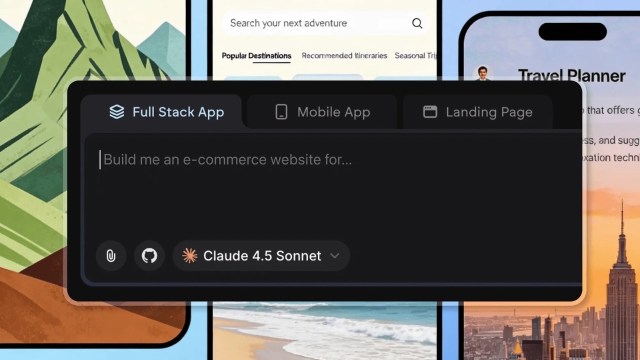
Rather than expecting users to build every component themselves, it lets them describe the application in plain English. From there, it generates the frontend, backend, database, APIs, and the logic that ties everything together.
For someone who’s never written a line of code, that’s a very different starting point.
And for someone who has, it can take care of a lot of the groundwork that usually eats up time.
The first version doesn’t have to be perfect
One thing experienced founders learn fairly quickly is that the first idea is rarely the final one.
Customers ask for features you hadn’t considered. Something that sounded useful on paper turns out to be unnecessary. A workflow that looked simple suddenly feels clunky once people start using it.
That’s normal.
The problem is that making changes has traditionally meant going back into another development cycle.
Emergent approaches updates differently. If you want to add a payment gateway, redesign a page, connect an external service, or introduce new functionality, you simply describe the change.
You don’t need to treat every update like a brand-new project.
That makes experimenting a little less intimidating, especially during the early stages when products are still finding their shape.
It brings the moving pieces together
Building software has never been just about writing code.
There are databases, hosting, authentication, APIs, deployment, email services, payment systems, and a dozen other moving parts depending on the project.
Anyone who’s built an application before knows how quickly that list grows.
Instead of asking users to manage those pieces across different platforms, Emergent brings them into one place.
Whether the goal is a customer portal, an internal business tool, a SaaS product, a booking platform, or a mobile app, the platform generates the full stack instead of leaving users to connect everything themselves.
That alone can remove a surprising amount of complexity.
It’s not only for people who don’t code
AI development tools are often described as something for beginners.
The reality is a little more interesting.
A founder might use Emergent because they don’t have a technical team yet.
A developer might use it because they’d rather spend time refining a product than setting up the same backend for the tenth time.
An agency might use it to get client projects moving faster.
The appeal isn’t limited to one kind of user. It’s about reducing repetitive work, no matter how much technical experience someone has.
GitHub integration also means developers can continue working within workflows they’re already comfortable with and not just starting over somewhere new.
Emergent: Pricing
Emergent offers a free plan that includes 10 monthly credits, access to its core platform, web and mobile app development, one-click LLM integration, and its latest AI models, making it easy to explore the platform without an upfront cost. Users who need more can upgrade to the Standard plan, priced at $20 per month or you can save some money with the $204 annual plan, which adds 100 monthly credits, private project hosting, GitHub integration, the ability to purchase additional credits, and task forking.
For power users, the Pro plan costs $200 per month or $2,004 annually and includes a 1 million-token context window, high-performance computing, custom AI agents, advanced reasoning capabilities, 750 monthly credits, and priority customer support.
Sometimes speed changes more than the timeline
People often talk about building faster as if it’s only about saving time.
In practice, it changes how people work.
When you can see an idea take shape within hours instead of months, you’re more likely to ask for feedback early. You’re more willing to try something different if the first approach doesn’t land. Small improvements happen sooner because they’re no longer tied to long development cycles.
That kind of flexibility is difficult to measure, but it’s often what separates products that keep improving from those that never make it past the planning stage.
Emergent isn’t trying to replace good ideas or thoughtful product design.
What it does is make the path from idea to working software much shorter.
And for founders, businesses, and even experienced developers, that might be the part that matters most.
Also Read: Weekend Exclusive: H&M Denim Essentials for Men Now Available at 15% Off