For years, watching something on a phone was often considered the second-best option.
If a film looked spectacular, people preferred a television. If a new web series was highly anticipated, many waited until they got home to watch it on a larger screen. Phones were convenient, but they weren’t where anyone expected to have the best entertainment experience.
That perception has started to change, and not because phone screens have become bigger or internet speeds have improved.
The content itself has evolved.
Some forms of entertainment are now being created with mobile viewing in mind from the very beginning. Instead of adapting a long-format production for a smaller screen, creators are thinking about how people naturally interact with their phones. The pacing is different, the framing is different and, perhaps most importantly, the viewing experience feels native to the device rather than adjusted for it.
That’s where Bullet stands out.
The platform isn’t taking traditional television and shrinking it to fit a mobile display. Its microdramas are designed for the way people actually use their phones. Episodes move quickly without feeling rushed, conversations are purposeful, and every scene contributes to the progression of the narrative. The format feels intentional rather than abbreviated.
That distinction is easy to overlook, but it has a noticeable effect on the viewing experience.
When content is created specifically for mobile, it doesn’t constantly remind viewers that they’re missing out by not watching on a bigger screen. Instead, the phone becomes the most natural place to experience it. Watching while travelling, relaxing at home or waiting for a friend doesn’t feel like a compromise because the format was never built around the assumption that viewers would be sitting in front of a television.
Bullet has also kept the experience inside the app relatively straightforward. Rather than overwhelming viewers with endless menus, it allows them to browse by language and genre, making it easier to find something that suits their preferences. Since the platform offers dramas across several Indian languages, there’s also a sense of variety without making discovery feel complicated.
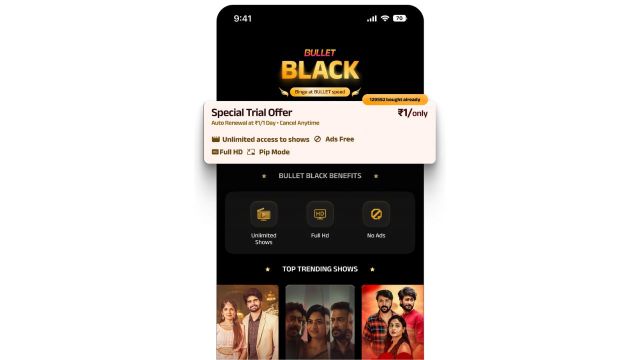
For someone who’s never explored microdramas before, the ₹1 day pass provides an easy introduction. Instead of asking users to commit immediately, it lets them spend some time with the platform and understand what makes the format different before deciding whether they’d like to continue.
Perhaps the most interesting thing about Bullet is that it doesn’t ask viewers to rethink how they use their phones. It recognises that the smartphone has already become the first screen for millions of people, particularly when it comes to everyday entertainment. Rather than resisting that reality, it embraces it and builds around it.
The conversation around streaming often revolves around bigger budgets, larger libraries or blockbuster releases. Those things will always have their place.
But sometimes innovation isn’t about making entertainment bigger. Sometimes it’s about creating an experience that feels completely at home on the device where people already spend much of their time.
That’s the space Bullet has chosen to occupy, and it’s a reminder that mobile-first entertainment doesn’t have to feel like a smaller version of something else. It can be a format with its own identity, its own strengths and its own way of keeping viewers engaged.
Also Read: Catch the Light With These Liquid Highlighters on Tira Beauty