Indian entertainment has never really been one thing.
A story set in Mumbai can feel completely different from one set in a small town in Maharashtra. The humour changes, family dynamics change, even the way characters speak to one another can tell you something about where they come from. For a country with so many languages and cultures, that variety has always been part of the entertainment experience.
What is changing is how easily audiences can move between these different worlds.
The growth of digital platforms has made it much simpler for viewers to discover content outside their usual language preferences. A person who normally watches Hindi entertainment might come across a Tamil or Bengali drama because the premise looks interesting, while someone who grew up watching regional television may now have access to Hindi content without having to switch between different services.
Microdramas fit naturally into this wider change.
Their shorter format makes experimentation feel uncomplicated, but the bigger attraction is often the setting and the characters. A familiar relationship can feel quite different when it is placed within another cultural environment, because the way people communicate, celebrate, argue and deal with family expectations changes along with it.
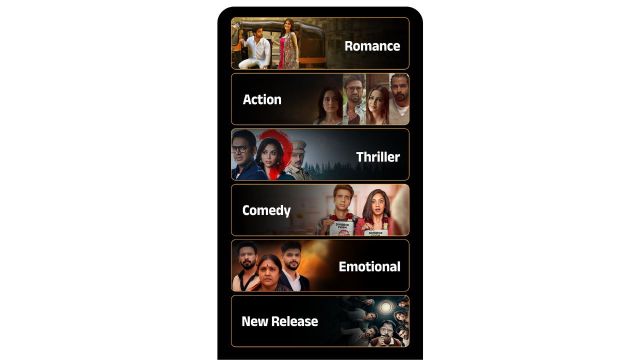
Bullet brings several Indian languages into the same microdrama catalogue, giving the format a distinctly regional character rather than treating Indian entertainment as a single category.
That becomes noticeable even from the titles. Auto Raja (Hindi) has a very different flavour from Saambu Mavaney, while Shahad and The Red Soil Curse suggest completely different kinds of narratives. The names alone don’t tell the whole story, but they give a sense of how varied the catalogue can be.
This variety matters because regional content is no longer something audiences necessarily discover only because it happens to be available in their first language.
The premise can come first.
If the plot sounds interesting, the language becomes less intimidating, particularly when viewers are already accustomed to subtitles, dubbed content and productions from different parts of the country. The success of regional films and series over the past few years has made this kind of cross-cultural viewing much more ordinary than it once was.
There is also something valuable about keeping the cultural details intact.
A story doesn’t become more universal by removing everything that makes its setting distinctive. In many cases, the opposite is true. The food, expressions, family relationships, festivals and everyday surroundings give characters a sense of place, while the emotions at the centre of the narrative remain easy to understand regardless of language.
That balance is particularly useful for microdramas because the format depends heavily on recognisable situations. A relationship, a family disagreement, a secret or an unexpected change in someone’s circumstances can be understood quickly, while the cultural details give the situation its personality.
Bullet’s multilingual approach creates room for both sides of that equation. Someone can stay within familiar Hindi content or explore dramas from another language without having to leave the platform altogether.
And that may be one of the more interesting developments in Indian digital entertainment.
Regional storytelling is gradually becoming less about being placed in a separate corner of the market. It is becoming part of the larger entertainment conversation, where a good premise can travel well beyond the language in which it was originally made.
Microdramas are simply another format through which that exchange is happening.
The episodes may be short, but the worlds inside them don’t have to be.
Also Read: From Hidden Fortunes to Secret Identities: The Drama of Unexpected Reveals on Bullet