
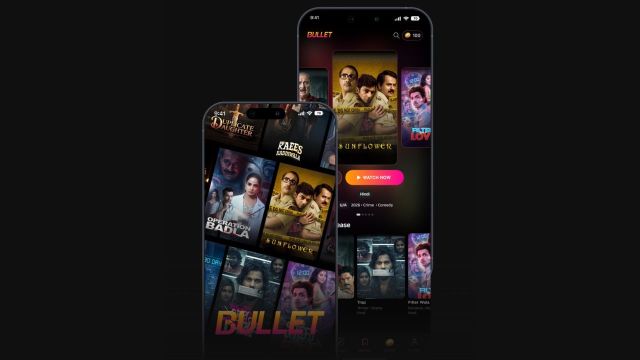
A story does not always need a grand cultural backdrop to feel distinctly Indian. Sometimes it is the way a family speaks to each other, the kind of job a character has, the food sitting on a table, or the strange amount of importance everyone gives to one particular relative.
Those details can do more work than a long explanation ever could.
That is particularly useful in microdramas, where there is not much room for lengthy introductions. Bullet’s stories often drop viewers into familiar situations quickly, relying on details that already make sense to the audience. You may not get a ten-minute explanation of a character’s background, but you can usually figure out quite a bit from the world around them.
Familiar places, familiar problems
Indian drama has never needed palaces and expensive sets to create conflict. A kitchen can do it. So can a roadside stall, an office, a rented room or a family gathering where somebody says the wrong thing at exactly the wrong moment.
That everyday quality gives stories such as Auto Raja and Ameer Golgappewaali an immediate sense of place. The characters are not floating around in some generic television world. Their work, surroundings and circumstances tell you something about them before the plot gets going.
It also makes the more dramatic parts easier to accept. When an extraordinary event happens in a recognisable setting, there is a strange familiarity to it. You might not believe that the situation would actually happen to you, but you understand the world in which it is happening.
Food is rarely just food
Indian stories have a particularly useful relationship with food. A meal can be a family occasion, a livelihood, a source of pride or even the setting for an argument.
That makes food an unexpectedly effective storytelling shortcut.
A character selling food tells you something about their circumstances. A family sitting down to eat tells you something about their relationships. Someone refusing a meal can suddenly become meaningful if there is already tension in the room.
The Chef’s Final Warning naturally brings work and food into the same space, while Ameer Golgappewaali uses something as recognisable as street food as part of its identity. These details give a story texture without demanding much explanation.
Family conversations carry a lot of information
You can learn an extraordinary amount about an Indian family simply by listening to the way its members talk.
Who gets interrupted? Who is allowed to make decisions? Which relative knows everyone’s business? Who is trying to keep the peace? Who has arrived with an opinion nobody asked for?
Microdramas can turn those familiar dynamics into instant context. A few exchanges can establish years of tension between characters without needing a long flashback or a detailed backstory.
That is where titles such as OMG: Mera Baap Toh Bigshot Nikla can fit naturally into the larger appeal of Bullet’s catalogue. Family relationships are already complicated before the unexpected revelation arrives. The revelation simply gives everyone another reason to react.
Regional flavour does not have to be explained
There is also something to be said for letting cultural details exist without constantly pointing them out.
People have different ways of speaking, different rhythms in conversation and different assumptions about family, work and relationships. When those things are allowed to remain part of the story instead of being explained to the audience, the result tends to feel more natural.
Bullet’s availability across Hindi, Marathi, Bengali, Tamil, Telugu, Kannada and Malayalam gives that idea plenty of room. The stories can be different in language and setting while still leaning on situations that feel recognisable to Indian viewers.
It is the ordinary stuff that makes the drama work
Big twists get attention, but small details are often what make a story believable enough for the twist to matter.
A character who has been introduced through their job, family, neighbourhood or everyday routine feels like someone who exists beyond the plot. Once that groundwork is there, even an unexpected turn—a hidden identity, a sudden change in fortune or a family secret—has something solid to disrupt.
That balance is useful for microdramas. The stories can be exaggerated without feeling completely disconnected from everyday life.
And maybe that is the charm of the format. Bullet does not have to make every story feel grand from the first frame. Sometimes it only needs to make the world feel familiar, then let the drama take over.