
We’ve all had that trip where we spent more time refreshing a weather app than actually seeing the sights. Maybe it was a “bargain” beach holiday that landed you in a monsoon, or maybe a city break where a record-breaking heatwave may have turned the streets into a furnace.
Weather is the ultimate travel wildcard.
However, in 2026, we have tools that do more than just show us a five-day forecast. Skyscanner has evolved into a strategic platform that can help you align your flights with the best possible climate windows. Here is how to use its data to stop gambling with your annual leave.
Let the Climate Lead with “Everywhere”
Most of us pick a city first and hope for the best with the weather later. To truly travel smart, you have to flip that logic.
The “Everywhere” search tool is effectively your best climate filter. Instead of forcing a trip to a rainy region because you found a cheap ticket, search “Everywhere” for your specific dates. You might find that for the same price, you could head to Southern Europe or Northern Africa where the dry season is in full swing. This shifts the focus from “Where is it cheap?” to “Where is it beautiful and affordable right now?”
Navigating the “Cheapest Destination Planner”
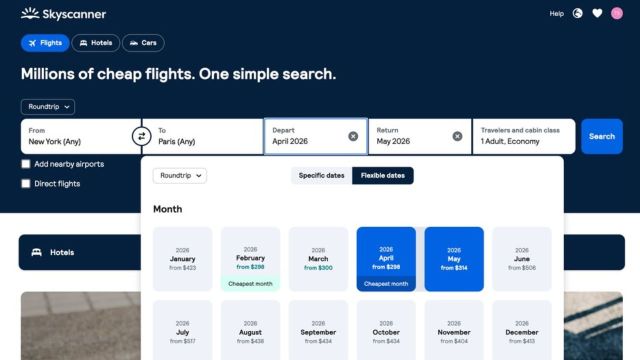
Skyscanner’s newest tool for 2026, the Cheapest Destination Planner, helps you spot value, but you have to read between the lines. If you see a massive price dip for a tropical coast in late summer, it is often a red flag for cyclone season.
The real trick is using the planner to identify “shoulder seasons”—those sweet spots in late spring or early autumn. The data helps you find windows where prices are dropping, but the weather is still holding steady. It is the difference between an overcrowded, sweltering August in Rome and a perfect, breezy May.
Protecting Your Itinerary from Disruptions
When the weather does turn—and eventually, it will—your booking strategy is your best defense. Extreme weather doesn’t just ruin the view; it grounds flights.
- Avoid the Connection Trap: During winter or monsoon months, a cheap layover in a hub prone to blizzards or fog can cost you days. Use the “Direct Flights Only” filter to minimize the variables that could prove to be a problem for you.
- Prioritize the “Flex” Factor: Climate patterns are becoming harder to predict. The “Flexible Ticket” indicator on Skyscanner is no longer a luxury but is a necessity. Having the ability to shift your travel dates by 48 hours because a major storm system is rolling in is the ultimate insurance policy.
The Shift to Conversational Planning
By mid-2026, travel search has become far more intuitive. Instead of just clicking through menus, you can now use conversational tools to ask highly specific, weather-contingent questions. Queries like, “Find me a dry, sunny destination under six hours away for February,” allow the system to cross-reference live pricing with historical rain charts, giving you a curated list that fits your comfort zone.
The Bottom Line
At the end of the day, travel will always involve a bit of a roll of the dice. But by using the flexibility of the “Everywhere” tool and the new Destination Planner, you can play the odds more effectively. The goal isn’t just to reach your destination—it’s to arrive when the world is actually ready for you.
Also Read: Pet Leashes That Offer Control Without Causing Pain