Every few months, someone declares that people’s attention spans have become impossibly short.
It’s an easy explanation because it seems to fit everything. Videos are shorter than they used to be. Social feeds move quickly. New forms of entertainment keep appearing. So the conclusion is obvious, or at least it sounds obvious: nobody has the patience anymore.
Except that doesn’t really match what people actually do.
Someone who claims they can’t sit through a forty-minute episode will happily spend an entire Sunday watching cricket. Another person who says long shows feel exhausting somehow finishes a crime thriller over the weekend because they couldn’t stop watching. Even outside entertainment, people devote hours to hobbies, podcasts, gaming or reading when something genuinely interests them.
That makes the “attention span” argument feel a little incomplete.
Maybe the bigger change is that people have become less forgiving.
Streaming has given audiences an enormous amount of choice. If something isn’t connecting, there isn’t much reason to wait around hoping it improves because there are dozens of other options sitting a few taps away. Years ago, viewers were more likely to stick with a programme simply because there wasn’t much else on. That habit has quietly disappeared.
Nobody owes a show three episodes anymore.
That’s where microdramas have arrived at an interesting moment.
They don’t spend much time asking viewers to be patient. The conflict appears early, the characters reveal enough of themselves to make you curious, and before you realise it, another episode has started. It isn’t about rushing through the narrative. It’s simply about recognising that first impressions matter more than they once did.
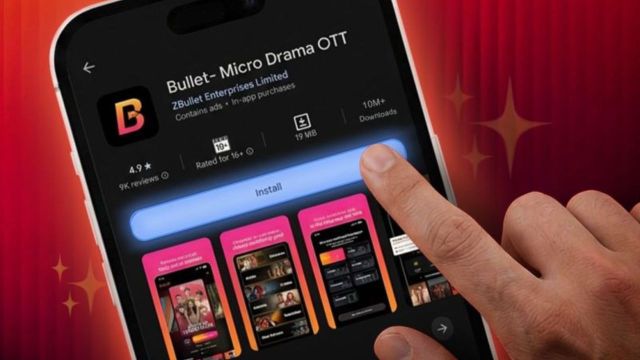
Bullet seems to have been built around that idea.
The platform doesn’t expect viewers to reorganise their day before pressing play. Whether someone has ten spare minutes or half an hour, the format fits naturally into whatever free time already exists. That probably explains why it feels different from opening a traditional streaming service with the intention of “finding something to watch.” There is much less hesitation because getting started doesn’t feel like a commitment.
The practical details help as well. Being able to browse by language or genre sounds fairly ordinary until you remember how much time people spend scrolling through enormous catalogues on other platforms. Sometimes making a decision easier is just as valuable as adding more options.
Even the ₹1 one-day trial follows the same line of thinking. It doesn’t really ask viewers to believe the marketing or rely on someone else’s recommendation. It simply gives them enough room to decide for themselves whether the format suits the way they like to watch.
Perhaps that’s why conversations about shrinking attention spans never quite feel convincing.
People haven’t become incapable of concentrating. They’ve simply become more honest about what deserves their time.
If something manages to draw them in, they’ll stay longer than they intended. If it doesn’t, they’ll leave without feeling guilty about it.
That’s probably not a sign that audiences have changed beyond recognition.
It’s just a reminder that good entertainment has always had to earn its audience. The difference now is that it has to do so much sooner.
Also Read: Lip Stains That Stay With You Long After Coffee Breaks on Tira Beauty