
It’s surprisingly easy to become a spectator in the world of investing.

Business news is available around the clock. Market updates appear on social media within minutes. Conversations about stocks happen in offices, cafés, and family gatherings. Even people who have never invested a single rupee often have an opinion about whether the market is expensive or whether a particular company is worth watching.
In other words, investing has become part of everyday conversation.
Participating in it, however, is another matter.
There is a noticeable gap between people who regularly follow the markets and those who actually invest. Curiosity is rarely the problem. The hesitation usually begins when that curiosity needs to turn into action.
For many first-time investors, the stock market still feels like a place where everyone else knows more than they do. It’s easy to assume that experienced investors possess information that beginners simply don’t have.
The reality is often much less dramatic.
Most investors started with the same questions. They simply reached a point where they stopped waiting to have every answer before opening their first account.
Familiarity Doesn’t Always Lead to Action
Human beings are remarkably good at convincing themselves that they are making progress.
Reading about investing certainly feels productive. Watching market analysis videos does too. Even checking stock prices every day creates the impression that someone is becoming more involved with investing.
To some extent, they are.
The problem is that knowledge and participation don’t always move at the same pace.
Someone can follow the stock market for years without ever making their first investment. Meanwhile, another person with far less theoretical knowledge may quietly begin building a portfolio and gradually become more confident simply because they are learning through experience.
There isn’t a rule that says one approach is better than the other.
But they lead to very different outcomes.
Investing No Longer Looks the Way It Once Did
The image many people still carry of investing belongs to another era.
It involves stacks of paperwork, complicated procedures, unfamiliar terminology, and systems that appear to have been designed only for seasoned traders.
Much of that has changed.
Digital platforms have reshaped the experience in ways that are easy to overlook because the change happened gradually rather than overnight. Opening a demat account, researching companies, exploring mutual funds, or reviewing a portfolio can now be done from a phone in the same way people manage banking, shopping, or travel bookings.
The mechanics have become simpler.
What hasn’t changed is the belief that investing itself must still be complicated.
Groww Reflects How Investing Is Evolving
That changing perception is one reason platforms like Groww have attracted so many first-time investors.
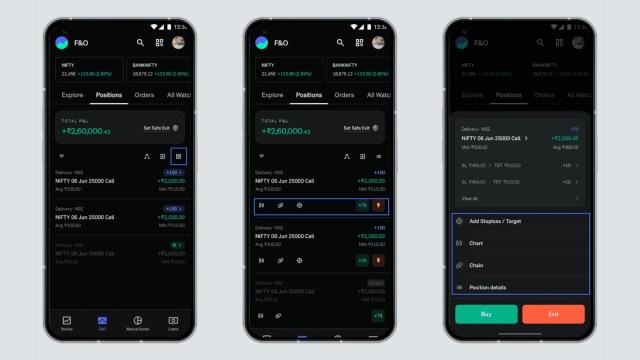
The platform doesn’t attempt to turn investing into a game or promise that financial markets are easy to predict. Instead, it focuses on removing practical obstacles that mostly discourage people from beginning. Users can open a demat account digitally, invest in stocks, mutual funds, and also ETFs, all while keeping track of their investments via a single application.
Bringing these services together might seem like a small improvement, but then it changes the overall experience. Rather than spending time learning multiple systems, investors can actually focus on understanding different investment options and also how they fit into their financial goals.
For many users, that simplicity becomes particularly valuable during the early stages of their investing journey. It encourages exploration without making the process feel overwhelming, which is often exactly what beginners are looking for.
There Will Always Be Another Reason to Wait
If someone looks for reasons not to invest, they won’t have to search very hard.
Markets may appear expensive.
Economic growth may slow.
Global events may create uncertainty.
Interest rates may change.
All of those concerns are valid.
The challenge is that they rarely disappear altogether.
Every generation of investors has dealt with its own version of uncertainty, and every generation has believed the next few months might offer more clarity than the present.
Sometimes they do.
Quite often, they don’t.
The Difference Is Usually Smaller Than It Appears
When people compare themselves with experienced investors, they often imagine a significant gap in knowledge.
In reality, the gap is usually smaller than it seems.
Experienced investors still read company reports. They still change their minds. They still encounter investments that don’t perform as expected.
The main difference is that they have become comfortable making decisions without expecting complete certainty.
That confidence wasn’t something they possessed before they started.
It developed because they started.
Platforms like Groww have helped make that first step far less complicated than it used to be. The responsibility of investing wisely will always rest with the individual, but opening the door to investing no longer requires navigating the complexities that once discouraged so many beginners.
The market will continue to change, opinions will continue to differ, and headlines will continue to influence sentiment.
The opportunity to begin, however, doesn’t depend on waiting until every question has an answer.
Disclaimer: Investments in securities markets are subject to market risks. Read all related documents carefully before investing.
Also Read: Chiffon Maxi Dresses for Women on Myntra That Look Like They Were Designed by the Breeze Itself