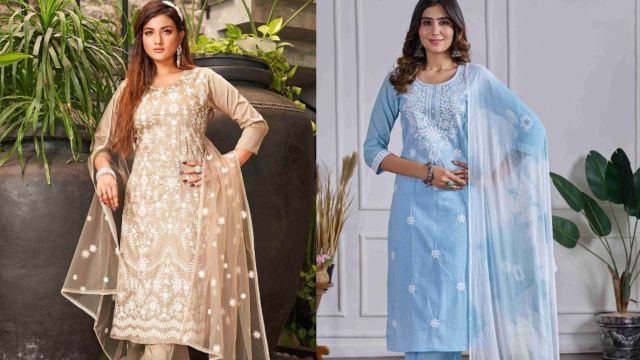
Top chikankari kurta sets to consider: The best “adapts everywhere” sets are the ones that don’t feel precious—clean embroidery placement, a comfortable waistband, and a kurta length that works with flats and heels. When the base set is simple, you can change the mood fast: daytime with minimal jewellery, evening with statement earrings and a dressier bag.
5 chikankari kurta sets worth considering for effortless styling switches
This list focuses on styling flexibility: sets that look complete without a dupatta for the day, but instantly feel occasion-ready when you add one. Think shades for maximum rewear, one pastel for softer daytime photos, and one deeper colour for evening plans.
Chikankari sets have moved from “occasionwear by default” to something closer to smart daily dressing, largely because fabric choices and embroidery placement now do more of the styling work. When the silhouette is straight and familiar, the difference comes down to how the textile behaves in heat, how visible the threadwork is at a distance, and whether the dupatta adds structure or softness. In practical terms, cotton reads clean and breathable, while blended or lustrous weaves lean dressier and photograph with more dimension.
Care is the other quiet divider. Chikankari embroidery is delicate by nature, and most longevity comes from avoiding harsh agitation, wringing, and direct sun-drying; even when a garment is labeled “machine weave,” the embroidery still benefits from gentler handling. That’s why sets that allow hand washing can feel easier for repeat wear, while dry-clean-only pieces are often better treated as rotation outfits rather than every-week staples.
One silhouette, five personalities
DRUPH & CO Paisley Embroidered Chikankari Pure Cotton Kurta With Trousers & Dupatta
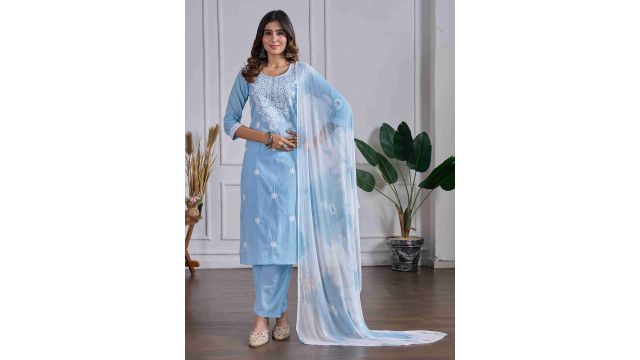
This is the most straightforward “wear-and-repeat” option on paper: pure cotton, knee length, straight hem, and an elasticated trouser waistband that usually suits long days and travel. The paisley embroidery tends to read traditional without looking busy, especially with a blue-and-white palette, and the dyed dupatta with taping border keeps the finish neat.
Pros: Pure cotton can feel breathable and predictable in humid weather; hand-wash care makes it easier to keep in regular rotation if handled gently.
Cons: Lighter cotton sets can crease quickly, and dyed dupattas may need careful, separate washing early on to avoid colour transfer.
Pro-tip: After hand washing, dry flat in shade to reduce stretching at embroidered areas, then iron on the reverse to protect threads.
KALINI Floral Embroidered Pure Cotton Chikankari Straight Kurta With Trousers And Dupatta
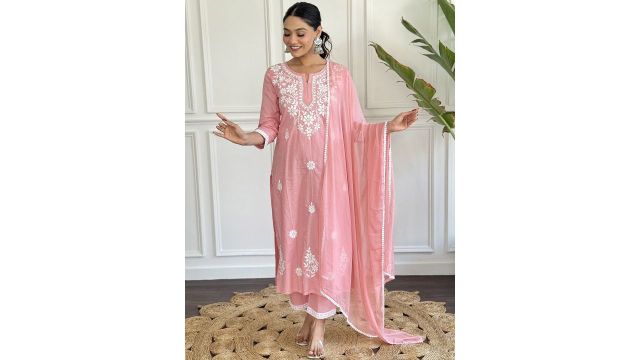
KALINI’s set leans more “statement daytime” because the floral embroidery is described with larger pattern coverage, and the trousers are embroidered as well. The notch neck can visually open up the neckline compared with a plain round neck, which often makes the set feel slightly sharper for workwear or lunch plans.
Pros: Embroidered trousers can make the full set look intentional even with minimal jewellery.
Cons: Dry-clean care adds friction for frequent wear, and heavier embroidery coverage can snag more easily in real-world use (bags, watch straps, rough seating).
Pro-tip: If the aim is versatility, keep the dupatta simple and let the embroidered trousers do the styling; it reduces visual clutter while still looking complete.
Also Read: Orders People Place When Discounts Decide the Meal
HERE&NOW Women Ethnic Motifs Embroidered Regular Chikankari Kurta with Trousers & Dupatta
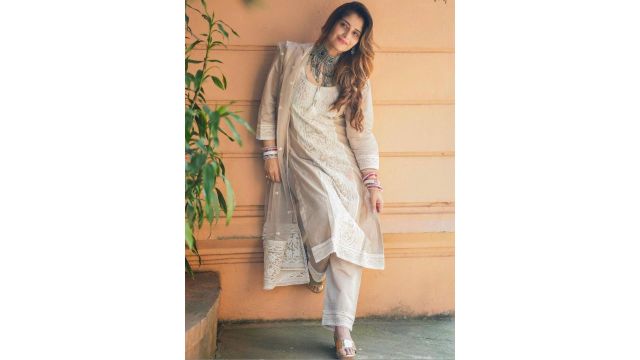
This one changes the equation with materials: a poly chanderi kurta-and-pant base and an organza dupatta. Chanderi is often chosen for its lightweight feel and subtle sheen, and organza tends to hold shape rather than melt into the outfit—so the overall look usually reads crisper and more occasion-ready than cotton-on-cotton sets.
Pros: The fabric mix can look more polished under indoor lighting; an organza dupatta often adds structure and a dressed-up edge.
Cons: Dry-clean-only care plus sheerer fabrics can feel higher-maintenance; this is less forgiving for everyday spills and repeated home washing.
Pro-tip: Treat the organza dupatta as the “styling lever”—pin it once at the shoulder and once at the waist to keep the shape controlled through the day.
Tikhi Imli Floral Embroidered Chikankari Pure Cotton Kurta with Trousers & Dupatta
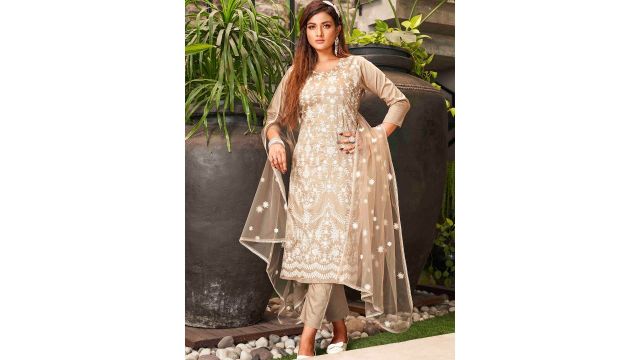
Tikhi Imli keeps the kurta-and-trouser base in pure cotton but pairs it with a net dupatta, which shifts the vibe toward light festive. Net is typically more fluid and layering-friendly than organza, and it can carry embroidery well while still feeling airy.
Pros: Cotton base supports comfort; net dupattas can be easier to drape in a relaxed, “soft frame” way around the shoulders.
Cons: Net can snag on rings, bangles, and textured handbags; dry-clean care means it may be better as a planned-outing set than a spontaneous one.
Pro-tip: Store the net dupatta flat or loosely rolled to reduce creases and accidental pulls at the embroidery.
Indo Era Women Ethnic Motifs Embroidered Regular Chikankari Pure Cotton Kurta with Trousers & With Dupatta
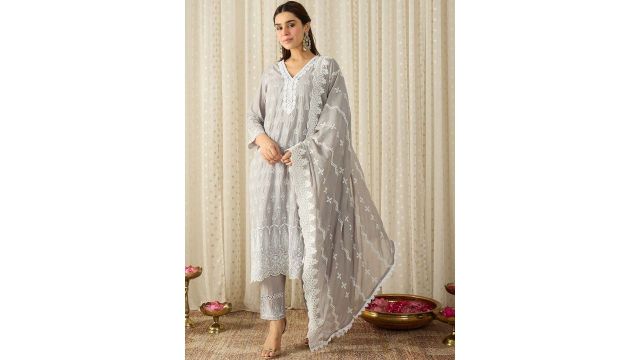
Indo Era adds two details that matter in daily wear: a V-neck and two pockets. The embroidered trousers and yoke/border placement also suggest the design is meant to look framed and finished, rather than scattered, which can photograph well in grey.
Pros: Pockets increase real utility; a V-neck can balance a straight silhouette and suit layered chains or a light stole.
Cons: Like other embroidered-bottom sets, it may feel less “throw-on” than solid trousers, and dry-clean care raises the effort barrier for frequent use.
Pro-tip: If the set is worn for long hours, choose flat sandals with a slightly structured upper; it matches the sharper neckline and keeps the look cohesive without adding fuss.
Frequently Asked Questions
How can someone pick between cotton and chanderi for a chikankari set?
Cotton is usually the safer choice for heat, repeated wear, and easy familiarity, while chanderi is often selected for its lightness and subtle sheen when a more polished look is needed.
Is hand washing actually better for chikankari than machine washing?
Hand washing is generally gentler because it reduces agitation, scrubbing, and wringing—common causes of thread stress and distortion in embroidered areas.
How should embroidered dupattas like net or organza be handled day-to-day?
Net is soft and layer-friendly, while organza is crisper and holds shape; both can snag, so pinning and careful storage make a noticeable difference.
What’s the easiest way to keep chikankari looking fresh between wears?
Air the set in shade, avoid spraying perfume directly on embroidery, and iron on the reverse side on a low setting to protect the threads.