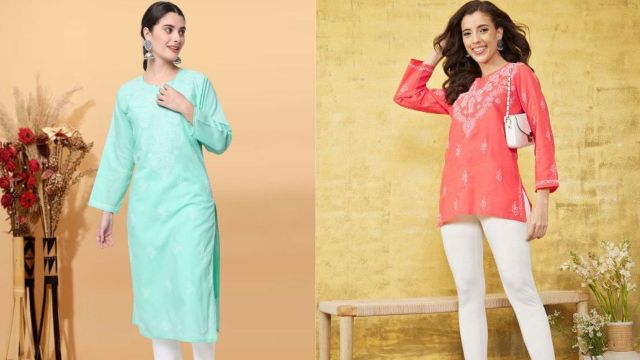
Top cotton chikankari kurtis to consider: The “standout” factor in chikankari is often subtle—clean necklines, even stitchwork, and fabric that falls nicely instead of clinging. Historically, chikankari began as white-on-white embroidery on fine fabrics, which is why cotton whitework still reads so classic today.
5 cotton chikankari kurtis to consider for strong everyday style
Curated as a general roundup (no platform specified), this list leans into cotton chikankari that can be reworn across seasons: straight cuts, A-line ease, and short kurtis that work with jeans.
Chikankari kurtis often get compared as if they’re interchangeable, but small specification differences change how they wear: pure cotton usually feels crisp and breathable, viscose blends drape softer, and the embroidery itself benefits from gentler washing because agitation and wringing can stress the threads. Several chikankari care guides emphasize cold water, mild detergent, avoiding scrubbing or wringing, and shade drying, especially in the first few washes when colour bleed can happen on dyed fabrics.
Within this set, most pieces sit in the same sleeve zone (three-quarter, regular sleeves), so the real decision points become neckline (round versus V-neck), hemline (straight versus flared/anarkali), and how cautious the wash instructions are.
Fabric and wash reality
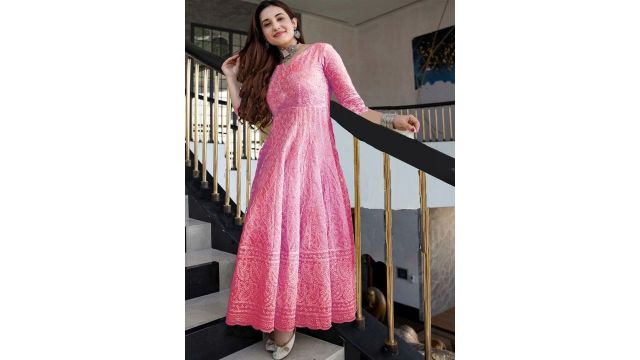
ZAZADIYA Ethnic Motifs Embroidered V-Neck Pure Cotton Chikankari Anarkali Kurti is listed as pure cotton with an anarkali-style flared hem and a V-neck, but its wash notes conflict between “regular machine wash” and “hand wash.” In practical terms, the flared anarkali shape gives more movement and airiness than a straight kurti, but the safer care approach for chikankari is typically hand wash or a very gentle cycle, so treating it as a delicate piece reduces risk.

AFFLEON Ethnic Motifs Embroidered Chikankari Pure Cotton Kurti is also pure cotton and allows machine wash, which makes it the most straightforward on paper for frequent wear. The blue-and-white palette can feel easy for day use, but the asymmetric hemline will read more styled than a standard straight cut, so it is less “uniform basic” and more “casual statement.”
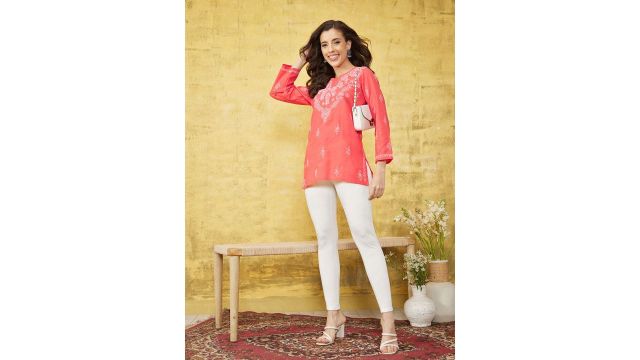
ADA Women Pink & White Pure Cotton Chikankari Embroidered Straight Pure Cotton Kurti is pure cotton and explicitly hand-wash, which aligns with the common care guidance that chikankari lasts longer with gentler washing. The straight hem and side slits keep it easy to pair with cigarette pants or leggings, and the round neck keeps the look classic rather than trend-led.
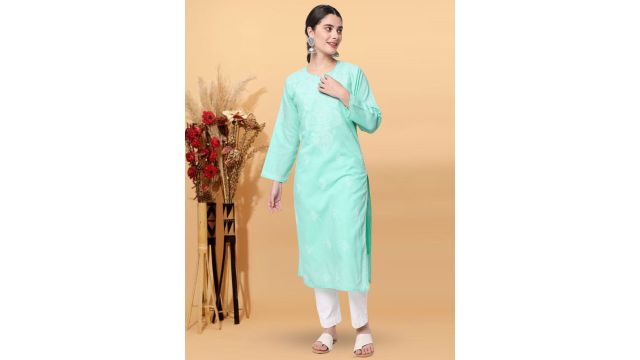
PARAMOUNT CHIKAN Women Sea Green & White Embroidered Cotton Chikankari Kurta is cotton with long sleeves and a calf-length straight shape, and it also specifies hand wash. In this set it functions like the coverage-forward option: the long sleeves and calf length push it closer to a kurta silhouette that can carry minimal styling, while still staying daytime-friendly in colour.
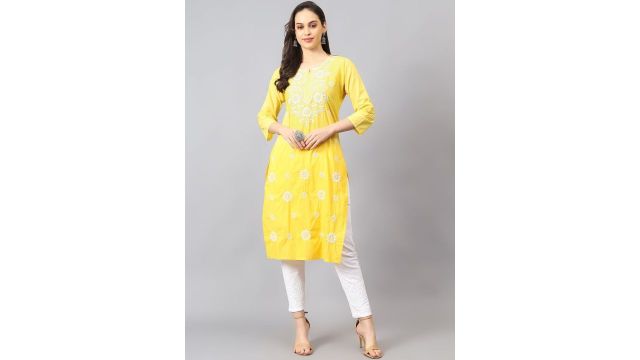
THE CHIKANKARI STORY Floral Embroidered Chikankari Pure Cotton Kurti is pure cotton and the most explicit about caution: it states hand wash only, wash separately because the fabric is dyeable and may release colour in the first few washes, and it warns against machine washing because delicate hand embroidery can be damaged. That level of instruction typically indicates a garment meant to be treated as fragile, and it is the clearest signal in this list that longevity depends on gentle care and careful first washes.
Necklines and silhouettes
The quickest way to separate these five is shape: ZAZADIYA is the flared anarkali option with a V-neck, which tends to feel more occasion-leaning and forgiving through the lower body. AFFLEON’s asymmetric hemline adds visual interest without switching to full flare, while ADA, PARAMOUNT CHIKAN, and THE CHIKANKARI STORY stay closer to straight silhouettes that usually layer and pair with bottoms more predictably.
Neckline-wise, ZAZADIYA’s V-neck is the most defined neckline here and can feel slightly more open and elongated, while the others largely stay round-neck, which generally reads more traditional and works cleanly with a dupatta.
Also Read: Best 2026 AC Models for Indian Summers Featuring Samsung, LG, Panasonic and More
How each piece fits into a wardrobe
ZAZADIYA suits days when a more flowy shape is wanted without adding extra styling pieces, but the mixed wash guidance suggests it should be handled gently to protect the chikankari detail. AFFLEON is the practical “pure cotton, machine wash, but not plain” option because the asymmetric hem stops it from feeling too basic.
ADA is the most classic straight-cut, hand-wash chikankari kurti in the set, so it fits into a repeat-wear rotation for workwear-like dressing. PARAMOUNT CHIKAN leans toward fuller coverage (long sleeves, calf length), which makes it useful for sun protection, office AC, or simply a preference for more coverage. THE CHIKANKARI STORY looks like the “treat it carefully” pick: it can be a strong wardrobe piece, but it asks for more discipline in the first few washes and ongoing care.
FAQ
Is hand wash really necessary for chikankari?
Many chikankari care guides recommend hand washing in cold water with mild detergent and avoiding scrubbing or wringing to protect the embroidery threads, and they suggest shade drying to reduce fading and distortion. Machine washing is sometimes presented as possible only on gentle settings, ideally with reduced agitation and protective steps.
Why do some chikankari kurtis bleed colour in early washes?
Care notes commonly warn that dyed fabrics can release colour during the first few washes, which is why “wash separately” guidance shows up for some of the clothing pieces. Cold water and gentle handling for care are better to reduce the effects.
Which silhouette is easiest for daily styling?
Straight kurtis with round necklines are usually the simplest to pair with leggings, cigarette pants, or straight trousers because the hemline stays predictable. More flared anarkali shapes can feel dressier and need less “bottom balancing,” but they take up more visual space.