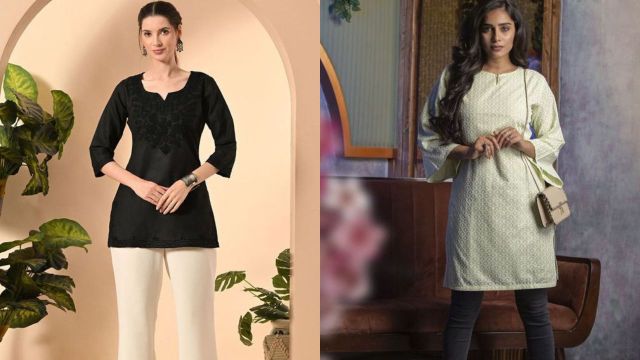
Best chikankari kurtis to check out: Under Rs 500, chikankari is the kind of find that can still look quietly “classic” because the charm comes from the embroidery, not loud prints. Chikankari is also closely associated with Lucknow and has a long craft legacy, which is why even simple silhouettes can feel elevated.
5 chikankari kurtis to consider under Rs 500 for an easy classic look
This edit is curated focusing on what typically works best in this budget: lighter cotton/rayon blends, cleaner necklines, and minimal threadwork that reads neat in daylight. If you want these kurtis to stay pretty for longer, care guidance commonly recommends gentle handwashing in cold water with mild detergent, and avoiding scrubbing/wringing to protect the embroidery.
Chikankari kurtis sit in a “looks delicate, wears daily” space, so the smartest way to compare them is to separate the embroidery from the base fabric. The same chikankari-style surface can feel very different on cotton versus viscose rayon, and care instructions matter because embroidery threads can snag or flatten if the wash is too rough.
A second practical separator is silhouette: straight cuts are usually easy to layer and pair, while A-line or flared hems add movement but can feel less “workday basic.” In this set, most are three-quarter sleeve kurtis, so neckline and fabric become the main comfort variables rather than sleeve length.
Fabric and feel
Cotton blend versus pure cotton
WOMEN PLUS Embroidered Cotton Kurta 1608 is a cotton-blend, straight green kurti with chikankari detail and a keyhole neckline. CROWN KING Women Embroidered Chikankari Pure Cotton Chikankari Kurti is described as pure cotton with chikankari detail, which typically reads as more breathable and summer-friendly for long wear.
Viscose rayon options
LIBOZA Floral Embroidered Chikankari Kurti and Kalavrund Creation Floral Embroidered Chikankari Kurti are both listed as viscose rayon with chikankari detail and machine-wash care. Rayon usually drapes softly and can look fluid, but it may wrinkle and can be less forgiving if washed harshly, so gentler cycles and shade drying tend to help.
Necklines and styling impact
Keyhole versus round versus V-neck
WOMEN PLUS Embroidered Cotton Kurta 1608 uses a keyhole neckline, which adds detail near the face without needing accessories. CROWN KING, LIBOZA, and Kalavrund Creation use round necklines, which are typically the easiest to wear with dupattas, layers, and everyday jewellery. Akshatani Ethnic Motifs Embroidered V-Neck Chikankari Chikankari Kurti uses a V-neck, which generally reads a bit sharper and can feel airier at the neckline.
Silhouette and hemline
Straight, A-line, and flared differences
WOMEN PLUS and Akshatani are straight-hem kurtis, which usually pair easily with cigarette pants and straight trousers. CROWN KING is described as A-line, which can feel more forgiving through the hips while still staying simple to style. LIBOZA lists a flared hemline, which can add movement and a slightly dressier feel compared with straight cuts.
Also Read: Budget Finds That Don’t Look Budget: Women’s Watches Under Rs 1,000 on Amazon
The five kurtis in context
WOMEN PLUS Embroidered Cotton Kurta 1608
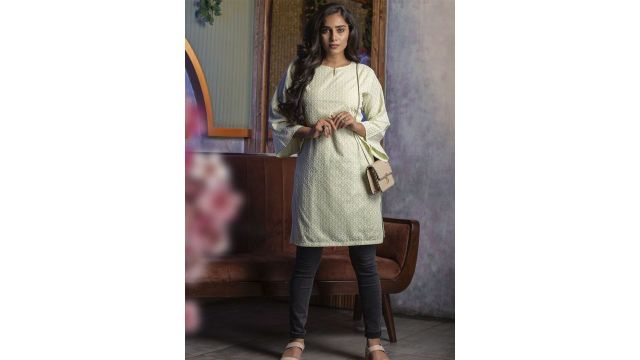
Green straight kurti, solid embroidered, keyhole neck, three-quarter sleeves, chikankari detail, cotton blend, machine wash.
Pros:
- Keyhole neckline adds interest without changing the overall simplicity.
- Straight hem keeps styling predictable.
Cons:
- Cotton blend comfort depends on the exact blend; also breathability can further vary.
Pro-tip:
Best treated as a weekday staple with minimal jewellery to keep the embroidery as the central point.
CROWN KING Women Embroidered Chikankari Pure Cotton Chikankari Kurti
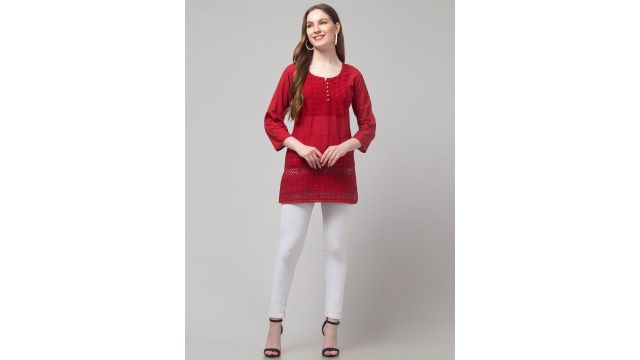
Maroon A-line kurti, round neck, three-quarter sleeves, chikankari detail, pure cotton, machine wash.
Pros:
- Pure cotton base typically suits warm-weather wear.
- A-line shape can feel easier for all-day movement.
Cons:
- Maroon can show lint more than mid-tones, depending on fabric finish.
Pro-tip:
Works well with neutral bottoms; let the maroon carry the colour story.
LIBOZA Floral Embroidered Chikankari Kurti
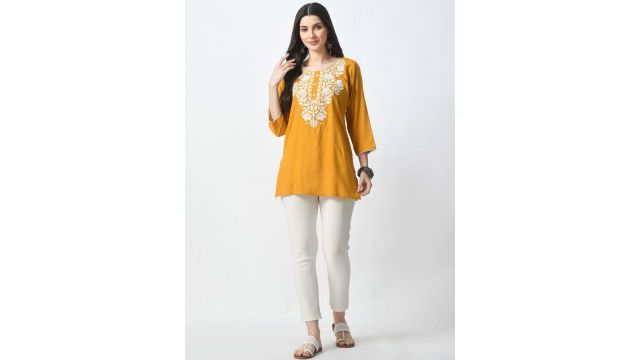
Mustard yellow and white straight kurti with floral embroidery, round neck, three-quarter sleeves, chikankari detail, viscose rayon; hemline listed as flared.
Pros:
- Mustard-yellow palette stands out without heavy styling.
- Rayon drape can look softer and more fluid than cotton.
Cons:
- Rayon can crease more; needs careful drying and light ironing discipline.
Pro-tip:
Pair with crisp white bottoms to keep the mustard-and-white contrast clean.
Kalavrund Creation Floral Embroidered Chikankari Kurti
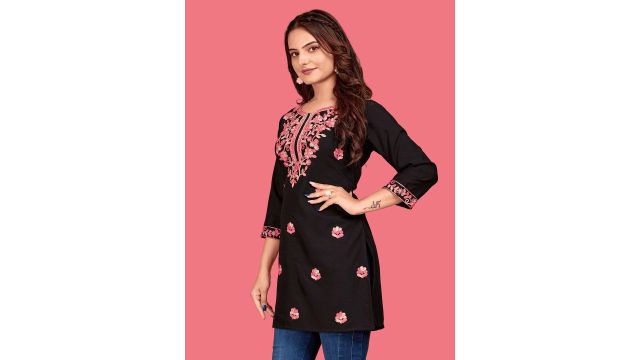
Black and pink straight kurti with floral embroidery, round neck, three-quarter sleeves, chikankari detail, made of viscose rayon, along with machine wash care.
Pros:
- Black base makes embroidery pop and can read more evening-friendly.
- Straight silhouette keeps it easy to balance with fitted bottoms.
Cons:
- Dark colours can fade faster if washed frequently without care.
- Pro-tip:
Turn inside out before washing to reduce surface abrasion on embroidery, which is a common care recommendation for chikankari.
Akshatani Ethnic Motifs Embroidered V-Neck Chikankari Chikankari Kurti

Black straight kurti with ethnic motifs embroidery, V-neck, three-quarter sleeves, chikankari detail; the specs mention both machine wash and hand wash, so the safest approach is gentler washing.
Pros:
- V-neck changes the look without changing the basic straight silhouette.
- Motif embroidery reads more graphic than floral, which suits minimal styling.
Cons: - Conflicting wash notes increase the chance of mishandling if care is not clarified.
Pro-tip: - If the tag allows machine wash, use a short gentle cycle and a mesh bag, which is commonly often recommended to protect chikankari embroidery.
FAQ
Which fabric is likely to feel coolest for summer?
Pure cotton bases are generally chosen for hot and humid wear, which is the case with the CROWN KING kurti being listed as pure cotton.
Can chikankari kurtis be machine washed?
Machine wash is possible on the gentle mode when necessary, commonly done inside out and in a mesh bag. However, most still prefer hand washing so to protect the embroidery work.
How should chikankari be ironed?
Common care advice is to iron on the reverse side and avoid pressing directly onto embroidery to protect the threadwork.