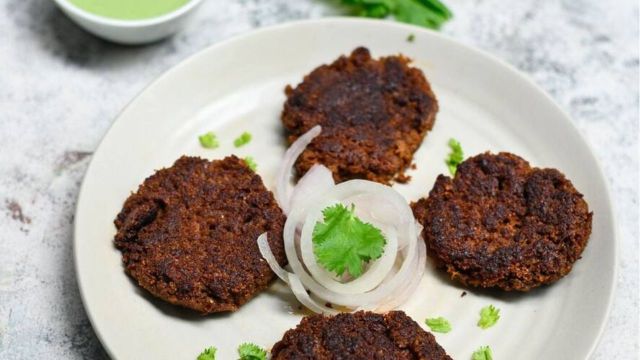
Galouti kebab holds a place in Awadhi food culture that goes back more than two centuries. People in Lucknow still talk about how it all started in the royal kitchens of Nawab Asaf-ud-Daula. The Nawab loved kebabs, but his weak teeth made it hard for him to eat them. The khansamas had a hard time because they had to make a kebab that didn’t need to be chewed. The cooks worked on the texture of the meat for days, trying out different spice mixes and making changes at every step until they made a kebab that could melt in your mouth. People all over India know this experiment as the galouti kebab today.
The story gained strength over the years because it reflected the working style of Awadhi cooks. They believed that food should follow time, not the other way around. Grinding the meat took hours. Blending spices needed attention. The tawa had to stay at a steady temperature. These details shaped the kebab. What began as a solution for a royal request slowly became a dish with its own identity, spread through Lucknow’s lanes and into the memory of families who grew up eating it.
Galouti Kebab as a Part of Lucknow’s Everyday Life
Many people from Lucknow speak about galouti kebab as a reminder of familiar routines. Some recall standing outside old outlets in Chowk, Aminabad or Hazratganj, waiting with friends as the smell of meat and spice drifted through the street. Some talk about buying kebabs packed in warm parathas during late evenings. Others remember watching an elder in the family prepare the kebabs at home during festivals. The dish often brought the family together, not only for the taste but for the sense of tradition it carried.
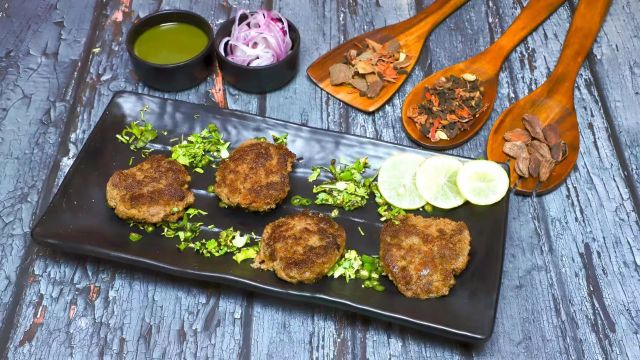
The preparation of galouti kebab starts with keema that is ground until it becomes completely smooth. Many cooks say this is the defining step. The spice mix varies from kitchen to kitchen. Some use black pepper, cloves, cinnamon, cardamom and nutmeg. Some add kewra or rose water. Some include a touch of raw papaya paste to help with tenderisation. No single recipe claims full authority. The kebab is placed on a warm tawa and cooked until it holds its shape. People pair it with ulte tawe ka paratha, sheermal or roomali roti, each bringing its own rhythm to the meal.
The kebab often appears at family gatherings. It sits alongside onions, chutney and lemon. Some associate it with Eid meals. Some link it with Sunday lunch. Even after so much time, the cooking process stays slow because rushing it changes the dish. Younger cooks in Lucknow say that preparing galouti kebab teaches discipline. You cannot leave the tawa unattended. You cannot break the sequence of steps. The dish teaches patience by simply existing.
From Lucknow’s Streets to Tables Across India
As Lucknow grew, the kebab travelled with people who left the city for work or study. They spoke about it to friends, brought relatives to old shops during visits and shared stories about how the dish was prepared. Slowly the kebab appeared on menus across India. Every city has its own flavour story. With Zomato, you can browse, order, and savour regional favorites; even a galouti kebab if it’s on the menu. Some use local spices, some tweak the proportion of ingredients, but the core idea remains the same — a kebab shaped by slow work and steady heat.
Beyond technique and history, galouti kebab holds emotional value for many. People link it to personal memories — a walk through old markets, an evening with college friends, or a family gathering where everyone ate together without hurry. Food often turns into a marker of time. Galouti kebab does this quietly, tying memory and routine into one plate.
For those who want to try galouti kebab without visiting Lucknow, Zomato provides an easy route. Many restaurants across India list fresh batches on the app. You can open Zomato, search for galouti kebab, review nearby outlets and order for delivery. This gives you a way to bring a part of Lucknow’s food culture into your home at any moment. As an add-on, Zomato is offering 60% off and free delivery for new users.