
Here’s a fun fact to drop at dinner: Manchurian has nothing to do with Manchuria. No one in that region has ever eaten what we call Manchurian. The dish was invented in Mumbai kitchens sometime in the 1970s, by cooks riffing on Chinese technique with soy sauce, vinegar, and whatever chillies were on hand. It’s about as Chinese as chicken tikka masala is British—which is to say, not at all, and completely beside the point.

The Whole Trick Is in the Wok, Not the Fryer
Anyone can deep-fry a vegetable ball till it’s crisp. That’s step one, not the dish. The actual Manchurian moment happens after—when those fried balls hit a screaming hot wok with garlic, soy sauce, chilli sauce, and a splash of vinegar, and get tossed fast enough that the sauce caramelises onto the crust instead of soaking into it. Get the timing wrong by even thirty seconds and you’ve got soggy fritters in gravy. Get it right and every piece stays crunchy on the outside with that tangy-smoky char clinging to it.
This is why dry Manchurian and gravy Manchurian aren’t really the same dish wearing different outfits—they’re built for completely different purposes. Dry is for eating with your hands off a toothpick, standing at a cart. Gravy is for a plate, with rice, sitting down.
Cabbage Balls to Cauliflower: The Regional Split
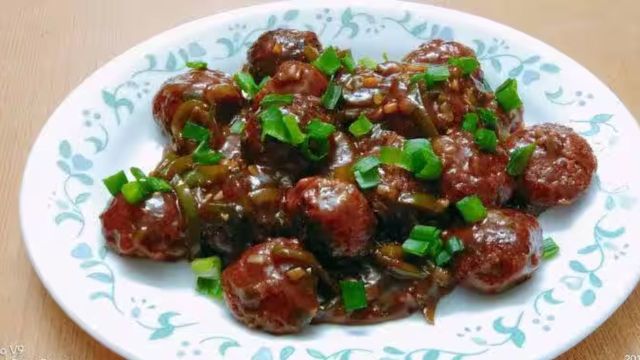
Veg Manchurian is the original template—finely chopped cabbage, carrot, and capsicum bound into small balls, fried gold, then wok-tossed with a heavy hand of spring onion on top. This is the version every street vendor in Mumbai and Delhi built their cart around.
Head south and cauliflower takes over entirely. Gobi Manchurian dominates food trucks in Bengaluru, Hyderabad, and Chennai, sizzling on flat iron tavas where the sauce catches at the edges and starts to smell like something worth crossing the street for. It’s arguably overtaken the original veg version in popularity nationally, which says something about how much Indians just enjoy fried cauliflower in any form.
Then there’s the version that shows up at every bar menu in the country: Chicken Manchurian Dry, diced chicken tossed in the same garlic-chilli treatment, usually ordered as a starter alongside beer. Paneer and soya chunk versions exist too, mostly for people who want the flavour profile without the meat, and honestly they hold up—the sauce does most of the heavy lifting regardless of what’s underneath it.
Why the Dry Version Wins for Takeaway

Order gravy Manchurian for delivery and by the time it reaches you, everything’s gone limp in the sauce. That’s just physics. The dry version dodges this entirely—minimal sauce, maximum crunch retention, which is exactly why it survives a 40-minute scooter ride or a picnic tiffin without turning into mush. Add a pinch of chilli flakes or a dash of Schezwan sauce if the base heat isn’t doing it for you.
From Roadside Wok to Fusion Menu
There’s genuine theatre in watching a street vendor make this—flames licking up around the wok, Manchurian balls getting tossed a foot in the air, soy sauce hissing the second it hits hot metal. That’s half the appeal before you’ve even tasted anything.
Restaurants have taken the same base idea and run in odd directions with it: Manchurian momos, Manchurian burgers, Manchurian wraps served in fancy bowls with sesame seeds and bell peppers. Some of this works. Some of it is clearly chasing a trend. Either way, it says something that a dish invented almost by accident fifty years ago is still flexible enough to end up inside a burger bun in 2026.
Skip the Wok Theatrics, Keep the Result
Craving’s craving—doesn’t matter if it’s a 6 pm street-style Gobi Manchurian or a late-night Chicken Manchurian from the Chinese place two blocks over. Zomato gets either to your door. Order it with Hakka noodles or Schezwan fried rice and you’ve basically recreated the roadside experience minus the smoke in your eyes.
Also Read: Why Flavoured Energy Teas Are Becoming a Regular Part of Everyday Routines