

On a cold day, a bowl of mutton stew is something that you would not like to miss if you love non-veg food. It doesn’t matter where you eat it; the slow-cooked mutton and smell of spices cooking together make it feel like home. Every area has put its own spin on it and each version has its own dedicated fans.

As winter approaches, there’s no better time to explore a few of the most loved versions of this comforting dish.
Kerala-Style Mutton Stew: Fragrant and Mild
In Kerala, people often eat mutton stew, or Ishtu, for breakfast with appam, which is a soft, lacy pancake made from fermented rice batter and coconut milk. The dish is creamy, smells good, and is mild because it uses coconut milk instead of strong spices.
The meat is simmered slowly with onions, green chillies, ginger, curry leaves, and whole spices like cardamom and cloves. The gravy turns light and aromatic, carrying the sweetness of coconut and the freshness of black pepper. What makes this version special is its simplicity—it’s not fiery or oily but still rich in flavour.Kerala-style mutton stew is a dish that feels almost therapeutic. It’s the kind of food you want when you’re craving warmth without the weight of masala. Best paired with appam, idiyappam, or even plain steamed rice, it’s a reminder that comfort doesn’t always have to be loud.
North Indian Mutton Stew: Spiced and Soulful
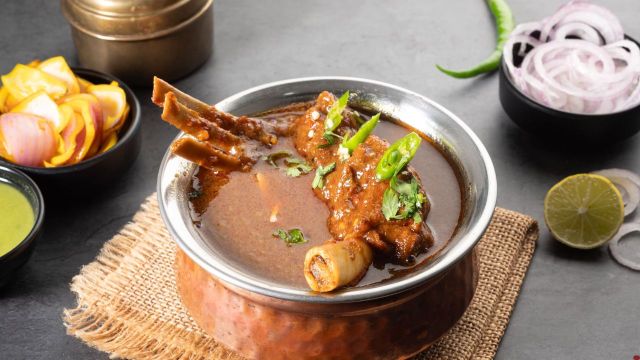
Travel north and the stew takes on a heartier personality.In Delhi, Punjab and Uttar Pradesh, mutton stew becomes thicker, cooked with onions and tomatoes, and a heavy dose of spices. Here, the flavours deepen through slow cooking, allowing the meat to soak in every bit of the masala.
A traditional North Indian mutton stew might include garlic, cumin, coriander, turmeric, and sometimes a hint of garam masala towards the end. The gravy is not smooth—it has texture and body, perfect for scooping up with parathas or tandoori rotis.
What makes this version special is how flexible it is. Some families add potatoes and carrots to make it a full meal, while others like it with more meat and just a squeeze of lemon to balance it out. No matter what, it’s a winter evening meal that everyone should enjoy together.
Anglo-Indian Mutton Stew: The Colonial Legacy
During British rule, Indian cooks adapted the traditional English meat stew to suit local tastes. The result was the Anglo-Indian mutton stew. A beautiful blend of European technique and Indian spices.
This version uses browned onions, garlic, and pepper as the main flavour base. The meat is cooked with potatoes, carrots, and sometimes peas, all simmered in a thin broth that’s light yet layered with taste. Some recipes use a dash of Worcestershire sauce or vinegar to add tang, while others stay closer to Indian flavours with bay leaves and cloves.
It’s a dish that bridges two worlds—the gentleness of Western stews with the depth of Indian spices. It’s also one of those dishes that taste even better the next day, after the flavours have settled and mingled. Served with bread or rice, it’s an ideal Sunday lunch or a cozy dinner after a long day.
Kashmiri Yakhni: The Subtle Sibling
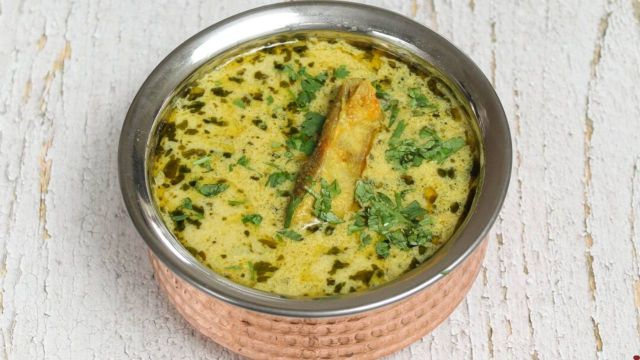
While not called a stew in the traditional sense, Kashmir’s Mutton Yakhni fits right in this family.The meat is slow-cooked in curd and a light mix of fennel, cardamom and bay leaf, producing a smooth aromatic gravy that’s neither spicy nor greasy. The beauty of Yakhni lies in its aroma. Paired with rice or sheermal (sweet saffron bread), it feels both royal and comforting, a dish that defines Kashmiri hospitality.
Order a Bowl of Warmth
You don’t have to spend hours slow-cooking to enjoy these varieties. Zomato brings these comforting mutton stews straight to your doorstep from your neighbourhood kitchens. You can search for “Kerala mutton stew,” “North Indian mutton curry,” or “Kashmiri Yakhni” to discover restaurants serving authentic versions near you.