
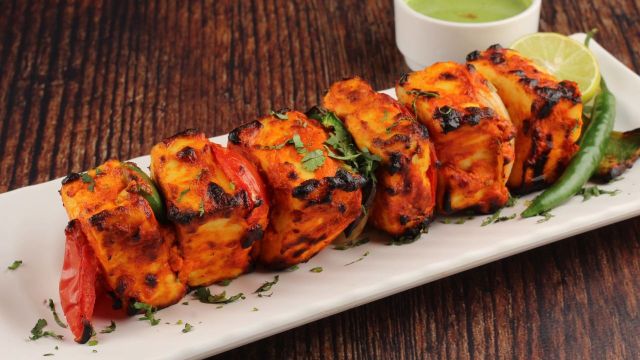
Paneer tikka is one of the most recognised vegetarian dishes in India but its roots lie in a much older tradition of tandoor cooking. The story begins in Punjab, where community kitchens once depended on large clay ovens ( tandoor) to prepare food for groups. These ovens stood at the centre of daily life. People gathered around them, shared work, exchanged news and cooked meals that served entire neighbourhoods. Tandoors first handled rotis and meats, but as food habits shifted and dairy became common in North Indian households, cooks began experimenting with paneer. This curiosity slowly shaped the idea of paneer tikka.

Many food historians link paneer tikka to the period before Independence, when Punjabi households relied heavily on milk, curd and paneer. Families often made paneer at home. As tandoor culture spread beyond villages into towns, the combination of paneer and open-fire cooking became easier to explore. Cooks marinated the paneer in curd, spices and oil, then placed it on skewers. When it came out of the tandoor with a smoky surface and a soft inside, the dish found acceptance. What started as a small experiment in a community oven turned into a regular feature of Punjabi cuisine.
How Paneer Tikka Spread Across Regions
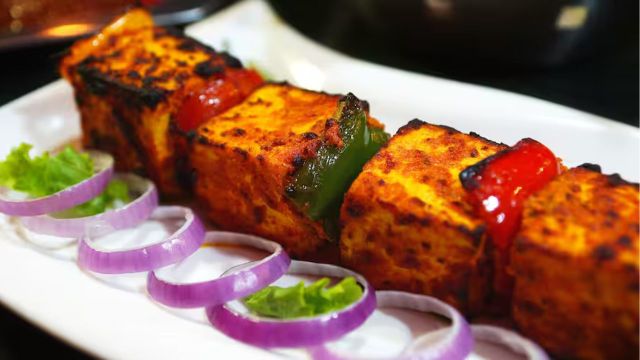
Partition played a role in the spread of paneer tikka. When families moved across new borders, they carried their food habits with them. Many Punjabi refugees established dhabas along highways and used tandoors because they were easy to set up and could serve food to travelers quickly. So, paneer tikka became a good dish to make in these highway kitchens. Travellers who ate it on long road journeys took the taste back home, helping the dish travel across regions.
In urban settings, paneer tikka soon became part of restaurant menus. People who wanted a vegetarian starter found it as go to choice. It worked well for gatherings because it needed no elaborate plating. The combination of chutney, onions and lemon turned into a standard routine. Over time, it became common at weddings, office parties and festivals. For many families, paneer tikka became the first dish that arrived when guests came home, a small signal that the meal had begun.
Preparation, Memories, and Modern Variations
The preparation follows steps that remain similar across homes, dhabas and restaurants. Paneer is cut into cubes and coated with curd mixed with spices such as turmeric, cumin, coriander and ginger-garlic paste. Some cooks include mustard oil. Some add kasuri methi. The marinade rests for a while so that the paneer absorbs the flavours. Vegetables like onions and bell peppers often join the skewers because they balance the taste. Once placed on a tandoor, grill or pan, steady heat decides the outcome.
People have their own memories linked to paneer tikka. Some recall road trips where a dhaba meal felt like a break from travel. Some connect it with college outings when friends shared a single plate while discussing life plans. Some remember the smell of tikka from neighbourhood grills during festival evenings.
The dish has also evolved across cities. Restaurants offer stuffed versions. Street vendors prepare rolls by wrapping paneer tikka in parathas or roomali rotis. Home cooks use ovens or air fryers when they want to recreate the taste. Even with all these variations, the idea remains rooted in the old community ovens of Punjab, where people gathered around a tandoor and cooked together.
Paneer tikka holds a place in India’s vegetarian food culture because it fits many moments — small gatherings, festival meals, road trips, and quiet evenings at home. It brings people together without much formality. A plate of tikka often reaches the centre table before anyone even asks what is for dinner.
If you want to enjoy paneer tikka today without setting up a tandoor, Zomato offers an easy option. As an add-on, Zomato is offering 60% off and free delivery for new users.