
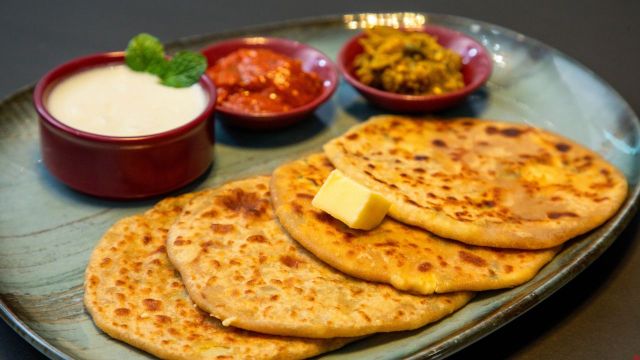
If you grew up in Delhi, Amritsar, Lucknow, or Jaipur, you probably ate parathas in the morning. They were rolled out by hand, roasted until golden brown, and served with a dollop of butter or a spoonful of pickle. It’s not just a meal; it’s a tradition that has been passed down through the years, changing to fit new tastes and flavors.

A Slice of India’s Food Heritage
The word “paratha” comes from “parat” (layers) and “atta” (flour). The layers are what make it so special: they are crisp on the outside and soft and warm on the inside. Parathas were once only eaten at Punjabi breakfasts, but now they are popular all over India and beyond. This simple dish has found a home in places as different as roadside dhabas and five-star hotels. The best thing about a paratha is how simple it is. To knead the dough just right, you only need flour, water, and time. But the filling is what really makes it different.
Many Faces of the Paratha
If you had to pick one dish that can suit every mood, paratha would be it. The aloo paratha remains the undisputed favourite — mashed potatoes mixed with green chillies, coriander, and spices, then sealed inside the dough and roasted until golden. Dip it in curd or pair it with butter and you have a breakfast that feels like a warm hug.
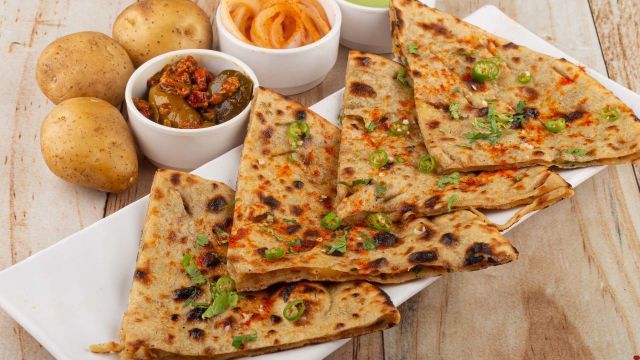
Next is the gobi paratha, which has a filling of grated cauliflower mixed with spices according to your taste. Another version is Mooli paratha which has a radish filling that makes it a little sharper. When served with tangy pickle, it tastes fresh. Paneer paratha and cheese paratha are great for people who like rich foods because they add a creamy, decadent touch.
Parathas in Amritsar are so thick and full that one might be enough for a whole meal. In Uttar Pradesh, people often fry parathas until they are crispy and serve them with spicy curries or sour chutneys. In the south, you’ll find parotta, a flaky, layered cousin of the paratha that goes well with kurma or egg curry.
The Soul of Breakfast, Lunch, and Beyond
Parathas are good at any time of day. They are great for breakfast, lunch, or even a quick dinner. Many Indian families use leftover sabzi or dal to stuff parathas the next morning. Kids take them in their lunch boxes, travelers pack them for long trips, and college students like to eat a paratha with butter after a long day.
Health and Modern Variations
Traditional parathas are usually full of ghee but modern kitchens have made them in lighter versions. Health-conscious eaters have started to like parathas made with whole wheat, multigrain and even oats. Stuffings like spinach, beetroot and soya keema add nutrition without changing the dish’s flavor. Grilled or air-fried parathas are also now common among fitness fans, showing that you can enjoy something without guilt.
Just Order Parathas at Home
The good news is that you don’t have to wait until you get home to enjoy one. You can order fresh, hot parathas from your favorite local restaurants or well-known dhaba-style kitchens with Zomato.
So the next time you want something warm, filling, and familiar, skip the fancy meals and get a plate of parathas. Because one bite is enough to bring back memories of home, no matter where you are.
Also read: