One person is ready for dinner. The other had lunch late and wants something to nibble on. They open a food delivery app together, but every suggestion seems to suit only one of them.
A curry-and-rice order feels like too much for the person wanting a snack. A plate of momos leaves the person wanting dinner wondering what comes next. Sharing sounds like a compromise, until neither knows whether there will be enough.
Ordering together does not have to mean eating the same dish or matching portions. The starting point is to recognise that two people sitting down at the same time may need different amounts of food.
Agree on appetite before discussing cuisine
Before choosing a restaurant, establish what each person wants from the order. Is one looking for dinner while the other wants a snack? Or do both want a meal, but in different quantities?
That distinction helps narrow the options. “I could eat a little” does not tell a partner whether to order an extra starter, share a main or choose something separately.
Being specific also avoids the familiar arrangement in which one person orders nothing, then eats part of the meal the other expected to finish.
Pair an individual meal with a snack
One approach is to order a meal for the person wanting dinner and a snack for the other.
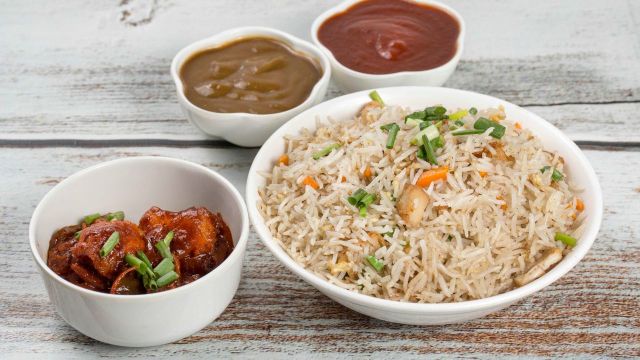
A rice bowl and a portion of momos, a curry combination and a sandwich, or a meal box and a roll can accommodate different appetites where the menu offers them.
Check the descriptions rather than assuming a category determines the quantity. A roll may be enough for dinner, while a starter platter may contain more food than the person wanting a snack intends to eat.
The aim is to find portions that fit, not to label one person’s choice as the meal and the other’s as an addition.
Share a dish, then add what is needed
Sharing can still work when appetites differ, provided the order accounts for the difference.
Both people might want some paneer or chicken, while only one wants rice or breads alongside it. A shared dish with an accompaniment for the person wanting dinner can give each control over their portion.
Discuss how much each expects to eat before ordering. If one person wants only a few bites, there may be no need to build a meal for two. If both expect a substantial share, an accompaniment alone may not cover the gap.
Check whether combinations create duplication
Meal deals can simplify ordering, but they can also add food neither person wants.
Before choosing two combinations, check whether both include sides or drinks. One individual meal and one separately ordered snack may suit the evening better than two bundles selected for their price.
When browsing Zomato, review the cart as a whole. Count the mains, snacks and accompaniments, then compare that quantity with what both people said they wanted.
Make sharing an agreement
There is nothing wrong with trying a partner’s food. The problem arises when sharing is assumed rather than discussed.
If one person wants a few bites of the other’s meal, account for that from the start. Order a portion that allows it, or add a dish both want.
Likewise, neither person needs to finish food simply because it was ordered. If leftovers are likely, consider whether there is a plan to store and eat them.
Dinner together is about sharing the time as much as the menu. One person can have a meal while the other enjoys a snack, with neither having to adjust their appetite to match the plate across the table.
Also Read: International Hot Sauce Collections for Bold Flavours from Amazon