
Every Indian cook knows the bhindi rule nobody writes down: don’t crowd the pan, don’t cover it, and for God’s sake don’t add water too early. Get impatient and you end up with that slimy, stringy mess that made half of us suspicious of okra as kids. Get it right and bhindi becomes one of the most versatile vegetables in the kitchen—crisp, tangy, stuffed, or drowned in gravy, depending entirely on which state’s kitchen you’re standing in.

The Everyday Version Nobody Thinks Twice About
Most people’s bhindi education starts with the plain dry sabzi—sliced ladyfinger, onions, salt, whatever masala’s within reach, cooked slow until it softens without turning gluey. It’s the version that shows up in lunchboxes because it survives four hours in a dabba without going soggy. Mustard oil versus groundnut oil is the one real fork in the road here, and most families pick a side early and never look back. Nobody’s arguing about it at the dinner table—it’s just what bhindi tastes like in that house.
Bhindi That’s Actually Trying
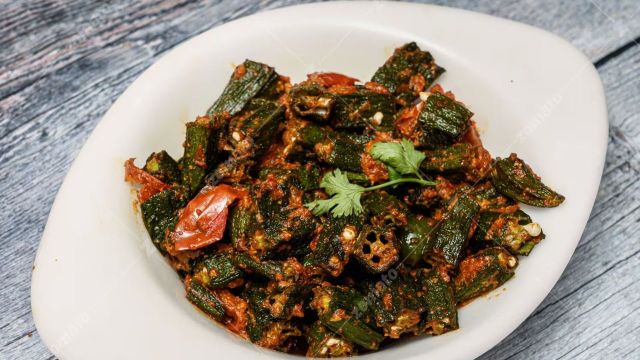
Bhindi masala is the dhaba upgrade—shallow-fried first so it doesn’t turn sticky, then simmered in a tomato-onion base thick enough to actually cling to a paratha instead of sliding off. Some cooks finish it with a pinch of kasuri methi for that smoky-bitter note; others leave it alone and let the bhindi do the talking. Either way, this is weekend cooking, not a Tuesday-night shortcut.
Bhindi do pyaza takes a different route entirely—onions cooked in two separate stages so you get two distinct layers of sweetness before the bhindi even enters the pan. It’s onion-forward in a way that sounds excessive until you taste it. Then it makes complete sense.
The One That Takes Actual Patience
Nobody makes bharwa bhindi on a rushed weeknight. Each pod gets slit open and packed by hand—besan and spices in some households, peanut powder in others, grated coconut if you’re in certain pockets of the West. Then it cooks slow enough that the stuffing sets without spilling out. This is guest-meal food, festival-thali food, the dish that signals someone spent real time in the kitchen because stuffing forty bhindi pods one by one is not a shortcut anyone’s found yet.
Crunch, Because Sometimes That’s the Whole Point
Kurkuri bhindi skips the gravy question entirely—thin-sliced bhindi coated in besan and spices, fried until it shatters when you bite it. It shows up next to dal-chawal for texture, or as a starter when people are over for chai. Some restaurants have gotten fancy with it lately, pairing it with chutneys and salad plating like it’s not, at heart, just really good fried okra. It is. That’s fine.
What the South Does Differently
South Indian bhindi drops the heavy masala and leans into tamarind—curry leaves, red chilli, a sour edge that actually solves bhindi’s stickiness problem better than any other regional method does. It stays dry, sits well with rasam rice or curd rice, and some households finish it with coconut while others skip that step entirely. Small variation, same underlying logic: cut the slime with acid.
Bhindi’s Two Escape Routes: Kadhi and Potato
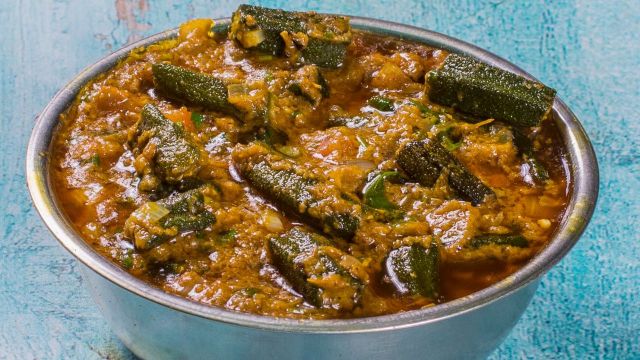
Gujarat and Rajasthan have a clever answer to the age-old question of what to do with a small, awkward leftover quantity of bhindi—fry it and drop it into kadhi. The bhindi soaks up the tangy yoghurt gravy and turns soft, which works especially well in summer when kadhi’s cooling effect actually matters. Pair it with khichdi and you’ve solved lunch with almost no real effort.
Bhindi with potatoes is the other safety net—less romantic, more practical. The potatoes bulk the dish up, the bhindi adds flavour, and the combination holds its shape well enough for tiffins. It’s the dish people make on mornings when there’s no time to think, just cook.
Skipping the Slicing Altogether
If none of this sounds like a weeknight project—fair, stuffing bhindi by hand isn’t for everyone—Zomato has most of these versions listed. Search bhindi masala, bharwa bhindi, kurkuri bhindi, or bhindi do pyaza, compare a few places nearby, and skip straight to the eating part.
Also Read: Fermented Yeast Protein Powder for Muscle Strength from Amazon