

A soft, spiced thepla is one of the few dishes in Gujrat that makes you feel at home. When it hits a hot tawa, the air fills with the smell of roasted flour, fenugreek and ghee. It’s the kind of smell that makes you feel better right away. Thepla is more than just food for most Gujaratis, it’s a part of their daily lives. Over time, it has spread far beyond Gujarat and is now a popular breakfast food, a travel companion and even a snack in cafes all over India.

A Slice of Everyday Gujarat
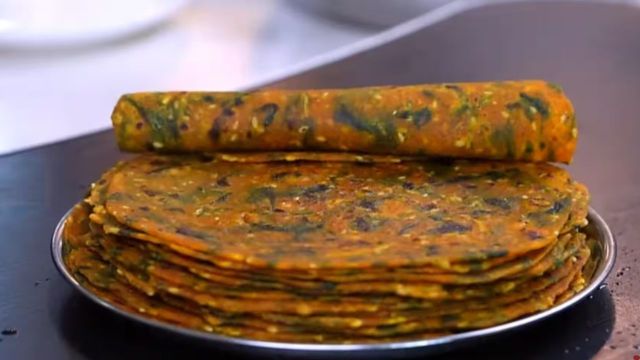
Thepla is a dish that perfectly captures the Gujarati way of life: simple, balanced and full of flavor. It’s made with a mix of wheat flour, gram flour (besan), curd and spices like cumin, turmeric and red chili. The addition of methi (fenugreek leaves) gives the bread its unique taste and smell.
After kneading and rolling out the dough, each thepla is cooked on a tawa with just the right amount of oil or ghee. It should be soft enough to fold but crisp at the edges. You can eat it with pickles, chutney, curd, or even a cup of masala chai. No two people in Gujarati homes make thepla the same way, but every version tastes like home.
More Than Just Breakfast
While most people think of thepla as a morning dish, Gujaratis know it’s much more than that. It’s breakfast on a busy day, a snack with evening tea, a packed lunch for school, or a makeshift dinner when you don’t want to cook. Most importantly, it’s travel food.
Ask any Gujarati family about their must-have item for a road trip or train journey, and the answer will always be “thepla.” Wrapped in foil or cotton cloth, stacked neatly in steel boxes, these flatbreads survive long trips without drying out or spoiling. Even after hours, they remain soft — ready to be eaten with pickle or just plain.
That’s what makes thepla so special — it doesn’t need fancy sides or reheating. It’s comfort that fits in your bag.
The Many Faces of Thepla
Thepla is beautiful because it never stops changing. People still love the classic methi thepla, but home cooks and chefs keep trying new things. Dudhi (bottle gourd) thepla is softer and wetter, palak (spinach) thepla adds a touch of green goodness, and masala thepla adds extra spice for people who like a little heat.
Some even make beetroot or carrot theplas, adding colour and nutrition — a clever trick parents use to get children to eat their veggies. Whether it’s light or rich, spicy or mild, every variation has the same heart: a wholesome flatbread that’s easy to love.
The Nutritional Comfort
Thepla shows that food doesn’t have to be fancy to be good for you. It’s high in protein and fiber because it’s made with wheat and besan. Methi helps with digestion and keeps blood sugar levels stable. Curd keeps it soft and adds calcium. If you don’t want to eat a lot, a couple of theplas with curd make a light but filling meal.
It’s also versatile for all diets — vegan if made without curd or ghee, and still deeply nourishing. That’s why it fits so easily into modern lifestyles — quick to make, easy to store, and full of nutrients.
From Dhabas to Cafés
What started as a home recipe is now everywhere — from roadside dhabas to trendy cafés. In Mumbai, you’ll find cafés serving thepla wraps stuffed with paneer or veggies. In Bengaluru and Pune, small eateries sell methi thepla with chhundo (sweet mango pickle) as part of breakfast combos.
Bringing Home the Taste
There is an easier way to make soft, tasty theplas if you don’t have time to roll and roast them. Simply open Zomato, type “thepla,” and look for the closest restaurants and cloud kitchens that serve it hot and fresh. You can get everything from traditional methi thepla to more creative versions with chutney, curd, or even stuffed fillings.
Also Read:
5 Sony Speakers And Headphones To Upgrade Your Music Experience
PrettyKrafts Underbed Storage Organisers To Declutter Your Bedroom