
Pregnancy has a way of making familiar things feel unfamiliar.
A good night’s sleep suddenly isn’t so good anymore. Your heart seems to beat faster for no obvious reason. You feel warmer than usual, tire more easily, and some days your body seems to have its own schedule.
The strange part is that many fitness trackers don’t know the difference. They continue measuring your body against the same baseline they used before you became pregnant, which means perfectly normal changes can sometimes look like warning signs.
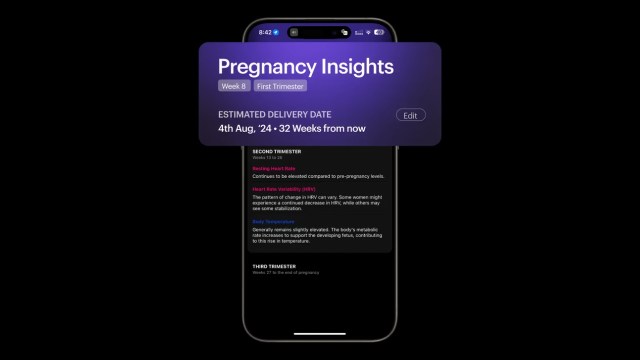
Ultrahuman’s Pregnancy Insights is built around a fairly simple idea: if pregnancy changes the body, the way a wearable reads that body should change too.
The numbers don’t tell the whole story
Take resting heart rate.
It’s completely normal for it to rise during pregnancy, particularly in the early weeks, because your body is working harder to support both you and your baby. But if you were looking at that number on a regular fitness tracker, you’d probably assume something was off.
The same thing happens with heart rate variability and even body temperature. They shift as pregnancy progresses, yet those changes aren’t necessarily a sign that your health is getting worse.
Pregnancy Insights looks at those numbers differently. Instead of treating them as problems, it recognises that they’re often part of the process.
That small change in perspective makes the data much easier to understand.
Every trimester is different
Anyone who’s been pregnant will tell you that the first few months feel nothing like the last few.
Energy levels change. Sleep changes. Even the way your body responds to exercise changes.
Instead of offering one set of health scores for the entire journey, Ultrahuman adjusts its insights depending on the trimester. The information you see is designed to reflect where you are in your pregnancy rather than comparing you with someone who isn’t pregnant at all.
It’s a more realistic way of looking at health because your body isn’t standing still for nine months. It’s constantly adapting.
Gentle guidance, not constant alerts
The Ring still tracks the things it always has—sleep, movement, heart rate, resting heart rate, heart rate variability, and skin temperature.
What’s different is the conversation around those numbers.
You might receive reminders to stay hydrated, suggestions to move a little if you’ve been inactive, or maybe even simple nudges around rest and nutrition.
The aim isn’t to overwhelm you with advice. It’s to help make sense of what’s already happening.
A welcome change for wearable tech
For years, wearables have largely treated pregnancy as an exception rather than something worth designing for.
Pregnancy Insights feels like an acknowledgement that expecting mothers shouldn’t have to ignore half the information their devices provide because the algorithms weren’t built with them in mind.
Instead, the ring adapts to one of the biggest physiological changes the body can go through.
That may sound like a small software update, but it changes how the data feels. Instead of raising unnecessary questions, it offers a little more reassurance and a little more context during a time when both can be valuable.
Also Read: Full Body Checkup vs Individual Tests: Which Offers Better Value?