
For most people, getting a blood test is a one-off exercise.

You book an appointment, wait for the results, glance through a long list of numbers, and maybe discuss them with your doctor. A few months later, life moves on, and those results are rarely looked at again.
The problem is that your health doesn’t stay the same between blood tests.
Your sleep changes. Your stress levels change. Your diet changes. So do your exercise habits. Yet a traditional blood report only captures one moment in time.
That’s the idea Ultrahuman is trying to rethink with Blood Vision, which is now available across 48 U.S. states.
Rather than treating blood work as an isolated event, the platform connects it with the wearable data users generate every day.
Looking beyond a standard blood report
Blood Vision measures more than 100 biomarkers covering areas such as cardiovascular health, metabolism, hormones, inflammation, and healthy aging.
That includes markers like ApoB and Lp(a) for cardiovascular health, fasting insulin for metabolic function, hs-CRP for inflammation, thyroid hormones, and biological age indicators.
On their own, these markers can already provide a detailed picture of what’s actually happening inside the body.
But then Ultrahuman’s focus isn’t just on collecting more numbers. It’s about understanding how those numbers relate to everyday habits.
Connecting blood work with daily life
This is where Blood Vision starts to differ from a typical lab report.
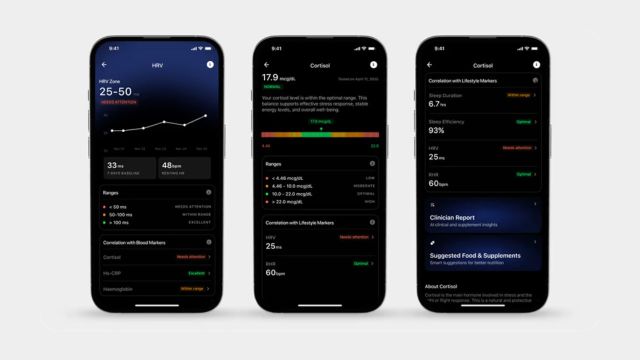
Using what Ultrahuman calls UltraTrace™, blood test results can be viewed alongside data from the Ultrahuman Ring, including sleep, movement, recovery, and, for users of its glucose monitoring platform, glucose patterns as well.
Instead of seeing your blood markers in isolation, you begin to see them alongside the behaviours that may be influencing them.
For example, if you’re trying to improve your cholesterol, reduce inflammation, or manage blood sugar, it’s easier to understand how changes in sleep, exercise, or recovery fit into the bigger picture.
The goal isn’t simply to tell users what their health looks like today, but to help them understand what’s driving those results over time.
The real value comes after the first test
One of the more interesting aspects of Blood Vision is that it isn’t designed around a single report.
The platform includes follow-up testing so users can compare results over time.
That essentially makes it possible to see whether lifestyle changes are actually making a difference, instead of relying on guesswork.
Maybe you’ve started exercising more consistently, improved your sleep, or changed your diet. Rather than wondering if those efforts are paying off, future tests can help show whether key biomarkers are moving in the right direction.
In many ways, the period between two blood tests becomes just as important as the tests themselves.
Turning complex results into something easier to understand
Blood reports aren’t always easy to interpret, especially when they include dozens of biomarkers.
To make that process less overwhelming, Blood Vision includes AI-generated clinician summaries, detailed reports, and performance coaching designed to help users understand what the numbers may mean and where they might want to focus next.
Those insights also take wearable data into account, creating a more complete picture instead of treating blood chemistry separately from daily lifestyle habits.
A different way to think about preventive health
Most healthcare is still reactive. Tests are often ordered after symptoms appear or during annual check-ups.
Blood Vision leans toward a more proactive model.
By combining laboratory biomarkers with continuous wearable data, Ultrahuman is trying to make health tracking more dynamic. Instead of looking at isolated snapshots, users can follow how their bodies respond to changes in sleep, nutrition, exercise, and also recovery over weeks and months.
A broader view of long-term health
Blood Vision doesn’t replace medical care, and it isn’t meant to diagnose disease on its own.
What it offers is more context.
Rather than asking users to make sense of a long list of biomarkers in isolation, it connects those results with the habits that shape them every day.
Now available across 48 U.S. states, Blood Vision reflects Ultrahuman‘s larger goal of moving health tracking beyond single measurements and toward a more continuous understanding of how the body changes over time.
Also Read: Health Checkups for Men: Essential Tests After 30