
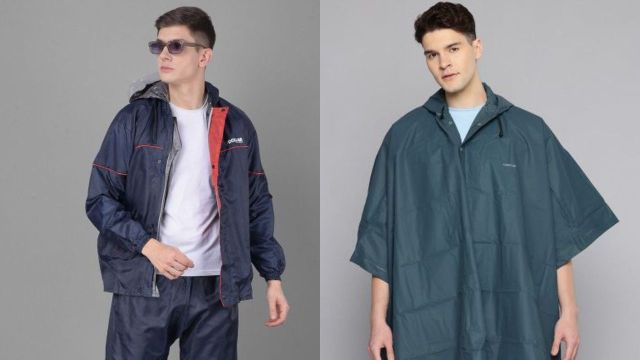
Best rain jackets and coats for men to check out: A good monsoon-ready jacket keeps you dry without feeling like you’re wrapped in plastic, whether you’re dodging city showers or riding through heavier rain. It needs to balance waterproof protection with breathability and enough room to layer, so it can work from early drizzle days to peak downpours as well.
Top 5 men’s rain jackets and coats to consider on Myntra
These styles are curated from Myntra to focus on men’s rain jackets and coats that combine functional details like hoods, sealed seams, along with practical pockets with everyday-friendly silhouettes. The idea is to make Myntra Mega Savings Sale 2026 a smart time to pick pieces that you can fold into your monsoon routine, from commute days to weekend plans, without feeling overbuilt.
Seams and membranes fail first. Nylon shells and polyester rainwear only stay useful if taped seams and coated surfaces keep water from creeping through the stitch lines; once wind pushes rain sideways, every cuff, hood edge, and zipper becomes a point of entry. A drawcord that works, an elasticated hem that seals, or a flap over a zip often matters more than a marketing tag.
The everyday compromise is familiar. Breathable jackets feel more comfortable when you move, but often weigh a little more or need mesh linings and multi-layer builds; simple PVC or EVA ponchos block water bluntly yet can trap heat and stick to skin. Length, fit, and hood design then decide whether a piece is better for a short city downpour or a long, wet hike.
Shell jackets and packable protection
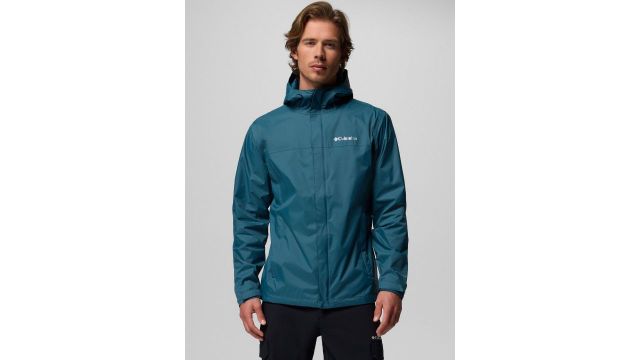
One jacket here uses a technical laminate and mesh lining to solve an old problem. The Columbia Watertight II works with a two-layer nylon shell and fine polyester mesh inside, using a waterproof-breathable construction that aims to shed rain while letting some heat and moisture escape. Omni-Tech seam sealing runs through the garment—seams taped and fabric treated—so the shell works more like a barrier with controlled breathability than a simple plastic coat.
The design choices are straightforward: attached adjustable hood, drawcord hem, zippered hand pockets, and a shell that can pack down into its own pocket. Fit stays on the regular side, leaving enough space to move or to add a mid-layer when conditions turn colder. That makes it more suited to active days and short hikes in real rain rather than just light showers.
Hiking poncho and emergency coverage
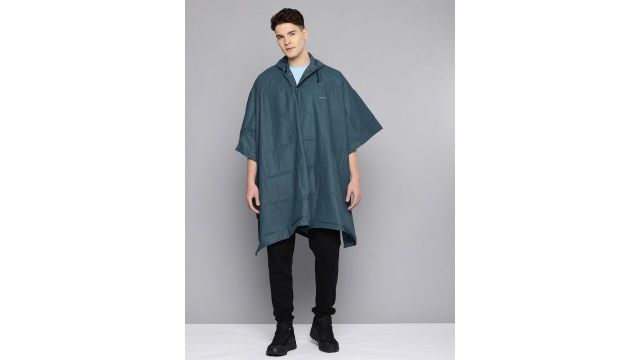
The Decathlon hiking poncho sits at the other end of the spectrum. It’s a teal solid poncho-style rain layer that goes over you and a small backpack (around 10 L capacity), built from EVA-type waterproof material. Hooded, above-knee, straight hem, extended three-quarter sleeves, and simple button closures give it fast coverage when rain arrives unexpectedly.
This kind of poncho is more about backup protection than constant wear. Length and width allow it to slide over a pack, and the straight hem plus wide cut make it easier to throw on quickly—but breathability is blunt, and the feel will be more plastic and less textile. It suits short hikes where a sudden shower is the risk.
Reversible and adjustable zip-front jackets
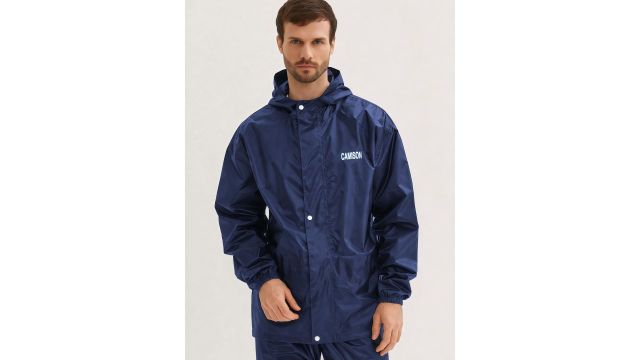
Two jackets here rely on polyester shells and reversible or adjustable details rather than advanced membranes. The CAMISON hooded jacket uses a navy solid shell with attached hood, full front zipper and snap-button placket, elasticated cuffs, side pockets, and an internal pocket. It aims for a regular fit that feels familiar—hood up when you need it, cuffs holding at the wrist, and pockets both inside and out.
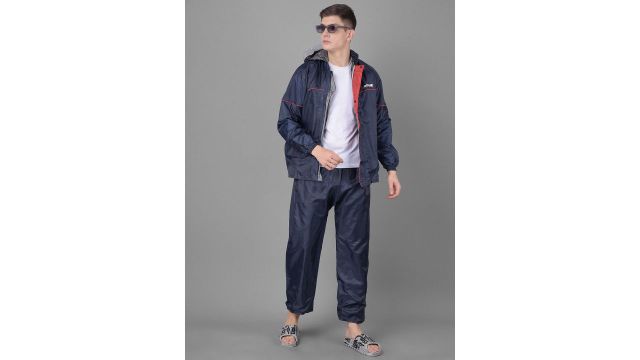
Dollar’s reversible jacket builds on the same idea but adds an overlay flap with snap buttons over the zippers, drawcord-adjustable hood, snap-button sleeve hems, and flapped side pockets. Polyester mixed with PVC pushes it further toward hard rain protection, so it will likely feel less breathable but tougher against sustained wet, especially where the flap and snaps cover the main zip.
These pieces behave like everyday rain jackets: practical for commutes, quick to wipe down, and more about dependable closure systems than refined internal climate control.
Also Read: Fresh Prints, Bigger Savings: Floral Printed Kurtas at Myntra Mega Savings Sale 2026
Striped seams and vented backs
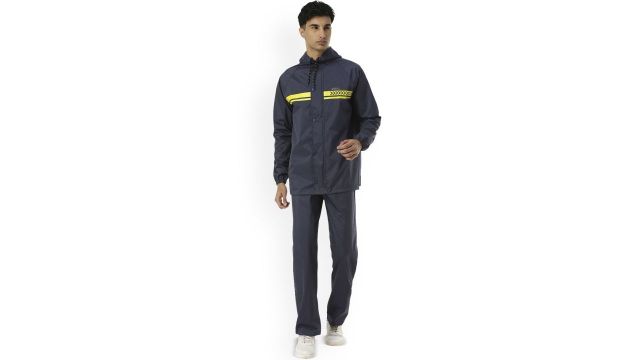
The Zeel jacket introduces a different angle through cut and detailing. Navy and yellow striping, hood with drawcord toggle, seam sealing, adjustable hems, a full front zipper with flap, cuffs and hood drawcord, packable hood, and back vents—all of that nudges it closer to a more technical commuter shell.
Seam-sealed construction and flap-covered zips help keep water out at typical weak points, while back vents and toggles give it a way to shed some built-up heat. It stays in regular polyester rainwear territory, but the pattern and venting make it slightly more intentional for repeated wet-weather use.
Frequently Asked Questions
Which jacket offers the most controlled waterproof-breathable performance for active use? Columbia’s Watertight II.
Which option makes sense as a quick emergency cover on hikes with a small pack? The Decathlon hiking poncho gets the nod here. It’s cut for fast throw-on use, covers both body and backpack, and uses simple closures and above-knee length to keep sudden showers off during short exposures.
Which rain layer feels closest to a straightforward everyday commuter jacket with good closure details? Dollar’s reversible jacket is the clear pick—hood drawcords, snap-button flap over the main zip, and flapped pockets all press it toward practical daily rain blocking rather than technical trail performance.
Which piece suits someone who wants striping and vented comfort rather than a plain solid shell? The Zeel striped jacket—patterned, seam-sealed, and vented at the back.