
When people say a trip is “expensive,” they’re usually talking about the total. But that total is just a mix of smaller decisions stacked together.
Flights, hotels, local travel, timing, even airport choices. Each one pushes the cost up or down.
Skyscanner doesn’t reduce prices on its own. What it does is show you where you’re overspending without realizing it. And once you see that, it becomes easier to adjust.
Start by figuring out where your money actually goes
For most trips, the biggest chunk is the cost of flights. After that comes accommodation. Everything else, food, transport, and activities, tends to be more flexible.
So if you’re trying to cut costs, flights are where the biggest impact is.
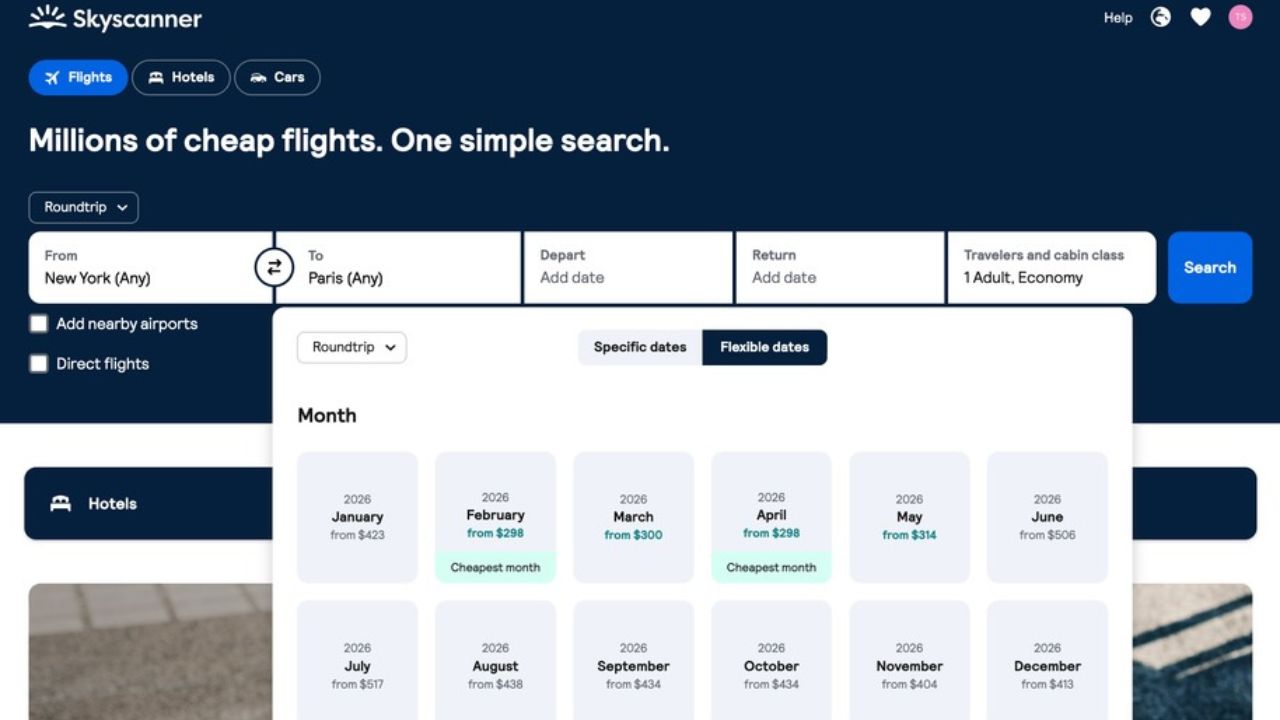
Run a search for your route and check the “Whole Month” view. This alone can show you how much prices shift from day to day.
If one date is clearly more expensive than the others, that’s your first saving opportunity.
You’re not cutting costs yet. You’re just avoiding the expensive option.
Flights: where small changes save the most
Flights are also where people get the most rigid.
Fixed dates, fixed airport, fixed airline.
That combination usually leads to higher prices.
Skyscanner helps you loosen that a bit:
- Try nearby airports instead of just one
- Look at different days in the same week
- Consider flights with one stop instead of direct
None of these feel like big changes, but together they can bring the price down noticeably.
The key is not chasing the absolute cheapest flight. It’s avoiding the overpriced one.
Hotels: where “cheap” can become expensive
Accommodation is the second biggest cost, and it’s where people often make the wrong trade-off.
They sort by lowest price, book the cheapest option, and only realize later that it’s far from everything or poorly rated.
That’s not really saving money.
A better approach is to use Skyscanner to compare options, then filter:
- Set a minimum rating
- Check location on the map
- Look at the price range, not just the lowest number
Sometimes spending slightly more on a well-located place reduces daily transport costs and saves time.
That’s a trade-off worth making.
Car rentals and local transport: easy to overspend here
This is the part most people don’t think about.
They either book a car immediately or ignore it completely.
Skyscanner lets you quickly compare rental options, but the real question is whether you even need one.
If you’re staying in a city, public transport is usually cheaper and easier. If you’re planning to move around a lot, then a rental makes sense.
The cost decision here isn’t just about price. It’s about how you’ll actually use it.
Where the biggest savings usually come from
If you look at the entire trip, most of the savings tend to come from just a few decisions:
- Choosing the right travel dates
- Picking a reasonably priced flight instead of a convenient one
- Avoiding poorly located accommodation
- Not paying for things you don’t need
It’s rarely one big “hack.” It’s just avoiding common mistakes.
Understanding the trade-offs
Budget travel always involves trade-offs. The trick is to choose the right ones.
For example:
- A slightly longer flight might save money without affecting your trip too much
- A hotel a bit outside the center might be fine if your transport is easy
- A red-eye flight could save both money and a night’s stay
But some trade-offs aren’t worth it:
- Extremely long layovers
- Very low-rated hotels
- Airports that are too far to be practical
Skyscanner helps you see these options side by side so you can decide what’s acceptable.
Comparing everything in one place
One of the biggest advantages of using Skyscanner is that it keeps everything visible.
Flights, hotels, car rentals, all in one place.
You’re not jumping between different websites trying to piece things together. You can compare and adjust quickly.
That’s where the cost optimisation really happens. Not in finding hidden deals, but in making better decisions because you can see the full picture.
The practical way to use it
If you’re planning a trip with cost in mind, the flow usually looks like this:
Check destinations and dates → pick a reasonable flight → see what accommodation costs look like → decide if you need a car → adjust where needed.
You’re constantly balancing cost and comfort instead of locking everything too early.
Final thought
Cutting travel costs isn’t about being extreme.
It’s about knowing where your money is going and making small adjustments before you book.
Skyscanner just makes that easier by putting the options in front of you. What you do with those options is where the savings actually come from.
Also Read: Snacks That Replace Dinner During Streaming