
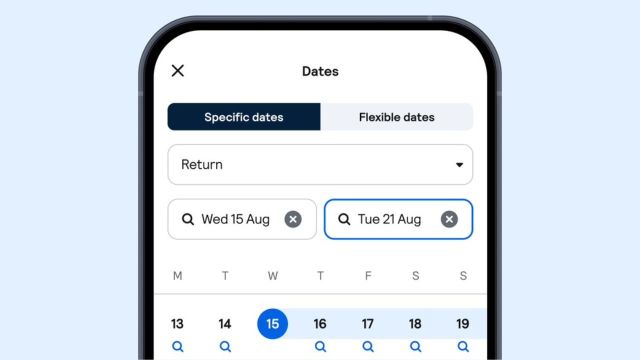
Most people search for flights the same way. Pick a destination, choose exact dates, hit search, and hope the price looks reasonable.

That’s usually where the problem starts.
Flight prices don’t work on fixed logic. They shift based on demand, timing, and how many seats are left. So when you lock yourself into specific dates too early, you’re basically accepting whatever price shows up for that day.
Skyscanner’s flexible dates feature exists for this exact reason. It shows you how prices change across different days so you’re not guessing anymore.
Why fixed dates quietly cost you more
Let’s say you search for a flight from Delhi to Bangkok on a Friday.
You might see a fare that looks fine and assume that’s just the price. But what you’re not seeing is what happens if you fly on Thursday. Or Saturday. Or even Monday.
That same route could easily vary by a few thousand rupees depending on the day.
When you search with fixed dates, you’re only seeing one slice of the picture.
The “Whole Month” view changes everything
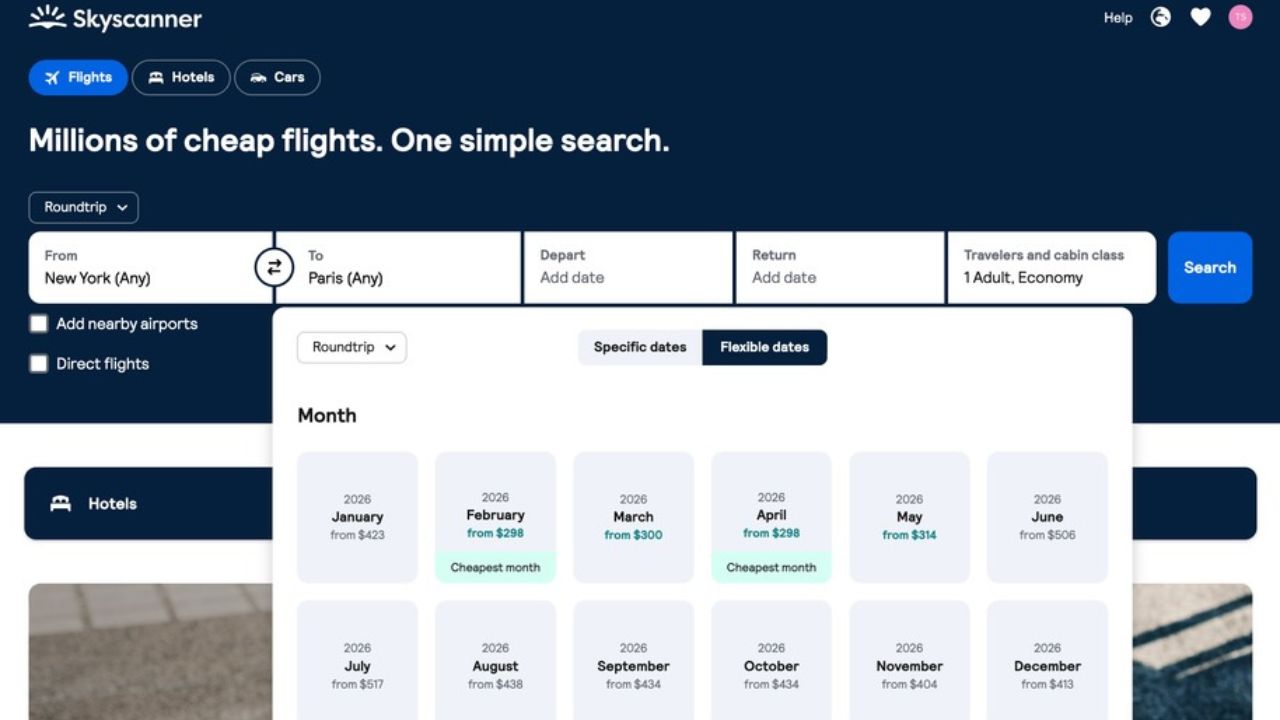
Instead of picking a specific date, switch to the “Whole Month” option.
Now instead of one price, you get a full calendar with fares for every single day. And this is where things start to make sense.
You’ll notice patterns almost immediately:
Some days are consistently cheaper
Weekends tend to spike
Midweek flights often drop
It’s not subtle either. The cheaper dates usually stand out clearly.
For example, a Friday departure might cost significantly more than a Tuesday for the exact same route. Nothing else changes, just the day.
The “Cheapest Month” option goes even further
If your plans are wide open, you can take it a step further with the “Cheapest Month” feature.
Instead of comparing days within one month, this shows you which month has the lowest fares overall.
This is especially useful for international trips. Flying to Europe in peak summer can be expensive, but shifting to a shoulder month like late spring or early autumn often brings prices down.
You’re not just adjusting dates at that point, you’re adjusting the entire timing of your trip.
Real difference it can make
This is where flexible dates actually pay off.
It’s not about saving a few hundred here and there. On longer routes, the gap can be noticeable.
A flight searched on a fixed weekend date might look expensive. Switch to the monthly view, and suddenly you see cheaper options just a day or two away.
For international travel, the difference can be even bigger depending on the season and demand.
Most people never see these options because they don’t look beyond their chosen date.
Who benefits the most from this
Flexible dates don’t work for everyone.
If you have fixed leave dates, specific commitments, or need to travel on a certain day, there’s not much room to adjust.
But if you have even a bit of flexibility, this feature becomes one of the easiest ways to save money without doing anything complicated.
It’s especially useful for:
- Leisure travel
- Remote workers or freelancers
- Anyone who’s planning trips much in advance
The mindset shift
The biggest change isn’t the feature itself. It’s how you approach booking.
Instead of asking, “What does this flight cost on this date?” you start asking, “When is the cheapest time to take this trip?”
That small shift changes everything.
Final thought
Skyscanner’s flexible dates feature doesn’t unlock hidden discounts. It just shows you the full picture.
And once you see how much prices move across different days and months, it becomes hard to go back to searching the old way.
Also Read: Festival-Time Food Orders Across Regions