Travel looks very different when it’s not a one-week break.
For digital nomads, flights aren’t just about getting from point A to point B. They’re part of an ongoing routine. Work schedules, visa limits, cost of living, internet reliability, all of it ties back to where someone goes next and when.
In that kind of setup, planning isn’t fixed. It’s flexible, and often ongoing.
That’s where tools like Skyscanner fit in. Not as a one-time booking platform, but as something that gets used repeatedly, almost like a reference point.
Planning without a fixed destination
A typical traveler usually starts with a destination.
A digital nomad often starts with a constraint.
It could be:
- A visa about to expire
- A rising cost of living in the current city
- Seasonal changes
- A need for better connectivity or work conditions
Instead of searching for a specific place, the search often begins with options.
This is where broader search tools, like flexible destination queries, become useful. Instead of deciding first and checking later, the process is reversed.
Using price as a direction, not just a filter
For long-term travel, price isn’t just about saving money on a single trip, but it influences where someone goes next.
If a certain region consistently shows lower fares at a given time, it can basically shape the next destination. Southeast Asia, Eastern Europe, or parts of the Middle East often appear in these patterns depending on the season.
Skyscanner becomes less about finding a deal and more about spotting movement trends.
Adapting travel to work schedules
Unlike short trips, digital nomad travel has to fit around work.
That changes how flights are chosen.
Instead of prioritising the absolute cheapest option, there’s more attention on:
- Arrival times that don’t disrupt workdays
- Layovers that don’t cut into productive hours
- Routes that allow a smoother transition between time zones
The cheapest option isn’t always the most practical when work is involved.
One-way flights over round trips
Long-term travel rarely follows a return structure.
One-way flights are more common, and plans are often open-ended.
Skyscanner offers the ability to compare one-way routes across multiple airlines becomes even more relevant here. Instead of locking into a return date, the focus changes to the next step in the journey.
It’s basically less about completing a trip and more about continuing it.
Frequent, smaller decisions instead of one big plan
A usual vacation might involve one major booking but in case of digital nomads, planning does not quite stop.
Flights are checked regularly by them, even if there’s no immediate booking. Prices are tracked, routes are explored, and further options are kept in mind.
It’s a series of small decisions rather than one fixed itinerary.
Balancing cost with quality of stay
Flight cost is only one part of the equation.
A cheaper flight to a destination with a higher cost of living might not make sense overall.
So planning often looks like:
- Checking flight prices
- Comparing living costs
- Considering how long to stay
Skyscanner plays a role in that first step, but the decision is always tied to a bigger picture.
Flexibility as a default
The biggest difference in how digital nomads use Skyscanner is flexibility.
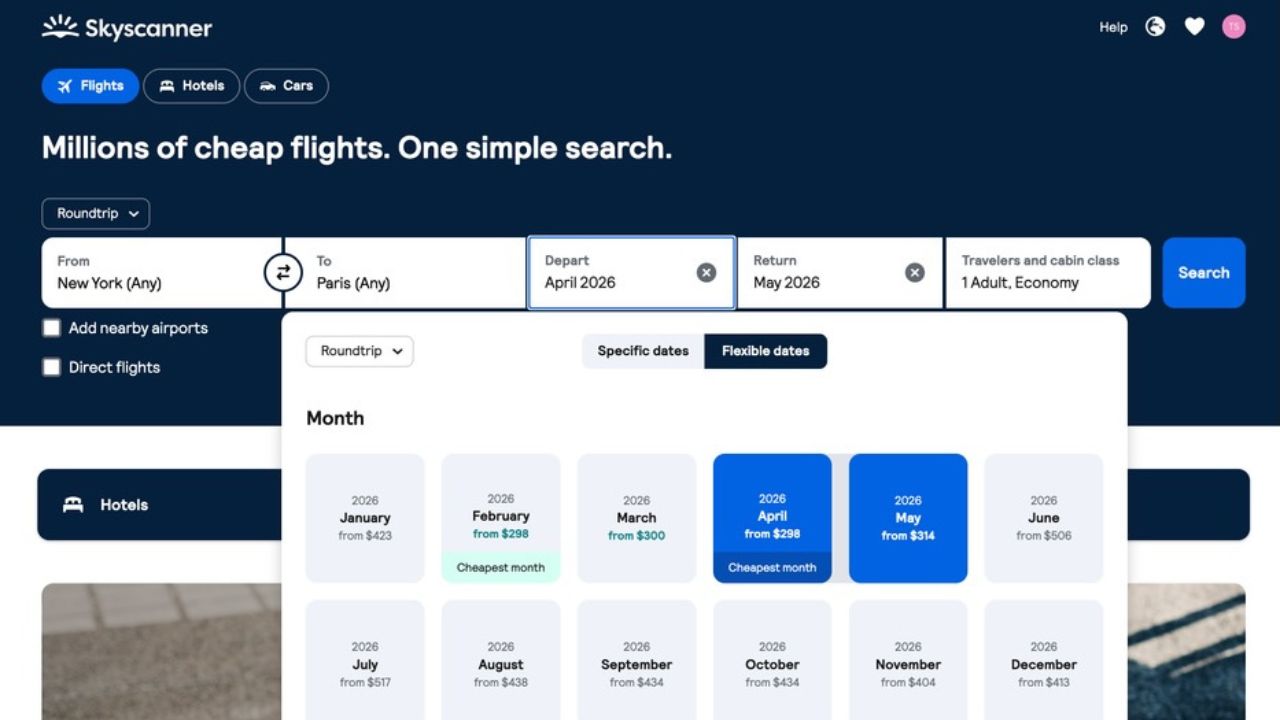
Dates are often adjustable for them but then destinations are not always fixed. Furthermore, routes can further change based on new information.
This makes features like flexible date searches or broader destination queries more relevant when compared to exact searches.
The process is less about precision and more about exploration and that too within a range.
Movement based on patterns, not plans
Over time, patterns start to form.
Certain months are cheaper for specific regions. Some routes fluctuate more than others. Some destinations consistently show better value.
Instead of planning everything in advance, decisions are made based on these patterns.
Skyscanner becomes part of that observation process.
The bigger shift
Digital nomad travel isn’t built around a single itinerary.
It’s built around adaptability.
Flights are one part of that system, connected to work, lifestyle, and long-term planning rather than just a short-term goal.
Final thought
For digital nomads, Skyscanner isn’t just a booking tool.
It’s something that sits in the background of how movement is planned, adjusted, and repeated over time.
Not for finding one perfect flight, but for continuously shaping where to go next.
Also Read: Desk Lamps That Reduce Eye Strain During Night Work