Snoring is one of those things most people laugh off or ignore. It’s usually someone else who notices it first, and even then, it rarely feels serious enough to worry about. But beneath that familiar nighttime noise, there can be signals your body is trying to send, signals that often go unnoticed for years.
That’s largely because you’re asleep when it happens.
Research has consistently shown that frequent snoring isn’t just a minor inconvenience. It can be linked to higher risks of conditions like stroke, and in many cases, it overlaps with undiagnosed sleep apnea. The problem is not just the snoring itself, but the lack of awareness around it. If you don’t know when or how often it’s happening, there’s very little you can do about it.
This is where Ultrahuman’s Respiratory Health PowerPlug for the Ring AIR starts to make sense. Instead of treating snoring as background noise, it treats it as a measurable signal.
Making the invisible visible
The idea behind the feature is straightforward: give users a clearer picture of what’s happening to their breathing while they sleep.
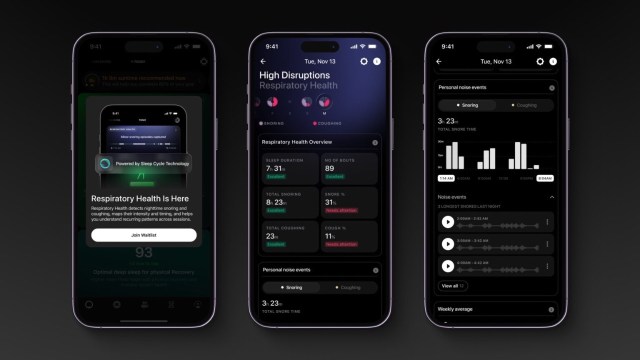
Using your smartphone’s audio, the PowerPlug detects snoring, coughing, and irregular breathing patterns through the night. It logs exactly when these events happen, how long they last, and how intense they are. You can even go back and listen to specific moments if you want context around what was detected.
Importantly, all of this processing happens on your device. Nothing is recorded or uploaded externally, which keeps the experience private while still being detailed.
By morning, instead of a vague sense of how well you slept, you get a breakdown of what actually happened.
Connecting the dots with your body
What makes this more useful than a simple snore tracker is how it ties into the broader data from the Ring AIR.
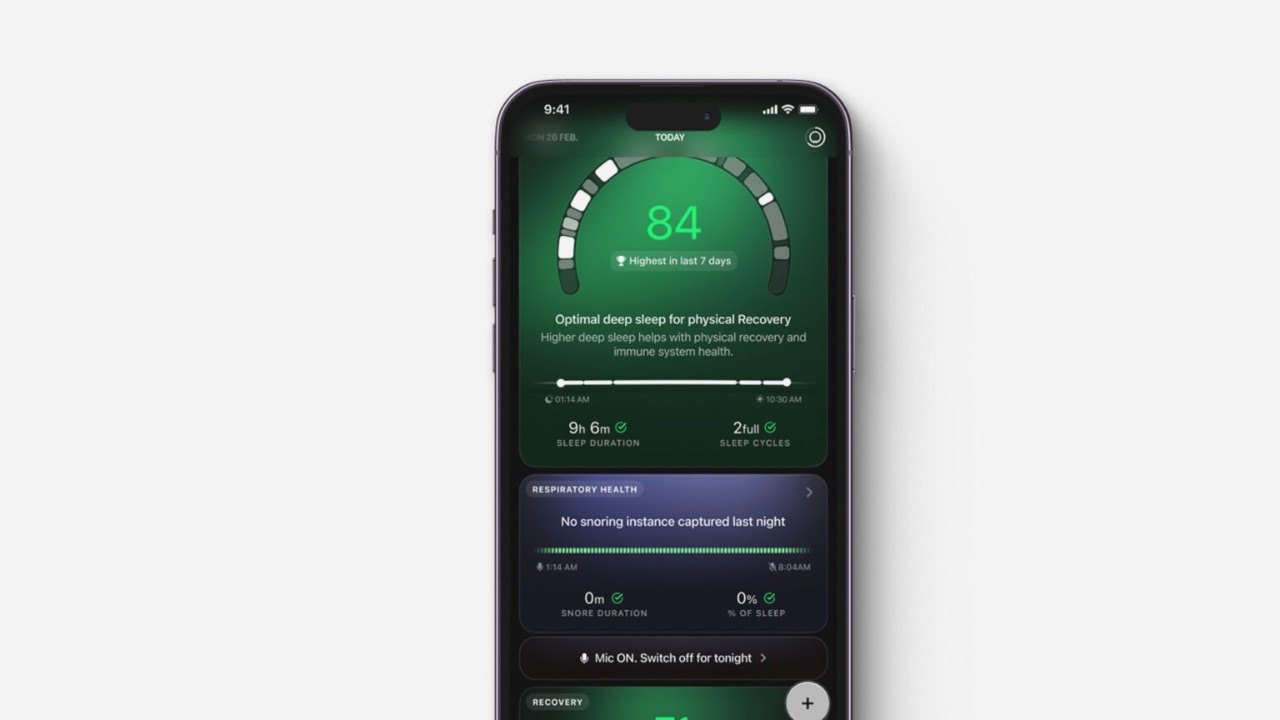
Each breathing disturbance is mapped alongside metrics like heart rate, heart rate variability, movement, and sleep interruptions. This basically gives you a clearer picture of cause and effect. For instance, you can see if a spike in heart rate lines up with a snoring episode, or whether certain disturbances are actually fragmenting your sleep.
Over time, this kind of correlation helps separate random noise from patterns that might be worth paying attention to.
Also Read: How Ultrahuman Is Changing Preventive Healthcare Through Smart Wearables
From awareness to small changes
The goal here isn’t diagnosis. It’s awareness.
Once you start seeing patterns, it becomes easier to experiment with small, practical changes. Maybe your snoring is worse after alcohol, or during periods of congestion. Maybe changing your sleeping position reduces disruptions. These are things that are hard to identify without consistent data.
There’s also value in having something concrete to share with a doctor if you ever decide to take that step. Instead of relying on guesswork, you have a record of what your nights actually look like.
A quiet shift in how we look at sleep
Features like this point to a broader shift in how wearables are evolving. It’s no longer just about counting steps or tracking sleep duration. It’s about understanding the quality of that sleep and the subtle factors that influence it.
Snoring, in that sense, stops being something to joke about and starts becoming a useful piece of information.
The Respiratory Health PowerPlug is available within the Ultrahuman app as a subscription, priced at $3.99 per month or $39.99 per year. For users already invested in the Ring AIR ecosystem, it adds another layer of insight, one that focuses on something most people have been overlooking for far too long.