

Flight booking has always involved a certain amount of friction.
You open multiple tabs, compare prices across dates, switch airports, adjust filters, and repeat the process until something finally looks reasonable. Even with modern travel apps, finding the “right” flight can still feel more like research than planning.
Skyscanner’s new integration inside ChatGPT is trying to simplify that process by turning flight search into a conversation instead of a series of filters and forms.
Searching for flights now feels more natural
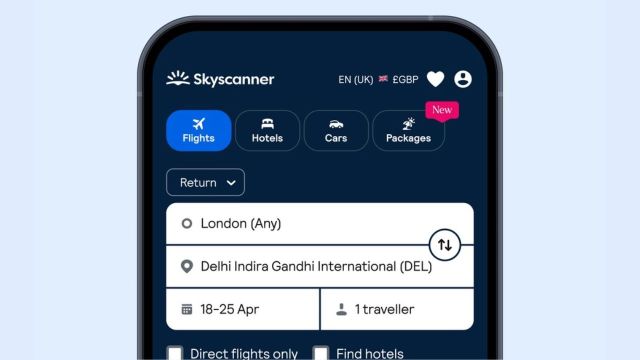
The idea behind the Skyscanner app in ChatGPT is fairly straightforward, where instead of manually mentioning destinations, dates, and preferences, users can type in their requests, all in a conversational manner. Something as simple as, “Find me the cheapest flight to New York in December,” is enough to start generating results.
From there, the interaction becomes more fluid.
You can refine dates, switch airports, compare options, or adjust your plans with follow-up messages instead of restarting the search every time. It feels closer to talking through travel plans with someone rather than navigating a traditional booking interface.
That’s really the biggest shift here.
It’s still Skyscanner underneath
What’s important is that this isn’t a separate booking engine.
The integration still uses Skyscanner’s flight search system and pricing data, which is what many travellers already rely on for comparing airlines and finding cheaper fares. The difference is mostly in how users interact with that data.
Instead of making users adapt to the platform, the platform adapts more naturally to how people already think and talk.
That may sound small, but it removes a surprising amount of friction from trip planning.
Why conversational travel planning makes sense
Travel searches are rarely straightforward.
People don’t always know exact dates. Sometimes they’re flexible on destinations. Sometimes they just want “somewhere warm and affordable next month.” Traditional travel apps aren’t particularly good at handling those kinds of vague requests.
Conversational AI changes that dynamic.
You can gradually shape your trip as you go instead of needing everything figured out upfront. And because the interaction feels more flexible, users are more likely to explore options they may not have considered otherwise.
In reality, it makes the search experience feel less transactional and even more exploratory.
Skyscanner is clearly leaning further into AI
The ChatGPT integration is only one part of a broader shift happening at Skyscanner.
The company has already been building AI-powered tools across different parts of its platform, including conversational hotel and car hire experiences. It has also experimented with more specialised tools, like its Football Flight Finder, which helps fans plan multi-city travel around tournament schedules.
The larger goal seems to be reducing the amount of effort required to plan a trip.
Instead of just showing search results, AI is increasingly being used to help users make decisions faster and with more confidence.
This feels less like a gimmick than some AI travel tools
A lot of AI integrations right now feel experimental. They sound impressive but don’t necessarily improve the actual experience.
This one feels more practical.
Flight search already involves constant back-and-forth adjustments, which makes it naturally suited to conversation-based interfaces. Being able to tweak plans without repeatedly resetting filters genuinely makes the process smoother.
Of course, it doesn’t completely replace traditional booking apps yet. Some travellers will still prefer manually comparing every detail themselves. But for casual trip planning or flexible searches, the conversational approach feels easier almost immediately.
A sign of where travel search is heading
What Skyscanner is doing here probably says more about the future of travel platforms than this feature alone.
Search interfaces are slowly moving away from rigid forms and toward more adaptive, AI-driven interactions. The expectation is shifting from “learn how the app works” to “just describe what you want.”
And travel is one of the clearest examples of where that approach actually makes sense.
The Skyscanner app in ChatGPT is currently available in markets including the UK and the US, giving users access to live flight search directly within a conversational interface.
For travellers, it may not completely change how flights are booked overnight. But it does make the process feel a little less mechanical, and a lot closer to how people naturally plan trips in the first place.
Also Read: Quality Soil Care Products To Improve Plant Growth