
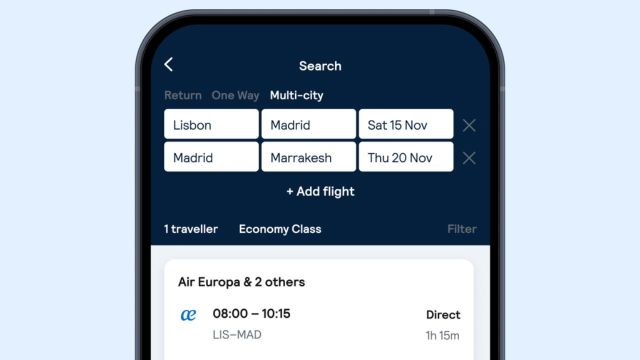
Planning a multi-city trip always sounds great in your head.

You imagine moving from one place to another, seeing more, doing more, making the most of your time. But when it comes to actually booking it, things get messy pretty quickly. You either end up forcing a return flight that doesn’t really fit your plan, or you start booking separate tickets and hoping everything works out.
This is where Skyscanner’s multi-city search quietly makes life easier. It’s not complicated, it just lets you book your trip in a way that actually matches how you want to travel.
Start by thinking like a traveler, not a ticket
Most people begin with this idea: “I’ll go here and come back from the same place.”
But that only works if you’re staying in one city.
The moment you’re visiting multiple places, it makes more sense to think in a straight line. Where do you want to land, and where do you want to leave from?
For example, if you’re planning something like Paris and Rome, it doesn’t make much sense to travel all the way back to Paris just to catch your return flight. You can simply land in one city and fly out of the other.
That one small change makes your entire trip feel smoother.
Using the multi-city option without overthinking it
When you open the multi-city tab on Skyscanner, it might look like you need to plan everything in detail.
You don’t.
Just add your main legs:
- Your first flight into the country or region
- Your last flight back home
If you already know the cities in between, you can add them. If not, you can figure those out later.
Trying to plan every stop perfectly from the start is what makes it feel complicated. Keeping it simple makes it manageable.
Should you book everything together or separately?
This is the part where most people get stuck.
Booking everything together feels easier. One itinerary, one place to check details, less to worry about.
But sometimes, when you check separate one-way flights, the total comes out cheaper. And that’s tempting.
So it becomes a trade-off.
Booking together gives you peace of mind. Booking separately gives you more control and sometimes a better price.
There’s no fixed rule here. It depends on what matters more to you for that trip.
The small risk that’s easy to overlook
When you book separate flights, you’re also taking on a bit more responsibility.
If one flight gets delayed and it affects your next one, airlines usually won’t step in because those bookings aren’t connected.
With a multi-city ticket, things are a bit more tied together, so there’s less stress if something goes wrong.
It’s not something you think about while booking, but it matters when things don’t go as planned.
Where multi-city planning really shines
This works especially well for trips where you’re naturally moving across places.
Europe is the easiest example. You might land in one city, travel through a couple more, and leave from somewhere completely different.
Instead of looping back just for a flight, your journey keeps moving forward.
It also works well for longer trips where staying in one place the whole time doesn’t really make sense.
Always do a quick comparison
Before you book, it’s worth checking both options.
Run a multi-city search, then quickly look at separate one-way flights for the same route.
Sometimes the difference is small, and it’s easier to just book everything together. Other times, you might save enough to make separate bookings worth the effort.
It only takes a few minutes, and it helps you avoid second thoughts later.
Pay attention to how your days are shaped
With multiple flights, timing becomes more important.
A late-night arrival might wipe out your first day. A very early departure can cut your last day short. Tight connections can make the whole thing stressful.
You don’t need perfect timings, just something that gives you a bit of breathing space.
The simple way to look at it
Multi-city search isn’t really about using a feature.
It’s about planning your trip in a way that makes sense.
You land where your journey starts, you leave from where it ends, and everything in between feels connected instead of forced.
Once you try it once, it’s hard to go back to planning everything as a basic return trip.
Also Read: Step-by-Step Guide to Planning a Trip Using Skyscanner