
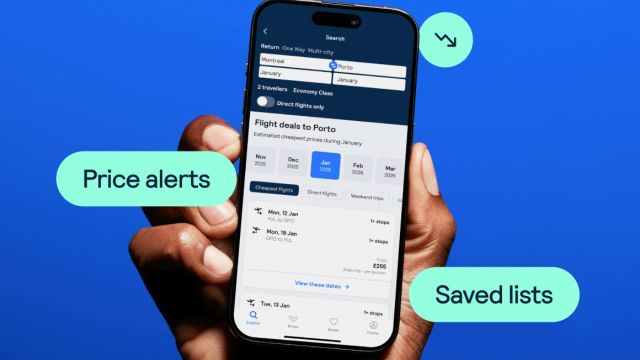
There is a highly specific financial penalty in the travel world known as the “Event Tax.”
You experience it the second a massive stadium tour announces its dates, a major tech convention locks in its schedule, or a giant international expo comes to town. Overnight, flight prices to that city double, hotel rooms triple, and standard routes get booked solid.
Whether you are trying to catch a legendary band on their reunion tour, heading to San Diego for Comic-Con, or flying to Barcelona for the Mobile World Congress, you are competing with tens of thousands of other people who are all trying to go to the exact same place at the exact same time.
If you book like a tourist, you will get gouged. To beat the surge, you have to approach Skyscanner with a tactical, event-focused mindset. Here is how to slip through the cracks of peak event pricing.
1. The “Tour Destination Swap” Strategy

Here is a wild but true reality of modern live entertainment: it is often significantly cheaper to fly to a completely different country to see your favorite artist than it is to buy a ticket and a domestic flight to see them in your home country.
When a major global tour is announced, don’t just search for flights to the nearest stop.
- The Math: Let’s say a massive pop star is playing in New York and London. Because the demand in New York is astronomical, flights and tickets are touching ridiculous numbers.
- The Skyscanner Play: Run a few quick searches for other tour stops on Skyscanner using the “Everywhere” or “Whole Month” tool for the tour’s run. You might find that flying into a secondary European tour stop—like Budapest or Cologne—costs a fraction of the price. The money you save on the cheaper flight and local accommodation can easily cover your concert ticket, turning a simple show into an international holiday.
2. Leverage the “Event Radius” with Nearby Airports
When an expo or convention hosting 100,000 delegates lands in a city, the primary airport becomes a massive bottleneck. Airlines know that business travelers with corporate expense accounts will pay whatever it takes to fly directly into the city center.
If you are paying out of your own pocket, you need to widen your search radius.
When you enter the host city into Skyscanner, always check the “Add nearby airports” box.
- The West Coast Example: If you are heading to a massive convention in San Francisco, don’t just look at SFO. Look at Oakland (OAK) or San Jose (SJC).
- The European Example: If you are attending a major trade show in Düsseldorf, check flights into Cologne (CGN) or even Brussels (BRU).
Because these secondary airports are often ignored by corporate booking tools, flights remain priced at normal, off-peak rates. Taking a 45-minute regional train from a nearby city is a small price to pay to save hundreds of dollars on airfare.
3. Play the Rumor Mill with “Soft Booking” Price Alerts
By the time a major event is officially announced on the news or social media, it is already too late. Within minutes of an official press release, thousands of fans and also professionals flood booking sites, triggering automated pricing algorithms to spike the fares.
To beat the rush, you have to set up your Skyscanner infrastructure early based on rumors and historic dates.
- Track the Annual Patterns: Most massive conventions and trade shows happen at the exact same time every year. CES is always early January in Las Vegas; the Cannes Film Festival is always in May.
- Set Up Price Alerts Months in Advance: Three to six months before the official announcement, set up Price Alerts on Skyscanner for the rumored dates.
- The Trigger: If you see a sudden, slight downward dip in prices, or if the prices are sitting at their absolute baseline, book it. Many airlines offer flexible tickets that let you change your dates for free. By securing a baseline fare before the general public catches on, you completely bypass the event-announcement spike.
4. Reverse-Engineer the Multi-City Loop to Avoid the Sunday Mass-Exodus
The worst day to fly out of any event city is the day after the event ends. If a three-day music festival wraps up on Sunday night, Monday morning at the airport is going to be a stressful, expensive nightmare of long security lines and sold-out flights.
Instead of fighting the crowd, use Skyscanner’s Multi-City tool to design a route that routes you away from the chaos.
Instead of booking a simple round-trip, try this:
- Leg 1: Fly from your home city to the event city a day or two early (when flights are still reasonably priced).
- Leg 2: On the final day of the event, instead of flying straight home, book a cheap regional flight or take a train to a quiet, nearby tourist town.
- Leg 3: Fly back home from that quiet town a couple of days later.
By avoiding the mass-exodus on Monday morning, you get to wind down from the high energy of the event in a relaxed environment, and your flight home will be significantly cheaper and less crowded.
The Golden Rule of Event Travel
When you are traveling for a massive gathering, the travel itself is just the prologue to the main event. Don’t let the stress of overpriced flights and cramped schedules ruin the experience before you even arrive.
By widening your airport search, playing the calendar early, and being willing to take a scenic train ride to bridge the final leg, you can beat the airlines at their own game—and save your budget for the actual event.
Also Read: Bike Care Kits That Keep Motorcycles Looking Their Best on Amazon