There was a time when finishing an entire season over the weekend felt normal.
A new web series would drop, social media would start talking about it, and suddenly everyone was trying to squeeze eight or ten episodes into two days. For a while, that was the standard way of consuming entertainment.
These days, things seem to be moving in a different direction.
The problem isn’t that people have stopped enjoying web series. Plenty of long-format shows continue to attract huge audiences. The issue is that finding the time to start something new has become surprisingly difficult.
Most people already know the feeling.
A promising new series gets added to the watchlist. A few weeks pass. Then a few more. Eventually, another show takes its place. The list keeps growing while the available free time stays exactly the same.
That’s one reason quick drama content has started gaining momentum.
Instead of asking viewers for several hours, it asks for a few minutes. The commitment feels smaller, which often makes pressing play much easier.
What’s interesting is that these shorter shows aren’t replacing drama. They’re simply changing its pace.
Traditional web series mostly spend time building characters, setting up storylines, and then gradually developing tension. Quick drama content works with a different philosophy. The conflict arrives early, the stakes become clear almost immediately, and every episode pushes the story forward.
There’s very little room for slow stretches.
That faster approach seems to be connecting with modern viewing habits.
Entertainment today competes with a lot more than other entertainment. Messages, social media feeds, work notifications, short videos, podcasts, and countless digital distractions are all fighting for attention. A story that gets interesting within minutes naturally has an advantage.
This is where microdrama platforms have started carving out a space for themselves.
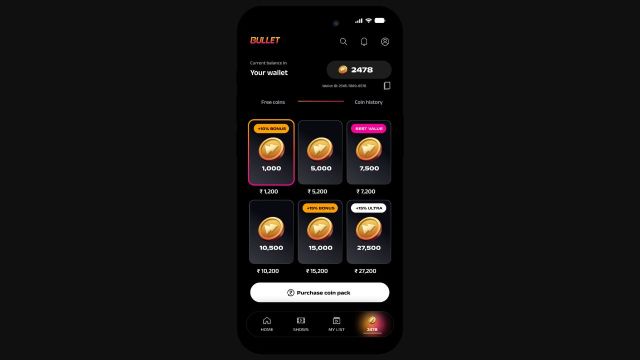
Platforms such as Bullet are built around the idea that compelling stories don’t necessarily need long episodes. And so, the platform offers short-form drama series across multiple genres as well as Indian languages, thereby creating an experience that feels very different from traditional streaming services.
The content itself reflects that shift.
On Bullet, titles like Love After Breakup, ATM Pati, and Superstar Loves Secretary jump straight into relationship conflicts and emotional twists, and then shows such as Obsession, Dhokebaaz Dilruba, and Race Ka Dhurandhar bring suspense and unpredictability into the mix. Rather than taking several episodes to establish the central conflict, these stories get moving almost immediately.
That’s part of their appeal.
A few spare minutes can be enough to experience meaningful progress in a story. There is a sense of momentum that keeps viewers engaged, and that too without demanding an entire evening. Furthermore, the rise of quick drama content further also reflects changing expectations around convenience.
People increasingly consume entertainment the same way they consume everything else: on demand and in smaller chunks. A story no longer needs to fit into a schedule. Instead, it fits into whatever free time happens to be available.
Cost has also become part of the conversation.
With multiple subscriptions already competing for attention and money, viewers are becoming more selective about where they spend. Platforms that offer an easy entry point often stand out. Bullet’s one-day trial starting at ₹1 is one example of how microdrama services are lowering the barrier for people curious about trying a different kind of entertainment.
None of this means long web series are disappearing.
There will always be an audience for detailed storytelling, complex character arcs, and also sprawling narratives. But not every viewing session needs that level of commitment.
Sometimes, all that’s needed is a few minutes, a good cliffhanger, and a story that knows exactly where it’s going.
That simple shift is helping quick drama content find an audience, and it’s one of the reasons more viewers are beginning to look beyond traditional web series when deciding what to watch next.
Also Read: How Skyscanner Can Help Travelers Explore Secondary Cities Instead of Tourist Hotspots