There was a time when most recommendations came from someone you knew.
A friend at work insisted you watch a particular series. A cousin wouldn’t stop talking about a new drama. Sometimes an entire office seemed to be discussing the same show, and by the end of the week you gave in just to understand what everyone else was talking about.
That still happens, of course, but recommendations don’t travel in quite the same way anymore.
Now it’s just as common to stumble across something by accident. A short clip appears while scrolling through social media. Someone mentions a title in the comments section of an unrelated post. An episode starts playing while you’re waiting for something else, and before long you’ve watched several more without intending to.
Entertainment has become surprisingly incidental.
The interesting part is that people don’t always set out looking for a two-hour film or a series they’ll spend the next fortnight watching. Quite often they’re simply looking for something engaging to fill a few spare minutes. If whatever they find happens to be entertaining, they’ll come back later. If it doesn’t, they’ll move on without feeling that they’ve wasted much time.
That’s one reason microdramas seem to fit naturally into today’s viewing habits.
The format doesn’t ask for much at the beginning. You don’t have to study reviews or wonder whether you’ll have enough time to finish an entire season. Watching the opening episode feels less like making a commitment and more like satisfying a bit of curiosity.
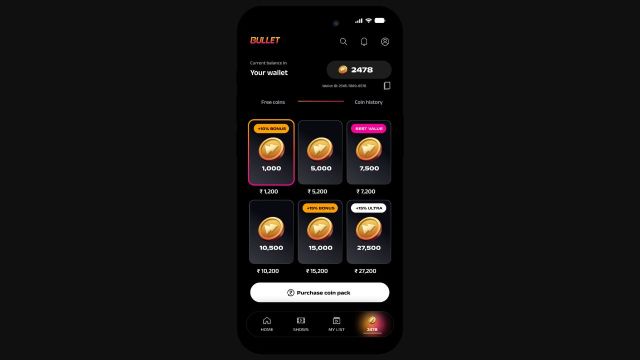
Platforms such as Bullet have leaned into that idea rather than fighting it. A viewer might begin with Love After Breakup because the title sounds familiar, then notice Generation Gap while browsing, and then later switch to something that’s actually entirely different such as Khufiya Crorepati or Obsession. The journey doesn’t necessarily follow a plan, and perhaps that’s the point. Discovery feels spontaneous rather than carefully organised.
Interestingly, this has also made language feel like less of a barrier than it once was.
Not very long ago, many people limited themselves to content in one or two languages. Today it’s fairly common for viewers to jump between Hindi, Telugu, Tamil, Marathi or Malayalam productions if the premise catches their attention. The popularity of regional cinema and web series over the past few years has probably made audiences more willing to explore, and platforms that bring multiple languages together in one place naturally benefit from that shift.
Bullet reflects this change by offering dramas across several Indian languages while making them easy to browse through language and genre filters. Those features don’t usually make headlines, but they remove enough friction that people spend less time searching and more time watching.
Even the ₹1 one-day trial feels consistent with that philosophy. It basically doesn’t ask viewers to make a big decision immediately. Instead, it leaves room for experimentation, which is often how people discover something they genuinely enjoy.
Perhaps that’s the biggest difference between entertainment today and entertainment a decade ago.
People don’t always fall in love with a show because they spent hours researching it or because it topped every recommendation list. Sometimes it happens because they had ten free minutes, opened an app without much expectation, and happened to find something that was worth staying for.
In the end, the most memorable discoveries are often the ones that weren’t planned at all.
Also Read: Why Ultrahuman Thinks Blood Tests Shouldn’t Be a Once-a-Year Event