Top embroidered kurtis to check out: Embroidery can turn even soft pastel kurtis into standout pieces that feel ready for photos and gatherings. It adds texture around the neck and sleeves, making the outfit look more intentional without needing too many accessories. That kind of easy elevation is what makes these kurtis a favourite in many wardrobes.
Top embroidered kurtis for women to consider on Myntra.
These embroidered kurtis for women have been curated from Myntra so you can find pieces that balance colour, comfort, and detail in one look. With the Myntra Mega Savings Sale 2026 live till July 12, it’s a great moment to buy kurtis that feel layered with craft but still stay light enough for warm days and long events. The focus is on designs that sit well with simple jewellery, familiar bottoms, and everyday styling.
Embroidery pulls fabric into small tensions that change how a tunic falls down the body. On cotton, thread work sits firm and crisp; on viscose rayon or georgette, the same stitches can make the cloth ripple and glide more softly around the hemline and sleeves, especially when the cut is A-line or flared rather than straight.
The daily trade-off across these pieces is between breathability and drape, and between subtle ethnic motifs and heavier surface detail. Mandarin and V-necks frame the face in different ways, roll-up or long sleeves adjust how much structure you see at the arms, and curved or straight hems quietly decide whether the tunic feels more fluid or more tailored.
Cotton A-line and straight viscose cuts
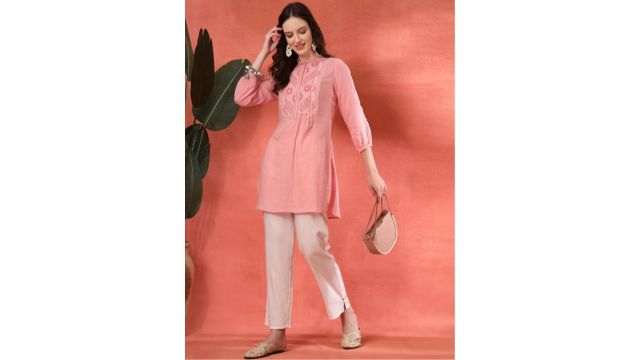
The Nayam by Lakshita tunic and the LIBOZA kurti form the softest entry into this set. The Nayam piece uses pure cotton with ethnic motif embroidery, a mandarin collar, three-quarter regular sleeves, thread work, and a curved hem in an A-line shape. It behaves like a fusion tunic: breathable, lightly structured at the neck, with embroidery giving character without overwhelming the cotton base.
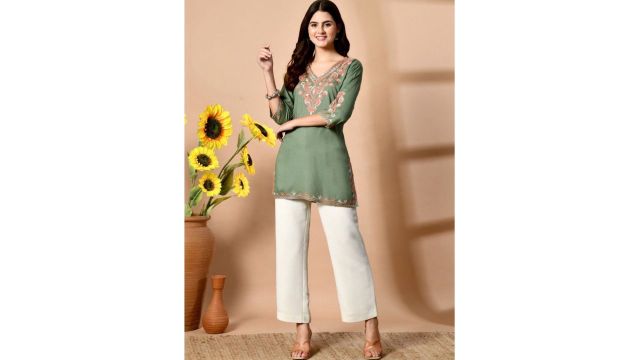
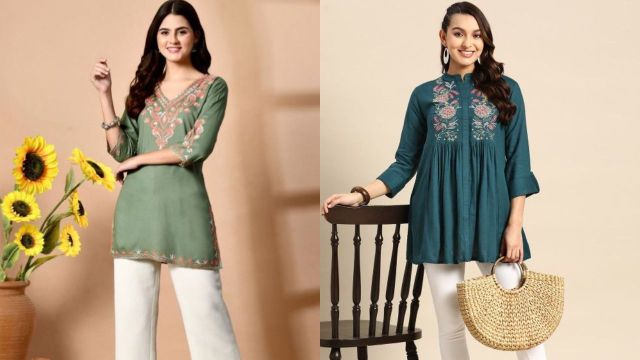
LIBOZA’s olive kurti shifts the same idea into viscose rayon and a straight shape. A V-neck, three-quarter sleeves, straight hem, and thread work embroidery keep it restrained and sleek, with the rayon adding more drape than the cotton tunic. It reads more linear and slightly dressier because of the straight cut and fluid fabric, while still staying in the “regular, wearable” embroidered space.
Chikankari and Kashmiri aari work
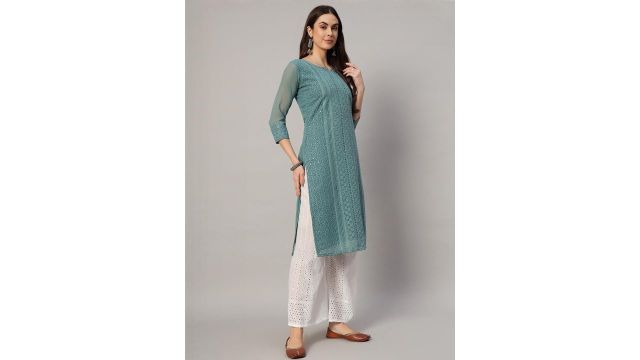
Umoly and Qazmi move into more defined regional craft territory. The Umoly kurta uses chikankari embroidery with intricate sequin work on georgette, paired with wide-leg embroidered palazzos. Even without full spec detail on shape, the three-quarter sleeves, V-neck, and chikankari focus frame it as a light, occasion-friendly ensemble where the texture and translucent softness of georgette do most of the aesthetic work.
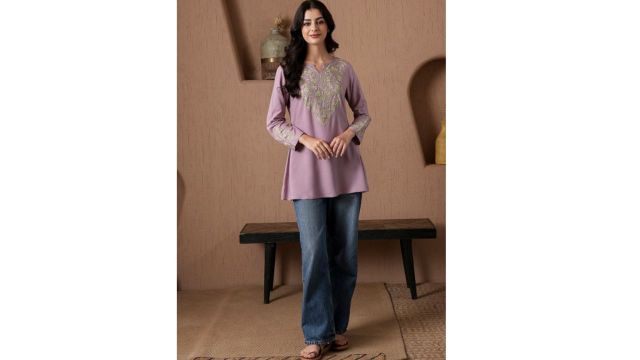
Qazmi’s purple A-line kurti centres Kashmiri aari work on viscose rayon. Round neck, long sleeves, flared hem, and ethnic motifs embroidered along the A-line body create a more weighted, crafted feel — the aari work usually has a dense, chain-stitch look that stands out against the smoother rayon. This makes it a strong choice for those who want the kurti itself to be the statement, with the flared hem adding movement to the embroidery-led design.
Also Read: Build a Smarter Work Wardrobe for Men with H&M Styles Up to 50% Off
Longline floral top with roll-up sleeves
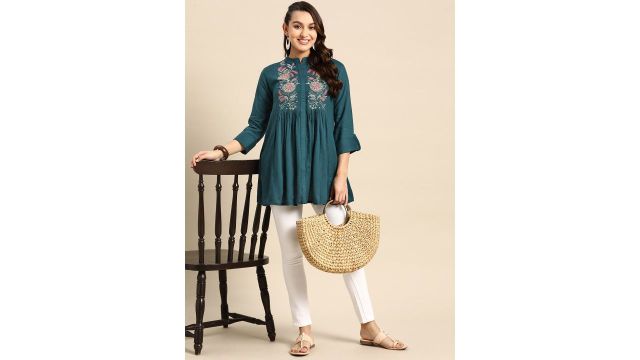
Sangria’s teal longline top sits between tunic and shirt-like styling. Floral embroidery on rayon, a mandarin collar, three-quarter roll-up sleeves, gathered or pleated detail, and a straight hem make it less about traditional motifs and more about a modern embroidered top that still nods to ethnic aesthetics. The roll-up sleeves add functional flexibility; the longline cut keeps it easy to pair with slim trousers or leggings.
Compared with the cotton tunic and straight rayon kurti, this piece feels more fluid and slightly more contemporary, especially given the mix of floral embroidery and a shirt-adjacent collar. It’s a bridge between everyday ethnic and a more outfit-led, styled top.
How these five sit in real wear
Together, the pieces fall into three routes:
- Breathable, everyday embroidered tunics and kurtis (Nayam cotton A-line; LIBOZA straight rayon) for regular use.
- Craft-forward, occasion-leaning styles (Umoly chikankari with palazzos; Qazmi Kashmiri aari work A-line), where regional techniques and fabric take centre stage.
- A modern longline embroidered top (Sangria rayon mandarin-collar style) that can go from day to slightly dressier settings with the right pairing.
Fabric and neckline shape answer most practical questions: cotton for all-day comfort and breathability; rayon and georgette for drape and a more polished fall; mandarin and round collars when you want a framed neckline, V-necks when you prefer an open, elongating effect. Hem shape — curved, straight, flared — then decides how the garment behaves over different bottoms.
Frequently Asked Questions
Which tunic feels best for everyday, breathable wear? The pink-and-white cotton Nayam by Lakshita A-line tunic.
Which piece leans most into artisanal, occasion-ready embroidery? The purple Qazmi Kashmiri aari work viscose rayon kurti gets the nod here — dense aari motifs and also a flared A-line shape make it standout.
Which option offers a contemporary, shirt-like look with embroidery? The teal Sangria longline top because of its mandarin collar, roll-up sleeves, and also the floral embroidery it gets.
Which kurti suits someone who wants drape and also a subtle ethnic detail rather than heavy embellishment? The LIBOZA olive viscose rayon straight kurti with the thread work it has.