
Punjabis will tell you corn means makki di roti and sarson da saag, full stop. Mumbai will point you to a cheesy corn chaat stall and call it a day. Delhi wants its bhutta charred over coal, nothing else touching it. All three are right, which is the strange thing about corn in India—no other vegetable gets reinvented this many times by this many regions without ever losing its core identity. It’s still just corn. It just refuses to sit still.

The Coal-Roasted Original
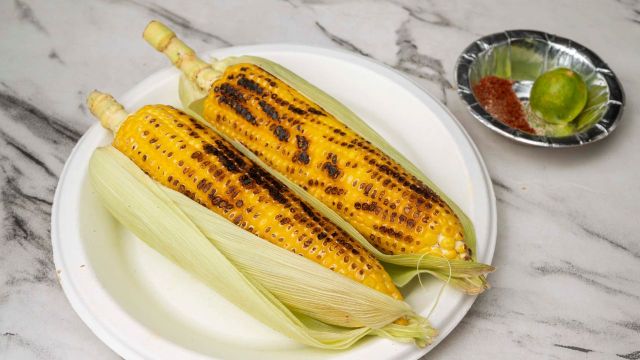
Nothing beats bhutta done right, and everyone has an opinion on what “right” means. Roasted over open coal until the kernels char slightly, then rubbed down with a wedge of lime, salt, and a dusting of red chilli powder—it’s smoky, sharp, and a little messy to eat off the cob. Monsoon evenings basically run on this snack. You’ll see vendors fanning coal flames at every second street corner from July through the start of winter, and somehow that smell alone is enough to stop foot traffic.
Chaat Culture Got to Corn Eventually
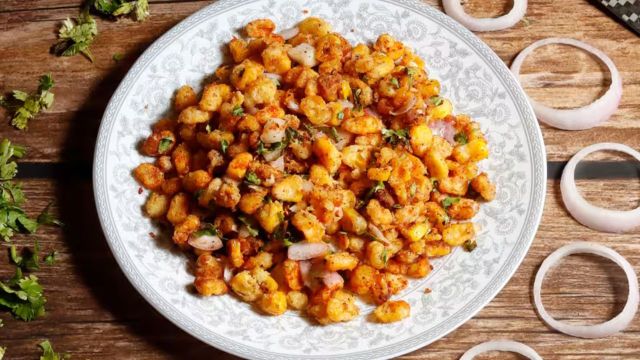
Of course it did. Anything that can be boiled, chopped, and tossed with onion, tomato, coriander, and chaat masala was always going to end up in a chaat bowl eventually. Corn chaat is proof India can’t leave a good ingredient alone without dressing it up—squeeze of lime, pinch of masala, and suddenly boiled corn kernels taste like a proper snack instead of a side dish. Mumbai and Delhi have both pushed this further with cheese versions, where melted butter and grated cheese turn a light street snack into something considerably less innocent. Worth it, usually.
Then there’s the monsoon specialty nobody talks about enough: corn pakoras. Sweet corn kernels mixed into besan batter with green chilli and coriander, deep-fried till golden. Pair this with hot chai during a downpour and you’ll understand why Indians never really needed comfort food imported from anywhere else.
Cafés Took Corn and Ran With It
Somewhere along the way, corn stopped being purely street food and started showing up on café menus dressed for a different occasion entirely. Cheese corn toast. Mexican-style corn salad. Corn and spinach sandwiches. Creamy corn pasta, where the natural sweetness of the kernels plays surprisingly well against a rich white sauce and herbs—light and indulgent at the same time, which shouldn’t work but does.
Home kitchens picked up the thread too, folding corn into North Indian-style curries with tomato puree, butter, and garam masala, sometimes bulked up with palak or mixed vegetables. It’s become the vegetable equivalent of a blank canvas—corn curry with rice on a Tuesday, corn and capsicum pizza on a Friday night, nobody batting an eye at the range.
The Genuinely Useful Bit: It’s Actually Good For You
Most snack foods that taste this good come with a catch. Corn mostly doesn’t. It’s high in fibre, carries a decent load of antioxidants, and happens to be naturally gluten-free—which explains why it’s quietly become a staple for anyone managing a gluten intolerance without wanting to eat sad rice cakes for the rest of their life. Even the laziest preparation—boiled corn with a smear of butter—beats reaching for a packet of chips, and enough fitness-focused eaters have figured that out that seasoned corn bowls have become a legitimate gym-bag snack now.
Where Corn Becomes Something Closer to Tradition
Strip away the street food and café reinventions, and corn’s deepest roots in India sit in Punjab, where makki ki roti and sarson da saag aren’t really a “dish” so much as a winter ritual. Hot cornmeal rotis, a generous dollop of butter melting into the centre, paired with mustard greens cooked down slow—this is the meal families build entire Sunday afternoons around. Farmers across Punjab, Rajasthan, and Madhya Pradesh have been growing corn for generations specifically because it survives this kind of demand: fed into curries, ground into flour, roasted whole, boiled, fried—corn does not ask for special treatment, and India has never given it any excuse to.
Skip the Coal Fire, Keep the Craving
Rainy night, sudden 4 pm craving, or a midnight hunt for something warm—Zomato covers most of what a coal vendor or café can, from spicy bhutta-style snacks to a proper bowl of creamy corn soup, all without you having to leave the couch.
Also Read: Nut and Seed Butter Varieties Beyond Peanut Butter Worth Trying from Amazon