
Here’s a bread that will expose a bad curry immediately. Missi roti — gram flour, onion, spice, worked into a rough-textured dough — isn’t a neutral canvas the way plain roti is. It’s got opinions built into the grain itself. Pair it with something thin or delicate and the roti overpowers it instantly, dominates every bite, leaves the curry feeling like an afterthought. This bread needs food that can actually hold its ground. Three dishes have earned that right over generations of Punjabi kitchens, and none of them are accidents.

Dal Makhani Doesn’t Rush, and Neither Should You
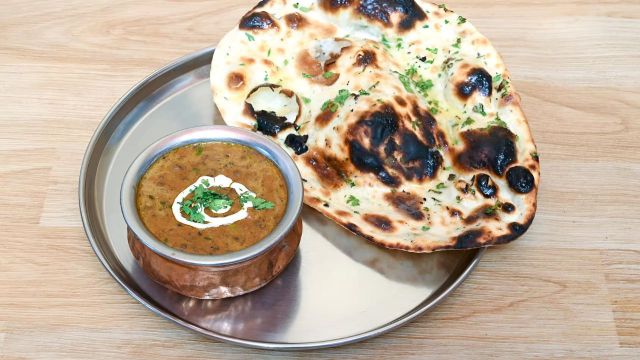
This pairing has history behind it, not just compatibility. Dal makhani takes its time — whole urad and rajma simmering slow, sometimes overnight, breaking down at their own pace until the dal turns thick and dark and stubborn. That’s precisely the texture missi roti was built to handle. The rough surface of the bread grips the dal instead of letting it slide back into the bowl, so nothing gets left behind on the plate.
There’s a rhythm to how this shows up in actual homes: the dal stays on the stove for days, reheated, growing richer each time, while the roti gets made fresh right before the meal. Neither one is trying to balance the other out — the dal stays heavy, the roti stays coarse, and somehow the contrast is the whole appeal rather than a problem to fix. Sliced onion, a squeeze of lemon, and this meal needs nothing else on the table. No rice required.
Baingan Bharta Brings Smoke, and Missi Roti Knows What to Do With It
Roast a brinjal over open flame until the skin blisters and the inside turns soft and smoky, mash it with onion, tomato, and spice, and you get a dish with a flavour that lingers well past the last bite. Soft roti would mute that smokiness — soak it up and flatten it into something forgettable. Missi roti’s uneven, grainy texture does the opposite: it picks up the mash in patches, unevenly, so every mouthful tastes slightly different from the last.
This is winter food, unmistakably — coal roasting and open flame just make sense when there’s a chill outside. Rural kitchens often add a small bowl of curd alongside it, but the meal doesn’t lean on that crutch. Strip the curd away and baingan bharta with missi roti still feels complete, still feels like enough.
Chole Gets a Different Personality With Missi Roti
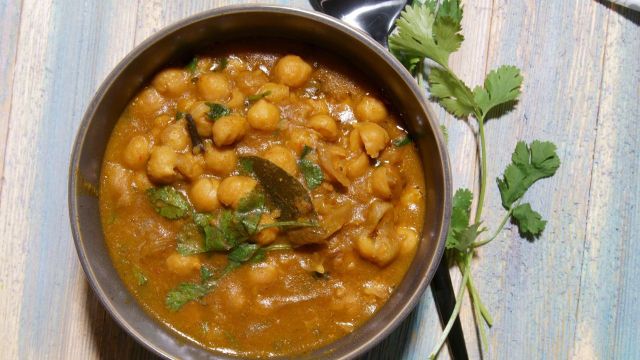
Most people associate chole with bhature — puffy, fried, made for soaking up gravy in big dramatic bites. Swap in missi roti and the whole equation changes. The chickpeas, cooked down with onion and tomato and a proper spice blend, meet a bread firm enough to control the bite instead of letting it turn into a mess. The roti absorbs gravy without falling apart, which matters more than it sounds like it should — nobody wants their roti disintegrating mid-bite.
This is the pairing built for actual weekdays, not special occasions. It survives a lunchbox, reheats without losing character, and gives you that grainy depth soft rotis simply can’t offer. Households looking to eat filling without eating heavy tend to land here specifically because of that balance. A few slices of raw onion, a green chilli on the side, and the plate’s basically done.
Skipping the Dough-Kneading Part
Slow-cooked dal and fresh missi roti on the same evening is a lot to ask of anyone’s schedule. Zomato has plenty of North Indian and dhaba-style kitchens listing missi roti right alongside dal makhani, baingan bharta, and chole — often bundled as combo plates, which saves the trouble of hunting each item down separately. New users get 60% off with free delivery on top of it.
One practical note while ordering: missi roti runs heavier than plain atta roti, so it’s worth checking portion counts before assuming the usual quantity will do. Add onions or curd on the side if you want, though honestly, these three dishes rarely need the help.
Also Read: The Omelette Doesn’t Care What You Call It — It Just Wants to Feed You