
Nobody talks about this, but tandoori roti isn’t just a vehicle for curry—it’s half the flavour equation. That char, that smokiness from sitting against a clay wall at 400-something degrees, changes how any gravy tastes the second you tear off a piece and drag it through. Swap in a butter naan and paneer butter masala turns purely sweet. Swap in tandoori roti and suddenly there’s smoke fighting the cream, and that tension is the whole point. Three curries, in particular, understand this assignment better than the rest.

Kadai Paneer Doesn’t Try to Be Smooth
Start here, actually, because it’s the one most people underrate. Kadai paneer refuses to be a smooth, spoonable gravy—the masala’s coarse, freshly pounded from coriander seeds, dried red chillies, and a hint of fennel, and it’s cooked hot and fast in an iron wok that leaves everything with a slightly roasted edge. Chunky onion, capsicum still holding some bite, tomatoes that haven’t fully broken down—this curry has texture in a way butter masala never will.
That’s exactly why it works with tandoori roti and not, say, a soft butter naan. Two rough textures meeting each other instead of one smooth thing gliding past another. A dhaba on the Delhi-Jaipur highway will make this dish differently than a five-star hotel kitchen, and both versions will be right—crank the chilli up or down and it still holds together. This is the curry for someone who wants dinner to feel like it’s doing something, not just sitting there being rich.
Paneer Butter Masala Earns Its Reputation the Boring Way
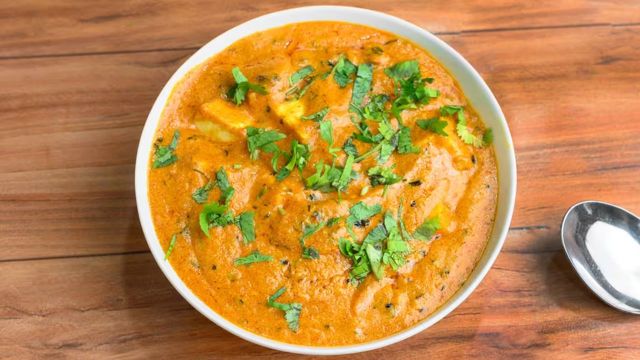
There’s a reason paneer butter masala shows up on every single North Indian menu in the country, from a five-rupee dhaba to a wedding buffet: it simply doesn’t miss. Slow-cooked tomato and cashew base, reduced down until it turns a deep, almost lacquered orange—that’s the part most home cooks rush, and it shows. Do it properly and the gravy gets a shine to it before the cream even goes in.
Tear the roti, drag it through, and you get smoke meeting sweetness in a way that somehow never gets old no matter how many hundred times you’ve eaten it. Kasuri methi crushed between your palms and scattered on top right at the end isn’t optional, by the way—skip it and something’s just missing, even if you can’t immediately place what.
This is comfort food in the most literal sense: the dish people order when they don’t want to think too hard about what they’re ordering.
Shahi Paneer Is the One You Serve When It Matters
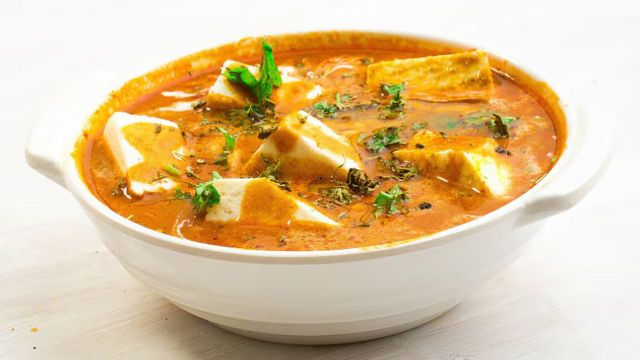
Mughlai kitchens didn’t do subtlety by accident—shahi paneer is built entirely on richness, paneer simmered in a cashew-cream-milk sauce carrying just enough saffron and cardamom to feel faintly royal without tipping into dessert territory. Some versions add a whisper of rose water, which sounds excessive until you taste how it rounds out the sweetness instead of announcing itself.
Here’s the thing though: without tandoori roti, shahi paneer can get cloying fast. The char cuts through it. That’s not incidental—it’s basically why this pairing became standard at weddings in the first place, where a guest is eating three other rich dishes on the same plate and needs something to reset the palate between bites. At home, on a lazy Sunday, the same principle holds. Onion rings and mint chutney on the side aren’t decoration; they’re doing actual work.
Skip the Dough-Kneading, Keep the Craving
Realistically, nobody’s making fresh tandoori roti at home on a Tuesday—most kitchens don’t even have a tandoor. Zomato solves that gap easily enough, with plenty of restaurants offering paneer-and-roti combo meals built exactly for this. Pick your curry based on mood: kadai if you want texture, butter masala if you want the reliable option, shahi if the occasion calls for something a little grander.