
Getting a piece of business software launched is only the beginning.
The way a company operates rarely stays the same for long. A new employee joins, a process changes, customers start asking for something different, or the business adds another service. Software that made perfect sense six months ago can suddenly feel restrictive.
That is one reason software development can become expensive after launch. Even relatively small changes may need to go through a developer, a testing process and another round of deployment.
AI-assisted development is changing how some businesses approach those updates.
Business requirements don’t stay still
Consider a company that builds an internal application for handling customer requests.
When it launches, the process might be straightforward. An employee receives a request, assigns it to someone and marks it complete.
A few months later, the company decides that certain requests should require manager approval. Then it wants automated notifications. Later, it needs customers to see the status of their requests.
The software hasn’t necessarily failed.
The business has simply changed.
This happens constantly, which is why the ability to modify an application can be just as important as the ability to create one.
Small changes can create surprisingly large projects
In a traditional development environment, adding a feature isn’t always as simple as adding a button.
The change may affect the database, user permissions, backend logic, notifications and other parts of the application. Someone has to understand those dependencies before making the change, and the updated version needs to be tested afterwards.
That is necessary work, but it can make businesses reluctant to improve software unless the change is considered important enough to justify the effort.
AI can actually reduce some of the friction around this process.
Instead of starting with a technical request, a user can explain what they want the application to do differently. The AI can then help modify the existing project based on that requirement.
This is where continuous AI editing becomes useful
Emergent is built around an approach where application development doesn’t have to stop after the first version.
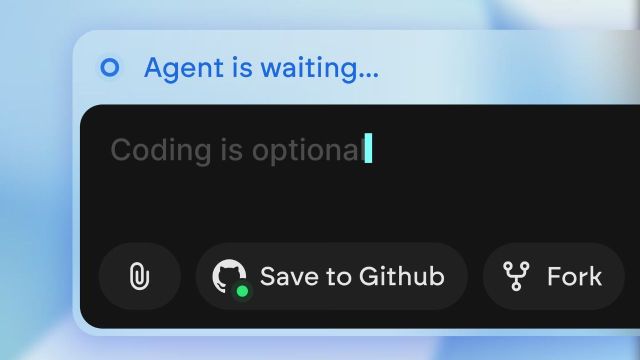
Users can describe changes in natural language and continue working on the project. The platform can work across the frontend, backend, database, APIs and business logic, so an adjustment to one part of the workflow can be considered in the context of the wider application.
For example, a business could ask for a new approval step, introduce another type of user account or change the way customers receive updates. The idea is to make those iterations part of the normal development process rather than treating every request as a completely new project.
Emergent can be used for web and mobile applications, including internal tools, dashboards, customer portals, SaaS products, booking systems and AI-powered applications. GitHub integration is also available for teams that want to manage projects through an established development workflow.
It can be useful even when developers are involved
The ability to describe changes in plain language doesn’t mean technical teams become unnecessary.
Developers still need to review important changes, mainly when an application has complex architecture or when it handles sensitive information. They also play a major role in security, performance, testing and long-term maintenance.
What can change is the amount of routine work involved.
A developer might use AI to make an initial modification and then spend their time reviewing the implementation rather than writing every part of it manually. A product manager could also use the platform to explore a change before handing a more defined requirement to the engineering team.
The result can be a shorter feedback loop between the people deciding what a product should do and the people responsible for making it work.
The pricing leaves room for experimentation
Emergent offers a Free plan with 10 monthly credits, access to the core platform, web and mobile development, one-click LLM integration and its latest AI models.
For more regular use, Standard costs $20 per month or $204 annually. It provides 100 monthly credits and adds private project hosting, GitHub integration and task forking, with additional credits available for purchase.
At the higher end, Pro costs $200 per month or $2,004 annually. It includes 750 monthly credits, a one million-token context window, high-performance computing, custom AI agents, advanced reasoning capabilities and priority customer support.
The different tiers make it possible to start with a smaller project and increase usage if the platform becomes part of a more substantial development workflow.
Software can become more adaptable
Businesses have always had to adapt to their software.
Sometimes that means replacing a system every few years. Sometimes it means accepting that an old application doesn’t quite fit anymore. And sometimes it means creating complicated workarounds that everyone in the company simply learns to tolerate.
AI-assisted development introduces another possibility: keeping the software closer to the business as the business changes.
That doesn’t mean every update should be handled by AI, or that traditional development has suddenly become obsolete. It means the process of making smaller changes can become more accessible.
For companies whose biggest software problem isn’t what they have today but how quickly it becomes outdated, that could be one of the more useful applications of AI development.
Also Read: What Makes Ultrahuman Cycle & Ovulation Pro Different From Regular Period Trackers?