A smart ring works best when you can forget about the fact that it needs a battery at all. You put it on, go about your day, sleep with it at night, and let it quietly collect information in the background. Having to take it off every few days changes that routine, particularly when sleep and recovery are part of what you are tracking.
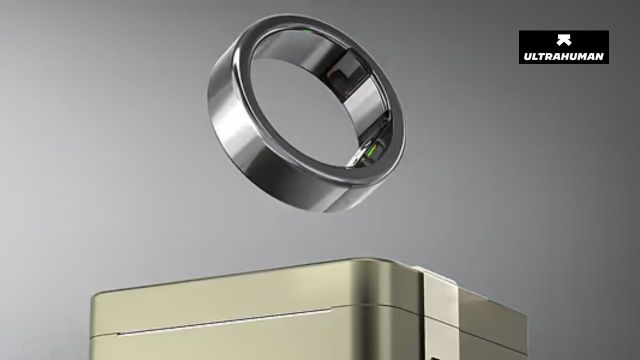
The Ultrahuman Ring PRO is built to keep those interruptions to a minimum. It can last up to 15 days on a single charge in Chill Mode, while Turbo Mode, which keeps the sensors working at higher intensity, is rated for around 12 days. With the PRO Charger Case, the total charging time away from a wall socket can stretch to as much as 45 days.
Those numbers will vary with how the ring is used, but they give a good sense of what Ultrahuman is aiming for with the PRO.
Two modes, two different battery expectations
The 15-day figure applies to Chill Mode, which is geared towards sleep and rest while still providing sleep, recovery and movement insights. It also continues 24/7 stress tracking.
Turbo Mode takes a more demanding approach. Every sensor runs at full intensity throughout the day, so the rated battery life drops to around 12 days.
That difference is fairly easy to understand when you consider what the ring is doing. More frequent and intensive sensing requires more power, so someone who keeps the Ring PRO in Turbo Mode and regularly records workouts should expect their charging cycle to look different from someone using Chill Mode.
For comparison, the Ultrahuman Ring AIR is rated for around 4–6 days on a charge. The PRO therefore represents a considerable increase in the amount of time the ring can remain on the finger between charges.
The charger can stay in your bag
The PRO Charger Case is arguably just as important to the overall battery experience as the battery inside the ring.
The case can provide up to 45 days of battery life, meaning you do not need to keep looking for a wall socket every time the ring needs a top-up. That is particularly useful when travelling or simply when you do not want charging to become part of your daily routine.
There is also a practical reason this matters for a health wearable. Once a ring comes off your finger, it is surprisingly easy to leave it sitting on a charger longer than planned. The longer it stays there, the more likely you are to end up with a gap in your sleep or recovery record.
A case that can keep the ring charged for weeks makes that interruption less likely.
What can shorten the battery cycle?
The advertised battery life is a useful reference point, but your own usage has the final say.
Turbo Mode is one obvious factor. Exercise can also affect battery consumption because the Ring takes readings more frequently during workouts. A week filled with regular training will therefore put a different demand on the battery than a quieter week spent mostly tracking everyday movement, sleep and recovery.
Then there is Background Sync.
When it is switched on, the Ring sends data to your phone continuously. With it off, which is the default setting, the data syncs when you open the Ultrahuman app. If you do not need information appearing on your phone continuously, keeping Background Sync off can help reduce unnecessary battery use.
The idea is fairly simple: the more work the Ring is doing throughout the day, the sooner it will need another charge.
Even a nearly empty Ring keeps some data going
Battery anxiety can be particularly frustrating with a wearable because you may notice the problem only after the device has already been on your finger for hours.
The Ring PRO has a fallback for this situation. When the battery drops below 5%, it enters Critical Battery Mode and switches to step counting.
It is a limited mode, but it means the Ring does not simply stop functioning the moment the battery gets critically low. You can still retain some activity data while finding time to charge it.
A few charging habits can help with battery health
There is a difference between getting several days out of a charge and keeping the battery in good condition over the longer term.
Where possible, avoid repeatedly running the Ring completely flat. Keeping it around 30% or above can help reduce the strain associated with deep discharges. You also do not need to wait until the battery is nearly empty before charging it; occasional shorter top-ups are fine.
Once the battery reaches full charge, taking the Ring off the charger rather than leaving it sitting at 100% for long periods can also help limit battery ageing.
The PRO Charger Case has another advantage here. Its UltraSnap contacts are designed to generate less heat than wireless charging. Since heat is one of the factors that contributes to lithium-ion battery degradation, keeping the charging process cooler is useful for long-term battery health.
Less charging means fewer breaks in the health record
The real benefit of a longer-lasting smart-ring battery is not simply having to charge less often. It is what happens to the data when you can keep the ring on more consistently.
Sleep is tracked overnight, recovery patterns develop over repeated days, and changes in metrics are easier to understand when there are fewer missing periods. Even a small charging interruption can become noticeable when it happens repeatedly.
The Ring PRO’s up to 15-day battery life, along with the up to 45 days offered by the PRO Charger Case, is therefore closely tied to the experience of continuous health tracking. The less often the ring needs to leave your finger, the easier it is for it to become part of your normal routine rather than another device you have to remember to charge.
Also Read: Electric Vegetable Choppers for Cutting Everyday Meal Prep Time from Amazon