Most sleep trackers focus on what happens inside your body.
They tell you how long you slept, how much deep sleep you got, how often you woke up, and how well you recovered. That’s useful, but there is another part of the equation that often gets ignored: the room you’re sleeping in.
Was it too warm? Was there too much light coming through the window? Did traffic wake you up? Was the air stuffy? Did someone in the room keep coughing or snoring?
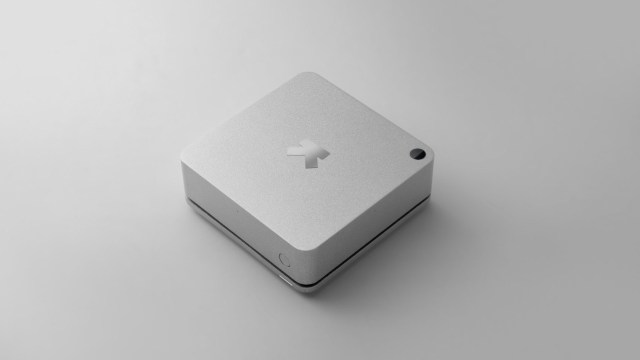
Ultrahuman Home is designed to look at those things.
The device is an ambient sleep monitor that sits in your bedroom rather than on your body. Its latest update expands what it can track, giving users a way to understand how their surroundings may be affecting their sleep.
Your bedroom can affect your sleep more than you realise
We tend to blame a bad night’s sleep on ourselves. Maybe you went to bed too late or spent too much time on your phone. But sometimes the problem is much simpler.
The room wasn’t right.
Ultrahuman Home looks at several environmental factors that can quietly interfere with sleep. It monitors light, noise, air quality, CO₂, temperature, and humidity, then brings those signals together into an Ambient Sleep Score.
The idea isn’t to tell you that every environmental change is a problem. It’s to help you notice what is happening around you when your sleep isn’t going as planned.
It can listen for the things that disturb your night
One of the more interesting parts of Ultrahuman Home is its sound detection.
Using its microphones and AI-based audio recognition, the device can identify different sounds throughout the night. It has been trained on more than 500 audio signatures, allowing it to distinguish things such as snoring, coughing, breathing, and a baby’s cry from outside noises like cars, sirens, and barking dogs.
Those events are then tagged in the Ultrahuman app.
That can make a surprisingly big difference when you’re trying to figure out why you woke up feeling exhausted. Instead of simply seeing that your sleep was interrupted, you may be able to see what was happening around that particular time.
There’s a respiratory side to it too
Ultrahuman Home doesn’t only listen for general bedroom noise.
It can also track snoring intensity, coughing frequency, and breathing irregularities, using those events to create a Respiratory Health Score. Events are time-stamped, and users can optionally listen back to recorded audio.
This is particularly relevant for people who have no idea how much they snore or whether their breathing changes during sleep.
Ultrahuman points to the connection between persistent snoring and obstructive sleep apnea, while positioning the feature as a way to notice patterns rather than as a diagnostic tool.
That distinction matters. A wearable or home monitor can show you something worth paying attention to, but it doesn’t replace a proper medical assessment.
It works without asking you to wear anything
There is another practical difference between Ultrahuman Home and the Ring AIR.
The ring obviously needs to be on your finger. Home doesn’t.
Because it sits in the room, it can monitor sleep for anyone sleeping there. That makes it useful in shared bedrooms, children’s rooms, or households where more than one person wants to understand their sleep environment.
It also means you can use the environmental tracking without adding another device to your body at night.
For people who don’t like sleeping with wearables, that’s probably one of its biggest advantages.
Privacy is part of the design
A device that listens while you sleep naturally raises privacy questions.
Ultrahuman says users can switch off the microphones using a physical control on the device, and recordings can be permanently deleted. The company also says its data handling follows HIPAA and GDPR standards.
That gives users more control over a feature that, by its nature, needs access to sounds inside the room.
The Ring AIR adds another layer
For people who already use the Ultrahuman Ring AIR, Home becomes more interesting.
Through UltraSync, the two devices can combine what’s happening inside your body with what’s happening around you.
That means sleep stages can be viewed alongside room temperature, light, noise, and air quality. Over time, the system can help identify possible triggers for nighttime awakenings and show how environmental changes line up with your recovery.
Ultrahuman also says future updates are planned to connect CO₂ levels with autonomic stress indicators and examine the relationship between blue light exposure and sleep onset timing.
The idea is to eventually make the room respond too
Ultrahuman isn’t stopping at monitoring.
The company has said it plans to let Ultrahuman Home control compatible smart-home devices, including lights, air purifiers, thermostats, and HVAC systems. The aim is for the system to respond automatically when environmental conditions aren’t ideal for sleep.
That could eventually mean the room itself adjusts instead of simply telling you that something is wrong.
So who is Ultrahuman Home for?
The Ring AIR is primarily about your body’s response to sleep.
Ultrahuman Home looks outward.
If you already have the ring, the combination gives you a much fuller picture of the night. You can see both the physiological response and the conditions that may have contributed to it.
But even without a wearable, Home has a clear use case for anyone who wants to understand their bedroom environment, especially if sleep disruptions seem difficult to explain.
At its core, Ultrahuman Home is built around a simple idea: sometimes better sleep isn’t about changing what you do before bed. It may be about changing what’s happening around you while you’re asleep.
Also Read: Video Doorbells for Safer Apartment Entry Management from Amazon