

A business application can show you what happened without necessarily telling you how it happened.
A customer record was changed. An invoice was approved. A user downloaded a report. Someone altered a setting.
The final state may be visible, but the sequence of actions behind it can be harder to reconstruct.
That is where an audit trail becomes useful.
As AI makes it easier to create business applications, auditability is becoming a consideration worth raising much earlier in development. An application that records important actions properly can make it easier to investigate mistakes, resolve disputes and understand changes long after they occur.
A timestamp alone isn’t much of an audit trail
There is a big difference between knowing that a record was modified at 3:14 p.m. and knowing what actually happened.
A useful audit trail can answer questions such as:
- Who made the change?
- What was changed?
- When did it happen?
- What was the previous value?
- Was the action approved?
- Which part of the system triggered it?
The exact information required depends on the application and the business.
A small internal tool may only need a history of important changes. A system handling financial, customer or regulated information may require considerably more detail.
The important point is to decide what needs to be recorded before the application starts generating records that are difficult to reconstruct later.
Audit logs become particularly useful when something goes wrong
Nobody plans to investigate an application after a problem.
Then something happens.
A customer’s information appears different. A payment is marked as processed when nobody remembers approving it. An employee says they never changed a particular record. A report contains figures that don’t match what was displayed the previous week.
Without a history of changes, an investigation can turn into guesswork.
With a properly designed audit trail, there is at least a record of the relevant activity.
That doesn’t automatically explain why something happened, but it narrows the search considerably.
Different users should leave different footprints
An application with several user roles has another reason to pay attention to auditability.
Consider a system with employees, managers and administrators. All three groups may be able to view the same customer record, but their ability to change it could be very different.
If a sensitive field is modified, the business may need to know exactly which account performed the action.
This is where audit trails and permissions work together.
Permissions determine what someone is allowed to do. Audit logs record what they actually did.
Neither one replaces the other.
AI can build the feature, but the business has to define the evidence
This is an interesting distinction in AI-assisted development.
A business can tell an AI system to create an application with user accounts, approval workflows and record management. It can also specify that significant actions should be logged.
But the AI cannot decide what constitutes a significant event for that particular organisation unless the requirement is made clear.
Should viewing a customer record be logged?
What about exporting it?
Should an administrator changing a permission generate an alert as well as an audit entry?
How long should records be retained?
These are business and compliance questions, not simply coding questions.
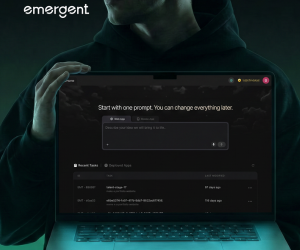
Platforms such as Emergent can generate full-stack web and mobile applications from natural-language instructions, which means requirements such as audit logging can be introduced while the application is being built. The resulting implementation still needs to be reviewed to make sure the logs capture the events the business actually cares about.
Good audit trails shouldn’t become another database nobody checks
There is a temptation to log absolutely everything.
That can create its own problem.
An application producing enormous amounts of low-value activity can make important events difficult to find. Someone investigating a suspicious change shouldn’t have to sift through thousands of irrelevant entries to understand what happened.
Useful audit design is selective.
Record the actions that matter to security, accountability, business operations or compliance. Give authorised people a practical way to search and interpret those records. Protect the logs themselves from unauthorised modification.
An audit trail is only useful if people can trust it.
The feature becomes more important as software becomes more central
A small prototype may not need extensive auditing.
An application that has become the place where a company manages customer accounts, approves payments or stores important business records is a different matter.
This is one reason AI-built applications need to be treated according to what they actually do, rather than how quickly they were created.
The development method doesn’t determine the application’s responsibilities.
If employees or customers rely on it, the business still needs to think about security, access controls, backups, testing and accountability.
The cost of building and refining the application
Emergent’s pricing provides several levels for teams developing and iterating on applications.
The Free plan includes 10 monthly credits, with core web and mobile app development, one-click LLM integration and access to the latest AI models.
The Standard plan is $20 per month or $204 per year, with 100 monthly credits, private project hosting, GitHub integration, task forking and the ability to purchase additional credits.
For larger workloads, Pro costs $200 per month or $2,004 per year and includes 750 monthly credits, a 1-million-token context window, high-performance computing, custom AI agents, advanced reasoning capabilities and priority customer support.
For an application that requires several rounds of testing and refinement, the ability to keep iterating can matter as much as the initial build.
Accountability needs to be designed, not added accidentally
AI has made the mechanics of creating an application faster.
That makes it tempting to focus on the visible parts: the screens, forms, dashboards and workflows that users interact with every day.
The less visible infrastructure matters too.
An audit trail may never appear in a product demonstration, but it can become extremely valuable when someone needs to understand what happened inside the system three months after an important change.
As businesses build more of their own software, those quiet features deserve attention from the beginning. The application shouldn’t only know what the current state is. For important actions, it should also be able to show how it got there.
Also Read: Protect Your Logins for Less: Get 50% Off Keeper Security’s Personal and Family Plans