
Ask a Kashmiri what Wazwan means and you won’t get a food description. You’ll get a feeling. That’s the first thing to understand about this feast — it was never really about the meat, even though there’s a staggering amount of it.

Here’s the number that stops people: a full traditional Wazwan can run to 36 courses. Thirty-six. Most of us struggle to plan a three-course dinner party. In Kashmir, an entire craft tradition exists to pull off a meal more than ten times that size, and it’s been doing so for centuries.
So what actually is this thing?
Wazwan is a multi-course, overwhelmingly non-vegetarian feast built around lamb and chicken, seasoned with fennel, dry ginger, Kashmiri red chilli and saffron. The name itself tells you everything: “Waz” means chef, “Wan” means kitchen or shop. Put together, it literally translates to a meal made by a Waza — a chef trained specifically to carry this culinary lineage forward. This isn’t home cooking scaled up. It’s a specialized profession, passed down the way a craft guild might hand off its secrets.
Traditionally, you’d only encounter Wazwan at weddings or major family occasions, prepared by these trained cooks for the whole community. That’s changing now — more on that below.
The dishes worth knowing before you dive in
If you’re eating Wazwan for the first time, don’t just work through it randomly. A few dishes carry more weight than others, literally and culturally.
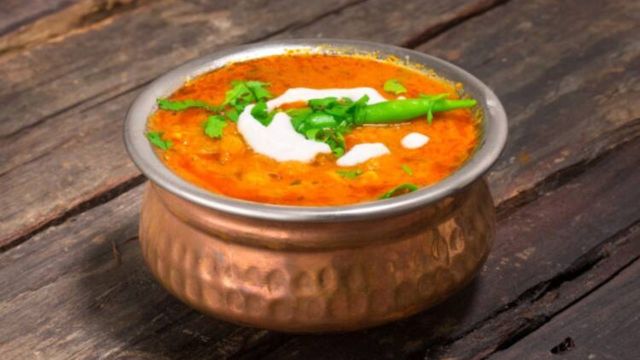
Rogan Josh is the one everyone’s heard of, and for good reason. It’s a deep red mutton curry built on yoghurt, Kashmiri chilli, and a spice blend that somehow manages to look fierce and taste restrained. Bold, aromatic, but not the punishing heat you might expect from the colour alone.
Gushtaba shows up last, and that’s the point. It’s a large meatball of finely pounded lamb simmered in a yoghurt-based gravy, and Wazwan eaters call it the “king of dishes.” When Gushtaba lands on the table, the feast is winding down — it’s basically the meal’s closing statement.
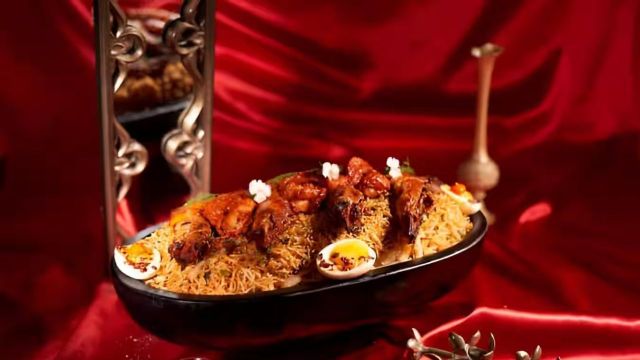
Rista is Gushtaba’s spicier cousin: hand-pounded lamb meatballs in a vivid red gravy, coloured and flavoured by Kashmiri chilli and saffron. Soft, a little vibrant on the plate, and easy to underestimate until you taste one.
Tabak Maaz — fried lamb ribs, first boiled in milk and spices, then shallow-fried to a crisp shell around meat that basically dissolves — is the starter that steals the show before the main courses even arrive. If you only try one dish, honestly, make it this one.
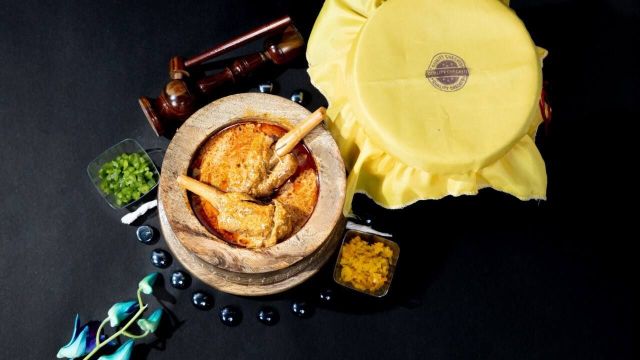
Yakhni is the palate’s reset button: mutton in a light yoghurt gravy with fennel and dry mint, milder and calmer than everything around it, and it pairs beautifully with steamed Kashmiri rice.
And for anyone who doesn’t eat meat, Dum Aloo — baby potatoes in a rich yoghurt gravy — has become a fixture on Wazwan-style spreads well beyond Kashmir, which says something about how good it is on its own merits, not just as the vegetarian option.
You don’t need a wedding invitation anymore
For a long time, your options for eating real Wazwan were: attend a Kashmiri wedding, or befriend someone who could cook it for you. Neither is exactly a scalable plan.
That’s shifted. Local Kashmiri restaurants and home kitchens now put together Wazwan thalis and combo platters — Rogan Josh, Rista, Yakhni, and the rest — sized and spiced to order, whether you’re ordering for yourself on a random Tuesday or hosting a small family gathering.
If you’re curious, search “Kashmiri Wazwan” on Zomato in your city. Curated menus from genuine Kashmiri kitchens turn up more often than you’d expect, and the food arrives hot enough that you’ll forget it travelled to get to you.
Also Read: Why Flavoured Energy Teas Are Becoming a Regular Part of Everyday Routines