At a family gathering, dessert often arrives after everyone has said they cannot eat another bite. Then someone mentions gulab jamun but a bowl of kheer appears, and the conversation turns to who wants what.

Choosing dessert for a group takes some thought. One person wants jalebi with tea, another prefers rasmalai after dinner, while someone else only wants a spoonful of whatever is being served. Ordering several boxes without checking portions can leave more food than the household expects to finish.
Gulab jamun, jalebi, rasmalai and kheer offer four ways to end the meal. The choice depends on the number of guests, their preferences and when you plan to serve dessert.
Gulab jamun: Count pieces before choosing boxes

Gulab jamun can make portion planning straightforward when the menu lists the number of pieces.
Size can also vary between sellers. If the description does not provide enough information, check with the outlet rather than assuming every portion will be the same.
Serve in bowls that will hold both gulab jamun and syrup. Be sure to put a serving spoon with the container, so guests can help themselves. If you plan to reheat the dessert, transfer it to an appropriate container and follow any instructions given by the vendor.
Jalebi: Decide when it will reach the table

Jalebi is eaten with tea either before a meal or as a dessert after a meal. Choosing the time allows you to plan the delivery.
If you want rabri alongside it, confirm whether it is included or needs to be ordered separately. Serve the two separately so guests can choose their combination and quantity.
Rasmalai: Check portions and fridge space
Rasmalai needs a little planning before delivery, particularly if dessert will be served several hours later. Make space in the refrigerator and follow the seller’s storage and consumption instructions.
Read the portion details. A serving may contain a specified number of pieces with milk, while a sharing pack may be described differently. Check both before deciding how many containers to order.
Use bowls and spoons for serving, and keep the dessert refrigerated until it is time to bring it out. For a gathering where guests eat in batches, serve smaller quantities at a time.
Rasmalai contains milk, and preparations may include nuts. Check ingredient information and ask about allergies before placing the order.
Kheer: Allow guests to choose their serving
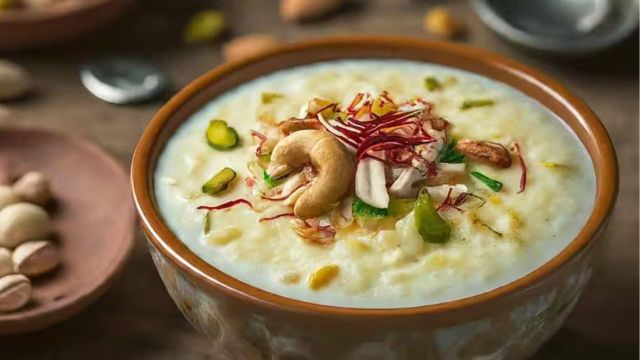
Kheer can work for a gathering where appetites differ because guests can take as much as they want. A bowl on the table gives someone room for a taste without committing to an entire portion.
Check which preparation the restaurant offers. Rice, vermicelli and other versions may appear on the menu, with ingredients and garnishes that vary between sellers.
Look at the quantity listed in millilitres, grams or servings. A container described as one portion should not automatically be counted as enough for several people.
If you plan to serve kheer chilled, refrigerate it after delivery according to the seller’s instructions. Keep a ladle with the serving bowl and set out dessert bowls before the meal ends.
Choose for the people at the table
Before ordering on Zomato, ask which desserts people want and check for dietary requirements. Milk, nuts and other ingredients may affect the choice; sweetness alone does not tell you whether a dessert suits a guest’s needs.
Two desserts may be enough to offer a choice without leaving several containers unfinished. Gulab jamun and kheer, for example, let guests choose between pieces and spoonfuls, while jalebi and rasmalai offer another combination.
Check quantities, plan storage and serve portions that leave room for seconds. The aim is to give everyone something they want to eat, rather than ordering every favourite just in case.
Also Read: Poha, Idli, Paratha and Upma: What’s on Your Breakfast Order This Weekend?