The kettle goes on, cups come out, and someone asks whether there is anything to eat with chai. On some evenings, biscuits will do. On others, the tea break becomes a reason to order snacks and gather around the table.

Samosas, pakoras, kachori and vada pav offer four ways to build that order. The choice depends on how hungry everyone is, when dinner will be served and whether you are ordering for yourself or sharing with family and friends.
Before opening Zomato, take a headcount. Then decide whether the plan is a snack with tea or something that will bridge the gap until dinner. That distinction can help you choose portions without ordering more than people want.
Samosas: Start with the filling and piece count
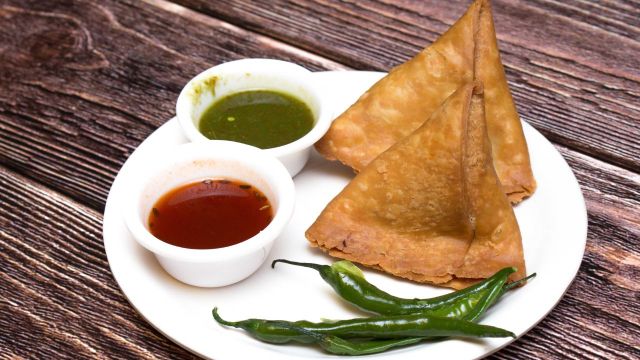
A samosa order may seem straightforward, but menus offer more than one filling. Alongside potato, you may find peas, paneer, lentils or meat, depending on the restaurant.
Look at the number of pieces in each serving. Some listings are priced per samosa, while others offer pairs or boxes. Counting pieces against the number of people helps avoid a situation where someone reaches for the plate and finds only crumbs.
Check which chutneys are included, too. Keeping them in bowls on the side lets everyone choose how much to add and makes sharing easier.
Pakoras: Choose a mix people will eat

Pakoras give a group room to choose between onion, potato, paneer and other ingredients listed on the menu. A platter can offer variety, but it is worth checking what the assortment contains.
If everyone wants onion pakoras, a mixed platter may leave other pieces untouched. Asking for preferences before ordering can be more useful than adding several varieties just to fill the table.
Pay attention to how portions are described. A restaurant may list pakoras by weight, piece count or plate, which makes comparisons between listings less straightforward.
Pakoras are best ordered around the time you intend to eat. Delivery conditions can affect their texture, so have the tea and serving plates ready when the food arrives. If some guests are delayed, keep their portion aside rather than covering the entire plate in chutney.
Kachori: Decide between a snack and a chaat

With kachori, the first choice is whether you want it served on its own or as part of a chaat. Menus may list fillings such as lentils or onions, while some preparations come with potato curry or other accompaniments.
Read the item name and description before ordering. A kachori served with curry needs a bowl and spoon, while one ordered as a snack can go straight onto a plate.
If you choose kachori chaat, check whether curd, chutneys and toppings arrive separately. Adding them when you are ready to eat gives you control over the quantity and helps prevent the pastry from sitting under the toppings while the tea brews.
For a group, confirm how many kachoris come in each portion rather than assuming one plate will serve several people.
Vada pav: When you want something to hold and eat
Vada pav combines the potato vada, pav and chutneys in one serving. It can suit someone who wants a snack without putting together a plate of several items.
Check whether the listing includes one vada pav or a combo. Drinks, extra chutney or other additions may change both the quantity and the price.
Chutneys and chilli can vary between restaurants. If someone prefers less chilli, look for a customisation option or request that the chutney and chilli be packed separately. Requests depend on what the restaurant can accommodate.
Build the order around the tea break
There is no need to order all four snacks for every gathering. Samosas and pakoras may cover a sharing plate, while kachori or vada pav can suit people who want a portion to themselves.
Check the delivery estimate before putting the kettle on. Once the food arrives, divide it into serving portions and set out the chutneys. A little coordination lets everyone enjoy the chai break together, without the tea waiting for the snacks or the snacks waiting for the tea.
Also Read: Biryani for the Group: What to Check Before You Place the Order