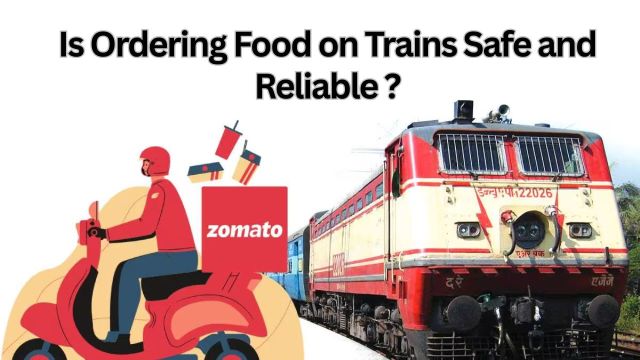
Train journeys in India have always had a food story attached to them. Earlier, that story often meant pantry car meals, platform vendors calling out loudly to sell snacks and meals or passengers carrying homemade food packed in containers. The experience has evolved over time. Thanks to the rise of food delivery platforms, travellers can now have restaurant meals brought right to their train seats, a shift from the past when they were limited to pantry services or the offerings at station stalls.
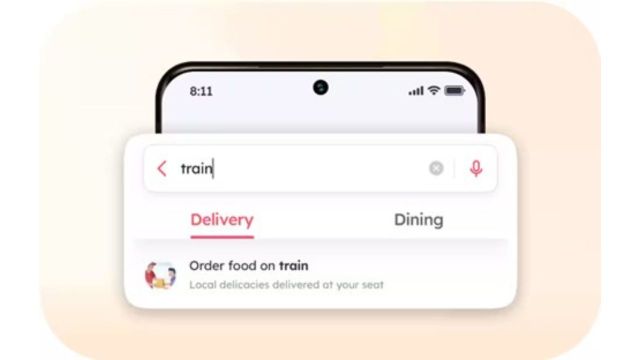
Zomato has been offering train-based delivery features for a while now that enable passengers to order food during their journey using details such as the train number or PNR. Once you enter your information, the system identifies your train’s path and the stations where deliveries are feasible. This allows passengers to explore restaurant choices at those stops, and schedule their meals to coincide with the train’s schedule.
Despite its consistent growth, many travellers still have doubts about its safety and dependability. Common concerns include cleanliness, delivery times, and payment security. A closer look at how the system works shows that many of these worries are based on assumptions, rather than the actual processes used today.
Myth 1: Food Delivered to Trains May Not Be Hygienic
A frequent worry is about the hygiene of food delivered on trains. Many people wonder if the meals are prepared in kitchens or restaurants that adhere to proper cleanliness protocols. Some people are of the opinion that the food comes from temporary vendors who cook near the train stations and the quality of food they deliver is bad.
Fact: The meals are sourced from well-known eateries already serving the city where the train makes its stops. For example, passengers travelling through cities such as Delhi, Jaipur or Bhopal often find meals from brands like Haldiram’s, Bikanervala, Behrouz Biryani and Faasos. These restaurants already run organised kitchens that serve thousands of customers daily.
Orders are prepared shortly before the train reaches the selected station and packed in sealed containers. It cuts down on the time food is exposed to the outside world.
Myth 2: Deliveries Might Miss the Train
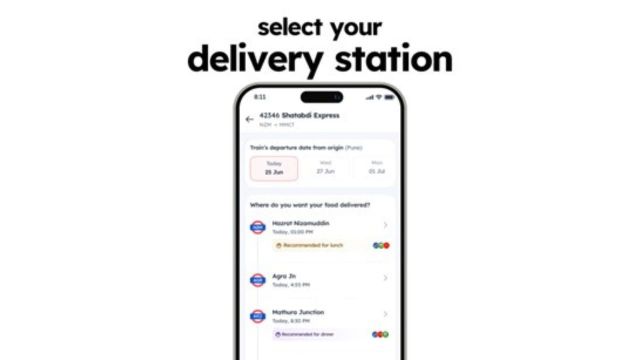
Another belief is that coordinating delivery with train schedules is difficult. Passengers often assume delays or platform changes could disrupt the order.
Fact: Train delivery services of food is done by carefully monitoring schedules. When a passenger enters their PNR or train number, the platform immediately identifies the train’s path and the stations where delivery is possible. The order is then assigned to a restaurant located near the chosen station, based on the user’s preference, with preparation beginning as the train’s expected arrival time draws near.
In case a train is delayed you don’t have to worry as the delivery schedule is automatically adjusted. Delivery staff wait on the platform and is ready to hand off the order as the train pulls in. Thanks to this setup, meals are delivered directly to passengers without any fuss.
Myth 3: Payments May Not Be Safe During Travel
Some people worry about the safety of online payments while travelling because mobile connectivity and coverage may fluctuate during a train journey.
Fact: The payment process for train-delivered meals mirrors that of typical app-based food orders or any other e-commerce transaction. UPI, digital wallets, and debit/credit cards all employ the same robust encryption to keep your information safe. If you’re on a train and your internet connection is spotty, you often have the option to pay once your food arrives. And just to be clear, no financial information is shared with the delivery person; the payment happens entirely within the app.
Myth 4: Food Options Near Stations Are Limited
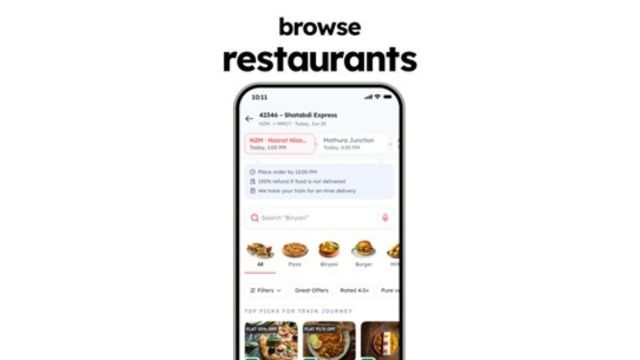
Another common misconception is that food delivery services on trains only offer basic meals or snacks, which is thought to be because of the station’s location.
Fact: India’s major railway junctions offer a wide array of dining choices. Stations such as New Delhi Railway Station, Lucknow Junction, Mumbai Central and Nagpur Railway Station have access to multiple restaurant kitchens, all conveniently located for delivery. Depending on the station and the hour, train passengers can select from North Indian cuisine, biryani, thalis, sandwiches, pizzas, and regional specialities.
Final Word
Ordering food on trains does not remove the charm of a railway journey, rather it just changes how passengers plan their meals during long train journeys. Instead of depending on pantry car menus or rushing to buy food during short station halts, travellers can now select restaurant meals ahead of time and have them delivered directly to their coach. Zomato has played a role in building this system by connecting train schedule data, restaurants located near railway stations and delivery coordination on the platform. For passengers travelling across cities, the option to order through services like Zomato means a train journey no longer limits what they can eat, it simply changes where the food arrives.
Also Read: Family Meals Ordered on Lazy Weekends