
There’s something almost poetic about a dish named after a motion. Shawarma comes from the Turkish word çevirme — “to turn” — which is exactly what’s happening on that vertical spit you see spinning behind glass in every food cart from Old Delhi to Hyderabad. Meat, slowly rotating, slowly cooking, getting shaved off in thin slices the moment it’s ready. Simple mechanics, extraordinary payoff.

One Dish, Three Names, One Empire
This whole method traces back to the Ottoman Empire, where it started life as doner kebab — marinated meat stacked high on a rotisserie, turning as it cooked, then sliced thin and tucked into bread. The idea spread and picked up new names along the way: shawarma in the Arab world, gyro in Greece, doner in Turkey. Same technique, three cultures claiming it as their own. Nobody’s really wrong.
How It Landed in India (and Never Left)
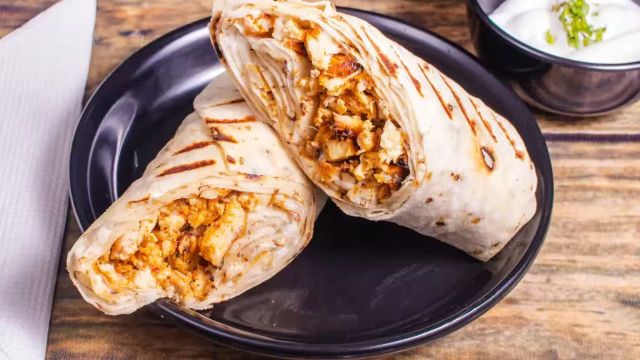
Shawarma didn’t just arrive in India — it settled in fast. Delhi, Hyderabad, and Bengaluru were early adopters, and from there it spread until shawarma rolls became as ordinary a street snack as momos or a quick sandwich. The traditional version leans on lamb or chicken, but Indian shawarma vendors didn’t leave it alone for long. Spicier marinades crept in. Extra sauces became standard. And somewhere along the way, paneer and falafel versions showed up for anyone skipping meat entirely.
It’s affordable, it’s fast, and it’s everywhere now — which is basically the definition of a street food that’s made it.
The Same Dish, Reinvented City by City
This is where it gets fun, because shawarma doesn’t taste the same everywhere in India, and that’s kind of the point.
Delhi and Lucknow wrap it in thin rumali roti, served alongside a tangy chutney that cuts through the richness.
Hyderabad’s version comes loaded — shredded chicken, cabbage, and a spicy mayo that leaves no doubt about where you are.
Mumbai, predictably, takes it over the top: cheese stuffed in, fries tucked inside the roll itself, sometimes even a double-layer wrap for people who don’t believe in restraint.
Vegetarian fillings — grilled paneer, falafel, mushrooms — have carved out their own space too, and they don’t feel like a consolation prize. The bold flavor profile survives the swap just fine.
Wait, Is Shawarma Actually Good for You?
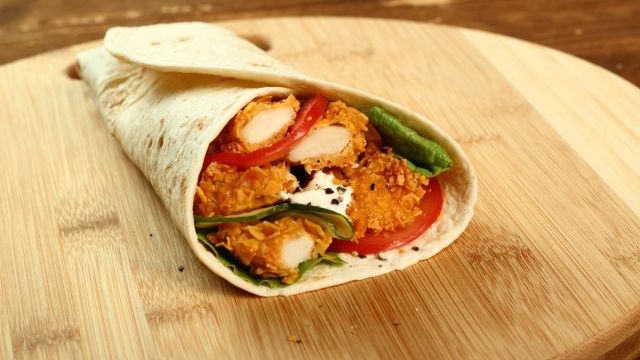
Here’s the part that surprises people: for street food, shawarma holds up surprisingly well nutritionally. Grilled meat brings protein, fresh vegetables bring, well, freshness — and if you go easy on the cheese and mayo, you’re left with something that’s satisfying without being a disaster. Some restaurants have leaned into this with “shawarma bowls” — hummus, rice, salad, all the flavor without the wrap. Good option if you want the taste but not the guilt.
Find One Near You
No need to wander around hoping to stumble on a good shawarma cart — Zomato does that legwork for you. Search nearby and you’ll get everything from no-frills street versions to the loaded, cheese-stuffed Mumbai-style wraps, chicken, lamb, or vegetarian, all a few taps away.
Also Read: Everything You Need to Know Before Your First Wazwan