Cycle tracking apps have been around for years, but most of them quietly rely on one big assumption: that everyone has a neat, predictable 28-day cycle.
That works on paper. It doesn’t work in real life.
In reality, cycles vary a lot. They shift due to stress, lifestyle, travel, and underlying conditions like PCOS or thyroid issues. Some people don’t ovulate regularly. Others don’t follow a consistent pattern at all. And yet, many apps still try to “predict” ovulation using fixed formulas that don’t really reflect what’s happening in your body.
That gap between assumption and reality is where things tend to fall apart.
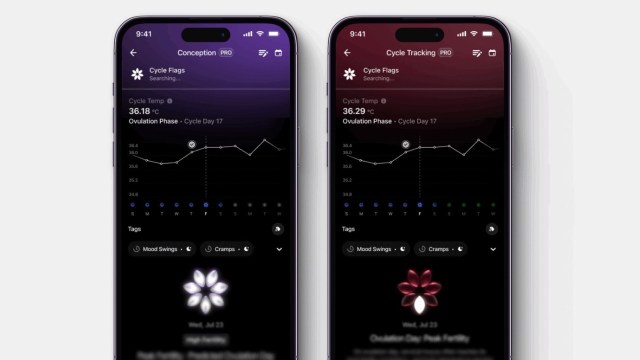
Ultrahuman is trying to address that with its new Cycle & Ovulation Pro feature for the Ring AIR, built after acquiring viO HealthTech. Instead of relying on calendar-based guesses, it leans more heavily on physiological data, particularly temperature patterns, to understand what your body is actually doing.
Moving beyond calendar predictions
Most tracking tools estimate ovulation based on past cycles. If your cycle is consistent, that can be somewhat useful. If it’s not, the predictions can quickly become unreliable.
Cycle & Ovulation Pro takes a different route.
It uses continuous temperature data from the ring to confirm ovulation after it happens, rather than just predicting when it might occur. This approach is actually closer to how medical-grade fertility tracking works, where confirmation matters more than guesswork.
The system is based on technology adapted from OvuSense, which has been developed over more than a decade and trained on a large dataset of real cycles. That foundation allows it to work across a wider range of cycle patterns, not just the “ideal” version most apps assume.
Why confirmation matters more than prediction
One of the biggest limitations of traditional tracking is that it often tells you when ovulation is “expected,” not whether it actually happened.
That distinction is important.
With Cycle & Ovulation Pro, the focus is on identifying temperature shifts linked to ovulation and confirming it with a high degree of accuracy. This becomes especially useful for people trying to understand fertility patterns or simply make sense of irregular cycles.
Instead of asking, “When should it happen?” the feature answers, “Did it actually happen?”
That shift alone makes the data more reliable over time.
Built for cycles that don’t follow the rules
The feature is built to handle variability, too. Not everyone has a predictable cycle, and many users fall outside the “average” range. Conditions like PCOS, endometriosis, or hormonal imbalances can make tracking more complicated, and most apps also don’t adapt well to that.
Cycle & Ovulation Pro is designed with that in mind.
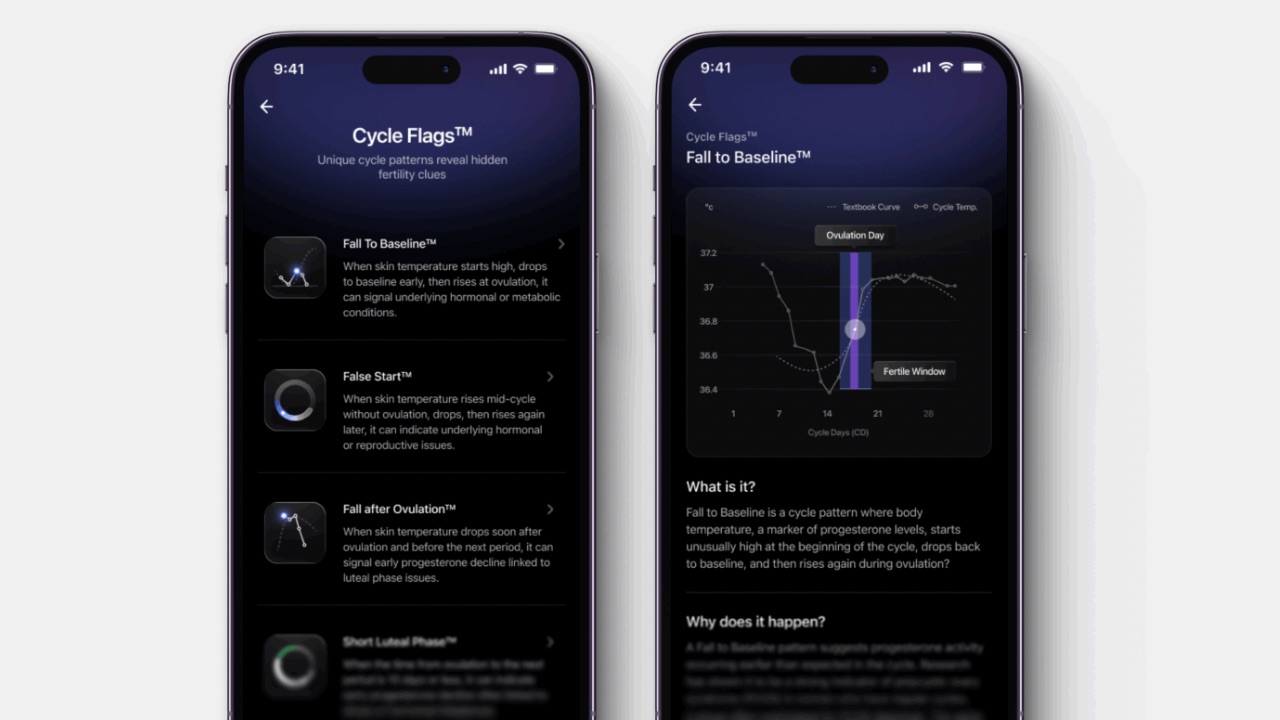
It looks for patterns within your own data instead of comparing you to a fixed set of data. So, over time, it can highlight trends like delayed ovulation, shorter luteal phases, or even cycles where ovulation may not have occurred at all.
These insights aren’t framed as diagnoses, but then they can still be useful in helping you understand what’s normal for you.
Also Read: Ultrahuman Ring AIR vs Ring PRO: Features, Health Tracking, and Which One to Choose
Spotting patterns you wouldn’t notice otherwise
Another layer comes from what Ultrahuman calls Cycle Flags.
These are essentially signals derived from your temperature data that point to patterns across multiple cycles. Some are straightforward, like identifying consistently early or late ovulation, but then others are more nuanced, which may be hinting at irregularities that might otherwise go unnoticed.
On top of that, you can log symptoms, mood, and lifestyle factors. Over time, this builds a more complete picture of how your cycle connects with how you feel day to day.
It’s less about isolated data points and more about long-term patterns.
Who is this actually for?
This isn’t just for people trying to conceive, although they’ll likely find it useful.
It’s also for anyone who has felt that standard cycle tracking doesn’t quite reflect their experience. If your cycle is irregular, if predictions have been off, or if you’ve never been sure whether you’re actually ovulating, this kind of data can be more meaningful.
At the same time, if your cycle is very regular and you’re comfortable with basic tracking, the added depth might not feel essential.
A more realistic way to look at cycle health
What Ultrahuman is doing here is shifting the focus from averages to individuality.
Instead of forcing everyone into the same model, it tries to work with the variability that already exists. That doesn’t make tracking perfect, but it does make it more grounded in actual data rather than assumptions.
Cycle & Ovulation Pro is available as a feature within the Ultrahuman app, building on the existing cycle tracking already available with the Ring AIR.
For users who want a clearer, more realistic understanding of their cycle, especially when it doesn’t follow a predictable pattern, it’s a step in a more practical direction.