
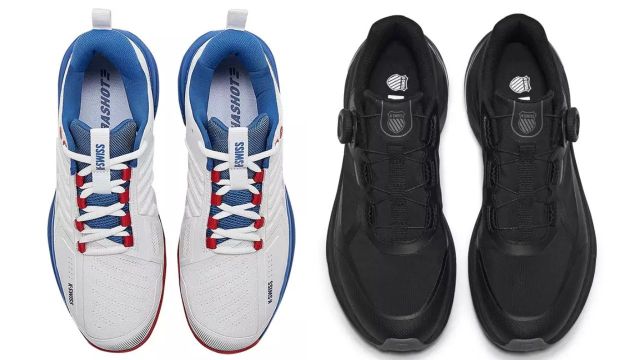
Best K-Swiss men’s shoes to check out: There’s something satisfying about a shoe that looks classic but doesn’t feel stuck in the past. K-Swiss has that old-school DNA—clean lines, court vibes—yet it still works with today’s fits, from relaxed trousers to denim.

5 K-Swiss men’s shoes worth considering on ZALORA Hong Kong
These pairs are curated from ZALORA Hong Kong’s K-Swiss men’s selection, focusing on versatile silhouettes you can wear on repeat—easy sneakers for everyday, sport-leaning options for active days, and styles that keep the look sharp without trying too hard.
K-Swiss leans into performance-first details—breathable mesh where it counts, rubber outsoles where grip matters, and add-on protection for toe-drag and lateral movement. If you’ve ever destroyed a pair of court shoes at the toe in a month, the “why” is simple: court movement is brutal, and tech like DuraWrap is specifically meant to reinforce high-wear zones. Comfort cues show up too, especially in models with OrthoLite sock liners, which use open-cell foam for moisture management and breathability—helpful if you play in humid weather or just run warm.
This list isn’t one vibe repeated five times; it’s two lanes. Two are clearly tennis-court-focused (Ultrashot 3, Hypercourt Supreme 2), while the others sit in training/casual sneaker territory (Techna Trainer, Maxon 3 BOA, Gstaad Gold). The smarter buy depends on where the shoe will actually be worn most days.
The five styles, in detail
K-Swiss MEN’S ULTRASHOT 3 TENNIS SHOES
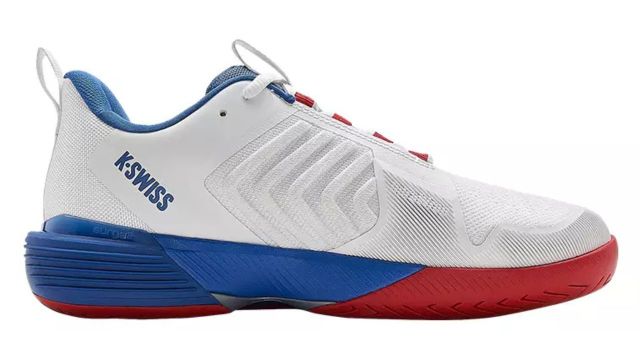
A mesh-upper tennis shoe with a rubber outsole, DuraWrap upper protection, and a SURGE+ midsole aimed at durability and performance. This is the “serious court shoe” energy in the lineup—built for movement that includes slides, stops, and repeated toe drag.
Best for
- Regular tennis players who put real wear on the toe box and need extra drag protection.
- Hot-weather play; mesh uppers typically help with airflow during long sets.
Not ideal for
- People who want one shoe to do everything (gym, city walking, casual fits); court shoes can feel stiff off-court.
- Minimalist sneaker fans—performance silhouettes look technical by design.
Pro-tip
- If you’re hard on the toe area, look for that reinforced DuraWrap zone and keep nails trimmed; both reduce premature upper breakdown.
K-Swiss MEN’S HYPERCOURT SUPREME 2 TENNIS SHOES
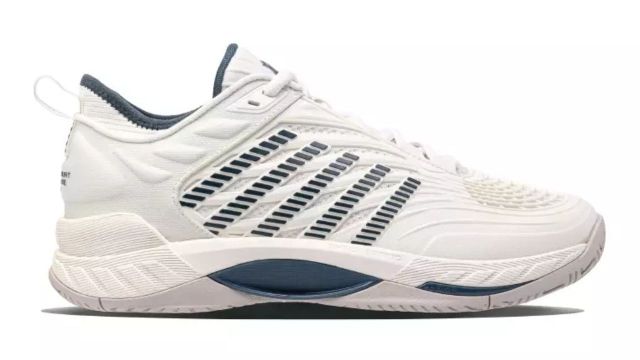
Synthetic upper, textile collar lining, rubber outsole, IMEVA midsole, plus an OrthoLite sock liner. It reads like the “comfort + performance” option: supportive enough for the court, but with underfoot comfort details designed for long sessions.
Best for
- Players who want cushioning and a drier in-shoe feel, especially in warm conditions.
- Those who like a classic lace-up court shoe with a stable, predictable fit.
Not ideal for
- Wide-footed buyers if they usually struggle in standard court lasts (best to size-check carefully).
- Anyone expecting a super-soft, running-shoe bounce; court shoes prioritize stability.
Pro-tip
- Change socks mid-session if you sweat a lot; OrthoLite helps moisture management, but dry socks still make the biggest comfort difference.
Also Read: Understated and Unmistakable: Mandarin Collar Kurta Pajamas Worth Wearing
K-Swiss MEN’S TECHNA TRAINER SNEAKERS
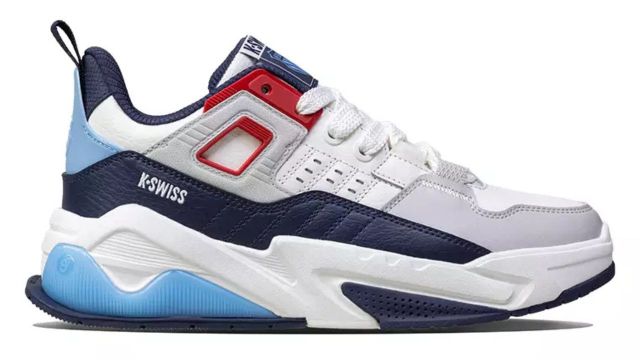
A leather and synthetic-leather upper with a rubber outsole and lightweight EVA midsole, plus padded collar and tongue. This is more “casual trainer” than “court shoe,” built for comfort and everyday wear rather than lateral court abuse.
Best for
- Daily errands, travel, and casual workdays where you want cushioning without a bulky silhouette.
- People who prefer the look and structure of leather uppers.
Not ideal for
- High-intensity court sports; casual trainers usually won’t hold up the same way under hard lateral loads.
- Rain-heavy days if you dislike maintenance; leather/synthetic leather needs basic wipe-down care.
Pro-tip
- Use them as your off-court pair if you also own a tennis model; it keeps the court shoe’s outsole and upper from wearing out on streets.
K-Swiss MEN’S MAXON 3 BOA SNEAKERS
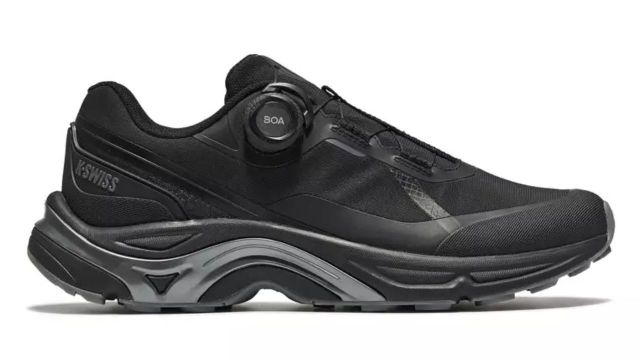
A mesh-upper sneaker with a BOA closure system (dial-based tightening) and slip-on convenience. The appeal is speed and fit control—tighten quickly, loosen quickly, no lace management.
Best for
- People who hate tying laces or want quick on/off without compromising fit.
- Travel and daily use where you adjust tightness often (walking, standing, driving).
Not ideal for
- Anyone who prefers the familiar “give” of laces; BOA feels more uniform and snug.
- Rough use where the dial might get knocked around repeatedly (depends on lifestyle and environment).
Pro-tip
- Learn the quick-release behavior before wearing out; BOA systems typically loosen fast when released, which is great—if you expect it.
K-Swiss MEN’S GSTAAD GOLD SNEAKERS
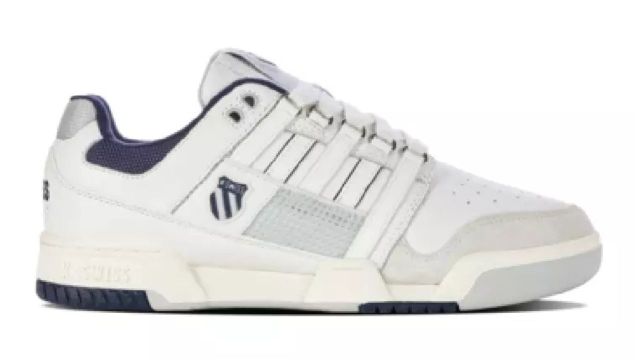
Leather upper, textile collar lining, rubber outsole, die-cut EVA midsole, plus an OrthoLite sock liner. It’s the most “clean classic sneaker” here, with comfort tech tucked into a timeless build.
Best for
- Smart-casual wardrobes where you want a leather sneaker that still feels cushioned inside.
- Long city days; EVA + OrthoLite usually plays well for all-day wear.
Not ideal for
- Heavy rain and muddy commutes if you don’t want to baby leather.
- People who only wear ultra-breathable mesh; leather will always run warmer than mesh.
Pro-tip
- Keep a basic wipe routine and store with shoe trees or paper; leather holds shape better when it isn’t collapsing between wears.
Frequently Asked Questions
What does DuraWrap actually do on K-Swiss tennis shoes?
It’s designed to reinforce high-wear areas and provide extra defense against toe dragging and abrasion, helping the upper last longer during aggressive play.
Why do some models mention OrthoLite sock liners?
OrthoLite’s open-cell foam is promoted for moisture management and high breathability, which can help keep feet cooler and drier.
Is BOA better than laces for everyday sneakers?
BOA systems tighten and loosen via a dial and can distribute tension evenly, making them quick and convenient compared with traditional laces.
Should tennis shoes be used as daily walking shoes?
They can be, but court shoes are typically built for lateral stability and durability on court surfaces, so using them daily on streets can wear them faster and feel stiffer than casual trainers.